Passage Study
Grace Received in Holiness and Godly Sorrow
2 Corinthians 6:1–7:16
In 2 Corinthians 6:1–7:16 Paul urges the Corinthians not to receive God’s grace in vain, proves his ministry through endurance rather than self-protection, calls them out of idolatrous partnerships because they are God’s temple, rejoices over Titus’ report of their earnest repentance, and distinguishes life-giving godly grief from worldly sorrow that ends in death.
- In this study
- 34 verses · 5 movements
2 Corinthians 6
6:1Working together, we entreat also that you do not receive the grace of God in vain.
6:2For he says, “At an acceptable time I listened to you. In a day of salvation I helped you.” Behold, now is the acceptable time. Behold, now is the day of salvation.
6:3We give no occasion of stumbling in anything, that our service may not be blamed,
6:4but in everything commending ourselves as servants of God: in great endurance, in afflictions, in hardships, in distresses,
6:5in beatings, in imprisonments, in riots, in labors, in watchings, in fastings,
6:6in pureness, in knowledge, in perseverance, in kindness, in the Holy Spirit, in sincere love,
6:7in the word of truth, in the power of God, by the armor of righteousness on the right hand and on the left,
6:8by glory and dishonor, by evil report and good report, as deceivers and yet true,
6:9as unknown and yet well known, as dying and behold—we live, as punished and not killed,
6:10as sorrowful yet always rejoicing, as poor yet making many rich, as having nothing and yet possessing all things.
6:11Our mouth is open to you, Corinthians. Our heart is enlarged.
6:12You are not restricted by us, but you are restricted by your own affections.
6:13Now in return—I speak as to my children—you also open your hearts.
6:14Don’t be unequally yoked with unbelievers, for what fellowship do righteousness and iniquity have? Or what fellowship does light have with darkness?
6:15What agreement does Christ have with Belial? Or what portion does a believer have with an unbeliever?
6:16What agreement does a temple of God have with idols? For you are a temple of the living God. Even as God said, “I will dwell in them and walk in them. I will be their God and they will be my people.”
6:17Therefore “‘Come out from among them, and be separate,’ says the Lord. ‘Touch no unclean thing. I will receive you.
6:18I will be to you a Father. You will be to me sons and daughters,’ says the Lord Almighty.”
2 Corinthians 7
7:1Having therefore these promises, beloved, let’s cleanse ourselves from all defilement of flesh and spirit, perfecting holiness in the fear of God.
7:2Open your hearts to us. We wronged no one. We corrupted no one. We took advantage of no one.
7:3I say this not to condemn you, for I have said before that you are in our hearts to die together and live together.
7:4Great is my boldness of speech toward you. Great is my boasting on your behalf. I am filled with comfort. I overflow with joy in all our affliction.
7:5For even when we had come into Macedonia, our flesh had no relief, but we were afflicted on every side. Fightings were outside. Fear was inside.
7:6Nevertheless, he who comforts the lowly, God, comforted us by the coming of Titus,
7:7and not by his coming only, but also by the comfort with which he was comforted in you while he told us of your longing, your mourning, and your zeal for me, so that I rejoiced still more.
7:8For though I grieved you with my letter, I do not regret it, though I did regret it. For I see that my letter made you grieve, though just for a while.
7:9I now rejoice, not that you were grieved, but that you were grieved to repentance. For you were grieved in a godly way, that you might suffer loss by us in nothing.
7:10For godly sorrow produces repentance leading to salvation, which brings no regret. But the sorrow of the world produces death.
7:11For behold, this same thing, that you were grieved in a godly way, what earnest care it worked in you. Yes, what defense, indignation, fear, longing, zeal, and vindication! In everything you demonstrated yourselves to be pure in the matter.
7:12So although I wrote to you, I wrote not for his cause that did the wrong, nor for his cause that suffered the wrong, but that your earnest care for us might be revealed in you in the sight of God.
7:13Therefore we have been comforted. In our comfort we rejoiced the more exceedingly for the joy of Titus, because his spirit has been refreshed by you all.
7:14For if in anything I have boasted to him on your behalf, I was not disappointed. But as we spoke all things to you in truth, so our glorying also which I made before Titus was found to be truth.
7:15His affection is more abundantly toward you, while he remembers all of your obedience, how with fear and trembling you received him.
7:16I rejoice that in everything I am confident concerning you.
CONTEXTUAL OVERVIEW
Paul begins as a coworker with God and quotes Isaiah’s promise of an acceptable time and day of salvation. The urgency is not manipulation. God’s grace has appeared in the reconciling work just announced, so the Corinthians must not receive it as a message that leaves their loyalties and practices untouched.
The center of the unit is relational as well as moral. Paul’s heart is wide open toward the Corinthians, yet he finds theirs restricted. Titus’ arrival later brings news that their grief over Paul’s severe letter has become earnest repentance. Holiness, therefore, is not an impersonal separation program; it is covenant loyalty that repairs fellowship with God and with wounded brothers and sisters.
HISTORICAL AND LITERARY CONTEXT
The ministry catalogue in 6:3–10 follows Paul’s appeal to reconciliation in chapter 5. He wants no obstacle to discredit the ministry, so he names beatings, imprisonments, sleepless nights, poverty, and public dishonor alongside purity, patience, truthful speech, and weapons of righteousness. His credentials are the marks of a servant who endures for the gospel, not the display of social polish his opponents may have prized.
The command not to be unequally yoked draws together Old Testament language about light and darkness, idols, God’s temple, and God dwelling among His people. It should not be used as a detached rule for every ordinary relationship. Paul’s reason is covenantal incompatibility: believers cannot bind themselves to worship or practices that rival the God who says, “I will be their God.”
SECTION-BY-SECTION ANALYSIS
- 2 Corinthians 6:1–13 · 2 Corinthians 6:11Paul appeals for a grace-shaped response and proves ministry by truthful endurance amid contradictory appearances.
- 2 Corinthians 6:14–7:1 · 2 Corinthians 6:16God’s people cannot share idolatrous allegiance because the living God dwells among them as His temple.
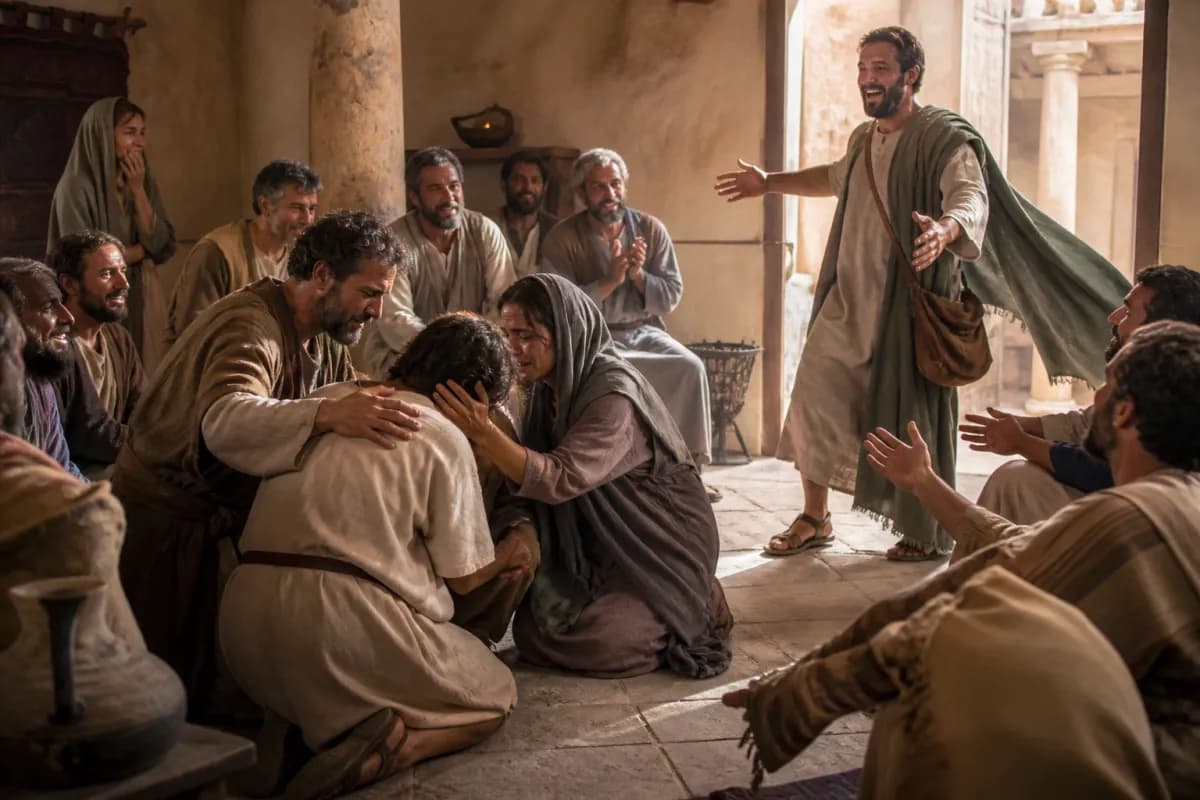
- 2 Corinthians 7:2–16 · 2 Corinthians 7:13Titus’ report reveals grief transformed into repentance, renewed affection, and joy.
CHRIST IN THIS PASSAGE
Paul’s appeal rests on the grace of God received through Christ’s reconciling death in the preceding passage. The “acceptable time” is urgent because salvation has been opened in the Messiah, not because the Corinthians can secure it through self-improvement. Their holy identity as God’s temple belongs to the new-covenant people gathered by Christ and indwelt by His Spirit.
Jesus’ mission also shapes Paul’s paradoxical ministry: sorrow and joy, poverty and enriching many, apparent death and life. The apostle does not turn suffering into a way to earn God’s favor; he serves the crucified and risen Lord, whose saving power has already made reconciliation possible. Godly sorrow is therefore hopeful because repentance returns sinners to the God who has acted in Christ.
REFLECTION
Ask whether you have received grace as a comforting idea while keeping an allegiance that competes with Christ. The temple language calls for specific examination: a business practice, sexual pattern, spiritual habit, or relationship commitment may demand loyalty God has not given it. Bring that matter into the light and seek wise, concrete help to walk in holiness.
When sin is exposed, do not settle for the grief of embarrassment. Let the Corinthians’ response teach you to ask God for godly sorrow that turns, repairs, and bears fruit. If your failure has wounded someone, name it without self-defense, receive Christ’s mercy, and pursue the faithful action that shows repentance is more than regret.
Original Greek Word Study
2 Corinthians 7:10
μετάνοια
metanoia · G3341
Usually translated: repentance or a changed mind and life
Metanoia means repentance, a change that turns life toward God. Godly grief produces this life-giving repentance, while merely worldly grief remains trapped in self and death.
Follow the Scripture trail
Grace Received in Holiness and Godly Sorrow in the larger story
The connection: The grace made known in Jesus’ reconciling work creates a people in whom God dwells. Because Christ opens the day of salvation, sorrow can become repentance and believers can leave rival loyalties for the holiness of His kingdom.
Respond to the passage
Identify one competing loyalty you have excused as normal, and bring it before Jesus in prayer and honest counsel. Where grief over sin remains only regret, take a repair-oriented step that demonstrates repentance shaped by Christ’s mercy.
- What does Paul’s ministry catalogue say about how gospel faithfulness is measured?
- Why does temple identity matter for the command not to be unequally yoked?
- How does godly sorrow differ from grief over consequences alone?
Prayer
Holy God, do not let me receive Your grace in vain. Through Jesus, cleanse my divided loyalties, give me godly sorrow that turns from sin, and make my life a fitting dwelling for Your presence. Amen.