Passage Study
What Wealth Cannot Give and Wisdom Cannot Master
Ecclesiastes 6:1–8:17
Ecclesiastes 6–8 faces the agony of riches without enjoyment, an insatiable appetite, a stillborn child, crooked realities no one can straighten, death’s certainty, and wisdom’s limits. The Teacher does not counsel cynicism. He directs readers to enjoy God’s gifts, keep reverent obedience, reject self-righteous extremes, and confess that no human being can master God’s work. Christ gives wisdom and resurrection hope where control fails.
- In this study
- 58 verses · 5 movements
Ecclesiastes 6
6:1There is an evil which I have seen under the sun, and it is heavy on men:
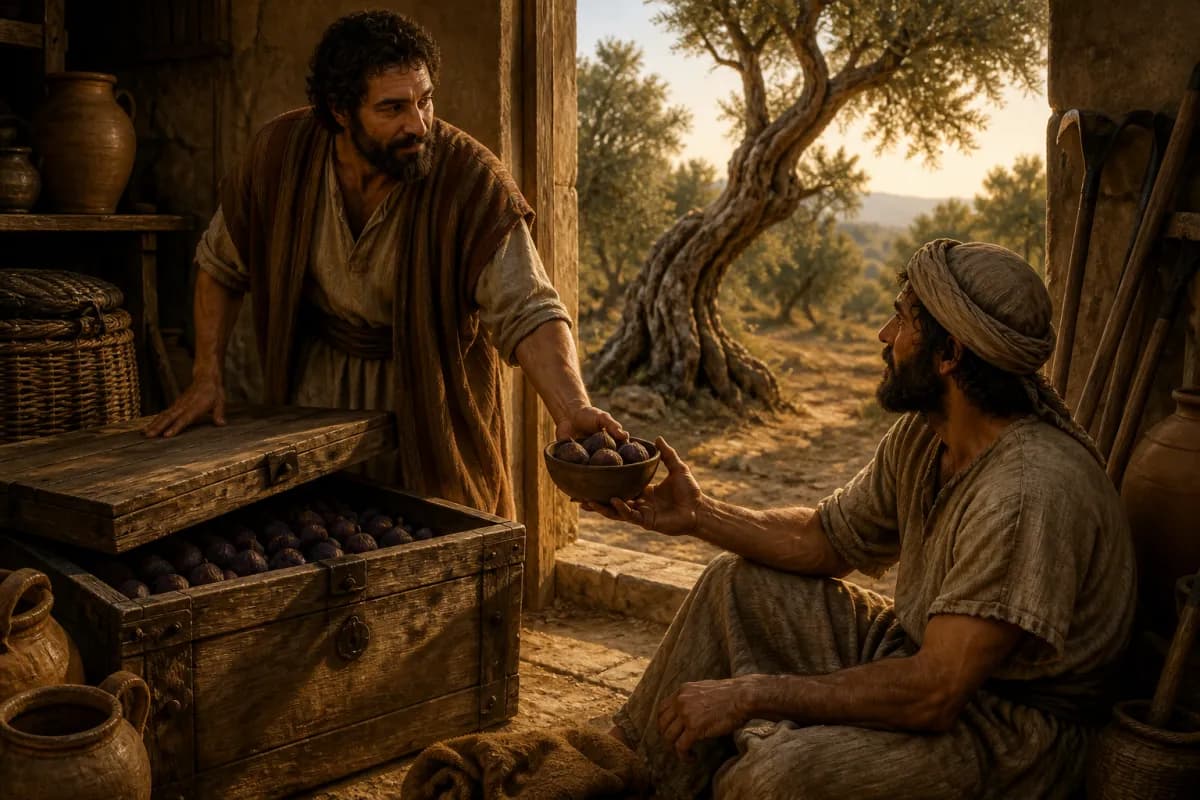
6:2a man to whom God gives riches, wealth, and honor, so that he lacks nothing for his soul of all that he desires, yet God gives him no power to eat of it, but an alien eats it. This is vanity, and it is an evil disease.
6:3If a man fathers a hundred children, and lives many years, so that the days of his years are many, but his soul is not filled with good, and moreover he has no burial, I say that a stillborn child is better than he;
6:4for it comes in vanity, and departs in darkness, and its name is covered with darkness.
6:5Moreover it has not seen the sun nor known it. This has rest rather than the other.
6:6Yes, though he live a thousand years twice told, and yet fails to enjoy good, don’t all go to one place?
6:7All the labor of man is for his mouth, and yet the appetite is not filled.
6:8For what advantage has the wise more than the fool? What has the poor man, that knows how to walk before the living?
6:9Better is the sight of the eyes than the wandering of the desire. This also is vanity and a chasing after wind.
6:10Whatever has been, its name was given long ago; and it is known what man is; neither can he contend with him who is mightier than he.
6:11For there are many words that create vanity. What does that profit man?
6:12For who knows what is good for man in life, all the days of his vain life which he spends like a shadow? For who can tell a man what will be after him under the sun?
Ecclesiastes 7
7:1A good name is better than fine perfume; and the day of death better than the day of one’s birth.
7:2It is better to go to the house of mourning than to go to the house of feasting; for that is the end of all men, and the living should take this to heart.
7:3Sorrow is better than laughter; for by the sadness of the face the heart is made good.
7:4The heart of the wise is in the house of mourning; but the heart of fools is in the house of mirth.
7:5It is better to hear the rebuke of the wise than for a man to hear the song of fools.
7:6For as the crackling of thorns under a pot, so is the laughter of the fool. This also is vanity.
7:7Surely extortion makes the wise man foolish; and a bribe destroys the understanding.
7:8Better is the end of a thing than its beginning. The patient in spirit is better than the proud in spirit.
7:9Don’t be hasty in your spirit to be angry, for anger rests in the bosom of fools.
7:10Don’t say, “Why were the former days better than these?” For you do not ask wisely about this.
7:11Wisdom is as good as an inheritance. Yes, it is more excellent for those who see the sun.
7:12For wisdom is a defense, even as money is a defense; but the excellency of knowledge is that wisdom preserves the life of him who has it.
7:13Consider the work of God, for who can make that straight which he has made crooked?
7:14In the day of prosperity be joyful, and in the day of adversity consider; yes, God has made the one side by side with the other, to the end that man should not find out anything after him.
7:15All this I have seen in my days of vanity: there is a righteous man who perishes in his righteousness, and there is a wicked man who lives long in his evildoing.
7:16Don’t be overly righteous, neither make yourself overly wise. Why should you destroy yourself?
7:17Don’t be too wicked, neither be foolish. Why should you die before your time?
7:18It is good that you should take hold of this. Yes, also don’t withdraw your hand from that; for he who fears God will come out of them all.
7:19Wisdom is a strength to the wise man more than ten rulers who are in a city.
7:20Surely there is not a righteous man on earth who does good and doesn’t sin.
7:21Also don’t take heed to all words that are spoken, lest you hear your servant curse you;
7:22for often your own heart knows that you yourself have likewise cursed others.
7:23All this I have proved in wisdom. I said, “I will be wise;” but it was far from me.
7:24That which is, is far off and exceedingly deep. Who can find it out?
7:25I turned around, and my heart sought to know and to search out, and to seek wisdom and the scheme of things, and to know that wickedness is stupidity, and that foolishness is madness.
7:26I find more bitter than death the woman whose heart is snares and traps, whose hands are chains. Whoever pleases God shall escape from her; but the sinner will be ensnared by her.
7:27“Behold, I have found this,” says the Preacher, “to one another, to find an explanation
7:28which my soul still seeks, but I have not found. I have found one man among a thousand, but I have not found a woman among all those.
7:29Behold, I have only found this: that God made mankind upright; but they search for many inventions.”
Ecclesiastes 8
8:1Who is like the wise man? And who knows the interpretation of a thing? A man’s wisdom makes his face shine, and the hardness of his face is changed.
8:2I say, “Keep the king’s command!” because of the oath to God.
8:3Don’t be hasty to go out of his presence. Don’t persist in an evil thing, for he does whatever pleases him,
8:4for the king’s word is supreme. Who can say to him, “What are you doing?”
8:5Whoever keeps the commandment shall not come to harm, and his wise heart will know the time and procedure.
8:6For there is a time and procedure for every purpose, although the misery of man is heavy on him.
8:7For he doesn’t know that which will be; for who can tell him how it will be?
8:8There is no man who has power over the spirit to contain the spirit; neither does he have power over the day of death. There is no discharge in war; neither shall wickedness deliver those who practice it.
8:9All this I have seen, and applied my mind to every work that is done under the sun. There is a time in which one man has power over another to his hurt.
8:10So I saw the wicked buried. Indeed they came also from holiness. They went and were forgotten in the city where they did this. This also is vanity.
8:11Because sentence against an evil work is not executed speedily, therefore the heart of the sons of men is fully set in them to do evil.
8:12Though a sinner commits crimes a hundred times, and lives long, yet surely I know that it will be better with those who fear God, who are reverent before him.
8:13But it shall not be well with the wicked, neither shall he lengthen days like a shadow, because he doesn’t fear God.
8:14There is a vanity which is done on the earth, that there are righteous men to whom it happens according to the work of the wicked. Again, there are wicked men to whom it happens according to the work of the righteous. I said that this also is vanity.
8:15Then I commended mirth, because a man has no better thing under the sun than to eat, to drink, and to be joyful: for that will accompany him in his labor all the days of his life which God has given him under the sun.
8:16When I applied my heart to know wisdom, and to see the business that is done on the earth (even though eyes see no sleep day or night),
8:17then I saw all the work of God, that man can’t find out the work that is done under the sun, because however much a man labors to seek it out, yet he won’t find it. Yes even though a wise man thinks he can comprehend it, he won’t be able to find it.
CONTEXTUAL OVERVIEW
Ecclesiastes 6 opens with a grievous evil: a person possesses wealth, property, and honor but lacks power to enjoy them, while a stranger consumes the goods. The Teacher refuses the flattering claim that abundance automatically produces a satisfied life. Even a man with a hundred children and many years can be called less fortunate than a stillborn child if he never sees good or receives a burial of honor.
Chapters 7–8 move from this ache into sayings about mourning, rebuke, anger, rulers, and death. The repeated pressure is proportion. Wisdom is genuinely better than folly, but wisdom cannot straighten what God has made crooked, prevent the day of death, or explain every delay in justice.
HISTORICAL AND LITERARY CONTEXT
The chapter division joins a reflective argument in chapter 6 with compact wisdom sayings in chapter 7 and courtly counsel in chapter 8. The Teacher’s comparisons are intentionally unsettling: the house of mourning teaches the end of all people, a wise rebuke is better than the song of fools, and the patience needed before a ruler is framed by the recognition that no one controls the wind or the day of death.
“What is crooked cannot be made straight” in 7:13 is a confession of creaturely limitation, not an excuse for injustice or laziness. The book has already condemned oppression and will close with divine judgment. Here it confronts the effort to make the world yield a complete moral system under human management.
SECTION-BY-SECTION ANALYSIS
- 6:1–12 · Ecclesiastes 6:7Possessions and long life cannot give enjoyment, satisfy appetite, or answer death’s unanswered future.
- 7:1–29 · Ecclesiastes 7:2Mourning, rebuke, patience, and fear of God are wiser than entertainment, anger, and moral self-confidence.
- 8:1–17 · Ecclesiastes 7:13Wisdom helps before rulers and injustice, but God’s work and the timing of judgment remain beyond human mastery.
CHRIST IN THIS PASSAGE
Ecclesiastes 6–8 does not directly identify Christ, but its confession that no one does good without sin establishes a real gospel need. Human wisdom cannot make the crooked world straight or make a guilty heart clean. Jesus alone lives in perfect righteousness, bears the judgment sinners deserve, and offers forgiveness to those who stop presenting their wisdom as a defense.
The Teacher sees death as a boundary no one commands and delayed justice as a mystery. Christ’s resurrection is the decisive canonical answer to death’s apparent finality, and His promised return secures the judgment Ecclesiastes trusts without fully seeing. This is strong thematic fulfillment, not an attempt to turn every proverb into prediction.
REFLECTION
If wealth, health, education, or influence has made you expect mastery, Ecclesiastes asks you to tell the truth about what none of them can give. Bring the fear of death, injustice, or an uncertain future to Jesus rather than treating it as a problem you must solve before you can rest.
Choose the house of mourning wisely: sit with a grieving person, remember your mortality, or receive a needed rebuke without deflecting it. Trust Christ’s righteousness where your own record is mixed, and let His resurrection make patient faithfulness possible while many questions remain unanswered.
Original Hebrew Word Study
Ecclesiastes 6:2
שָׁלַט
shalat · H7989
Usually translated: to have power or control
Shalat means to have power. A person may possess wealth yet lack power to enjoy it, exposing the limits of control over the very things people chase.
Follow the Scripture trail
What Wealth Cannot Give and Wisdom Cannot Master in the larger story
The connection: Ecclesiastes 6–8 shows that wealth cannot grant enjoyment, wisdom cannot master God’s work, and death cannot be postponed. Jesus, the sinless righteous one, bears sinners’ judgment and rises as the firstfruits of the world where death and injustice will not have the final word.
Respond to the passage
Bring one unanswered question about death, injustice, or control to Jesus in plain prayer. Receive one wise correction without defending yourself, and practice gratitude for a gift you cannot keep by your own power.
- Why is wealth without the power to enjoy it called an evil?
- How does the house of mourning teach wisdom?
- What does Ecclesiastes 8 affirm about judgment while admitting mystery?
Prayer
Lord Jesus, forgive my self-reliance and my attempt to master what belongs to God. Give me humility before death and mystery, courage to receive correction, and hope in Your resurrection. Amen.