Passage Study
Death’s Common End and Wisdom’s Quiet Strength
Ecclesiastes 9:1–11:10
Ecclesiastes 9–11 faces the same death for righteous and wicked, the limits of human knowledge, the urgency of joyful obedience, the forgotten wisdom of a poor man, the small power of folly to spoil honor, and the uncertainty of wind, clouds, and birth. The Teacher summons readers to act faithfully while they have life. Jesus defeats death and sends His people into fruitful work without pretending to control outcomes.
- In this study
- 48 verses · 5 movements
Ecclesiastes 9
9:1For all this I laid to my heart, even to explore all this: that the righteous, and the wise, and their works, are in the hand of God; whether it is love or hatred, man doesn’t know it; all is before them.
9:2All things come alike to all. There is one event to the righteous and to the wicked; to the good, to the clean, to the unclean, to him who sacrifices, and to him who doesn’t sacrifice. As is the good, so is the sinner; he who takes an oath, as he who fears an oath.
9:3This is an evil in all that is done under the sun, that there is one event to all. Yes also, the heart of the sons of men is full of evil, and madness is in their heart while they live, and after that they go to the dead.
9:4For to him who is joined with all the living there is hope; for a living dog is better than a dead lion.
9:5For the living know that they will die, but the dead don’t know anything, neither do they have any more a reward; for their memory is forgotten.
9:6Also their love, their hatred, and their envy has perished long ago; neither do they any longer have a portion forever in anything that is done under the sun.
9:7Go your way—eat your bread with joy, and drink your wine with a merry heart; for God has already accepted your works.
9:8Let your garments be always white, and don’t let your head lack oil.
9:9Live joyfully with the wife whom you love all the days of your life of vanity, which he has given you under the sun, all your days of vanity, for that is your portion in life, and in your labor in which you labor under the sun.
9:10Whatever your hand finds to do, do it with your might; for there is no work, nor plan, nor knowledge, nor wisdom, in Sheol, where you are going.
9:11I returned and saw under the sun that the race is not to the swift, nor the battle to the strong, neither yet bread to the wise, nor yet riches to men of understanding, nor yet favor to men of skill; but time and chance happen to them all.
9:12For man also doesn’t know his time. As the fish that are taken in an evil net, and as the birds that are caught in the snare, even so are the sons of men snared in an evil time, when it falls suddenly on them.
9:13I have also seen wisdom under the sun in this way, and it seemed great to me.
9:14There was a little city, and few men within it; and a great king came against it, besieged it, and built great bulwarks against it.
9:15Now a poor wise man was found in it, and he by his wisdom delivered the city; yet no man remembered that same poor man.
9:16Then I said, “Wisdom is better than strength.” Nevertheless the poor man’s wisdom is despised, and his words are not heard.
9:17The words of the wise heard in quiet are better than the cry of him who rules among fools.
9:18Wisdom is better than weapons of war; but one sinner destroys much good.
Ecclesiastes 10
10:1Dead flies cause the oil of the perfumer to produce an evil odor; so does a little folly outweigh wisdom and honor.
10:2A wise man’s heart is at his right hand, but a fool’s heart at his left.
10:3Yes also when the fool walks by the way, his understanding fails him, and he says to everyone that he is a fool.
10:4If the spirit of the ruler rises up against you, don’t leave your place; for gentleness lays great offenses to rest.
10:5There is an evil which I have seen under the sun, the sort of error which proceeds from the ruler.
10:6Folly is set in great dignity, and the rich sit in a low place.
10:7I have seen servants on horses, and princes walking like servants on the earth.
10:8He who digs a pit may fall into it; and whoever breaks through a wall may be bitten by a snake.
10:9Whoever carves out stones may be injured by them. Whoever splits wood may be endangered by it.
10:10If the ax is blunt, and one doesn’t sharpen the edge, then he must use more strength; but skill brings success.
10:11If the snake bites before it is charmed, then is there no profit for the charmer’s tongue.
10:12The words of a wise man’s mouth are gracious; but a fool is swallowed by his own lips.
10:13The beginning of the words of his mouth is foolishness; and the end of his talk is mischievous madness.
10:14A fool also multiplies words. Man doesn’t know what will be; and that which will be after him, who can tell him?
10:15The labor of fools wearies every one of them; for he doesn’t know how to go to the city.
10:16Woe to you, land, when your king is a child, and your princes eat in the morning!
10:17Happy are you, land, when your king is the son of nobles, and your princes eat in due season, for strength, and not for drunkenness!
10:18By slothfulness the roof sinks in; and through idleness of the hands the house leaks.
10:19A feast is made for laughter, and wine makes the life glad; and money is the answer for all things.
10:20Don’t curse the king, no, not in your thoughts; and don’t curse the rich in your bedroom, for a bird of the sky may carry your voice, and that which has wings may tell the matter.
Ecclesiastes 11
11:1Cast your bread on the waters; for you shall find it after many days.
11:2Give a portion to seven, yes, even to eight; for you don’t know what evil will be on the earth.
11:3If the clouds are full of rain, they empty themselves on the earth; and if a tree falls toward the south, or toward the north, in the place where the tree falls, there shall it be.
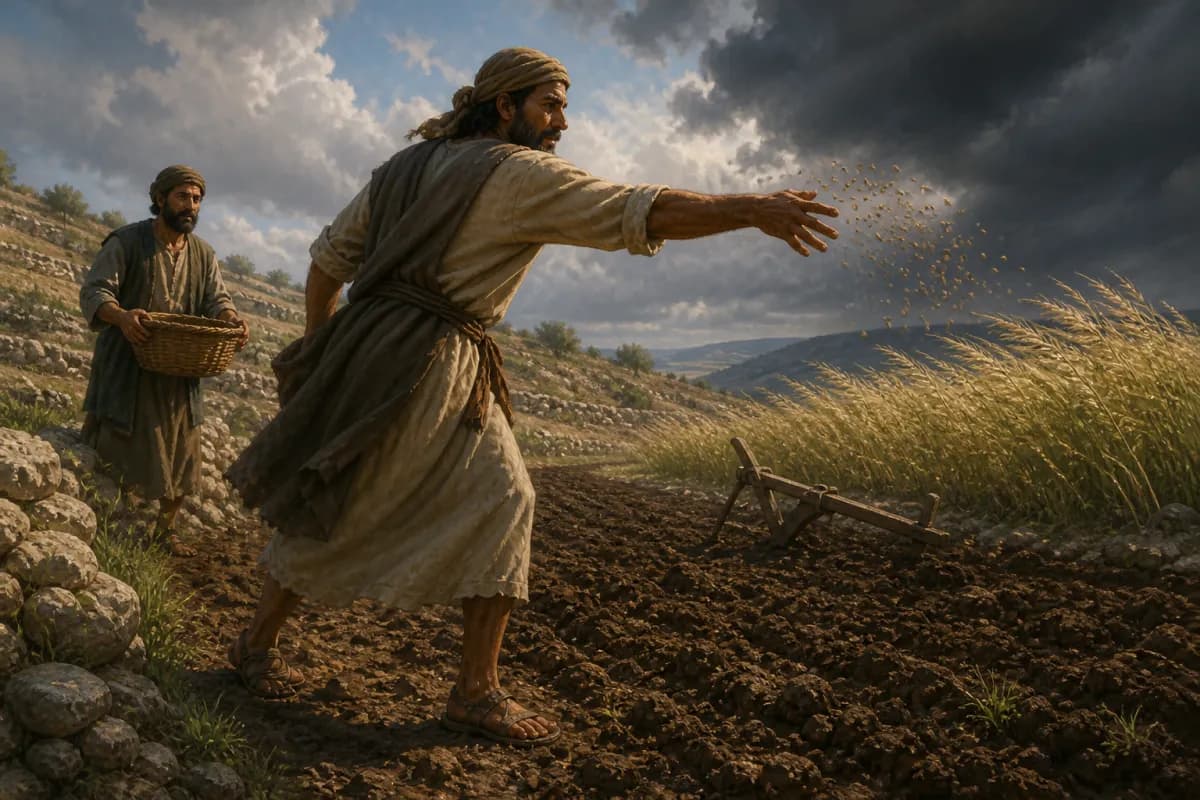
11:4He who observes the wind won’t sow; and he who regards the clouds won’t reap.
11:5As you don’t know what is the way of the wind, nor how the bones grow in the womb of her who is with child; even so you don’t know the work of God who does all.
11:6In the morning sow your seed, and in the evening don’t withhold your hand; for you don’t know which will prosper, whether this or that, or whether they both will be equally good.
11:7Truly the light is sweet, and it is a pleasant thing for the eyes to see the sun.
11:8Yes, if a man lives many years, let him rejoice in them all; but let him remember the days of darkness, for they shall be many. All that comes is vanity.
11:9Rejoice, young man, in your youth, and let your heart cheer you in the days of your youth, and walk in the ways of your heart, and in the sight of your eyes; but know that for all these things God will bring you into judgment.
11:10Therefore remove sorrow from your heart, and put away evil from your flesh; for youth and the dawn of life are vanity.
CONTEXTUAL OVERVIEW
Ecclesiastes 9 begins with a hard observation: the righteous, the wise, and their deeds are in God’s hand, yet people cannot read from present circumstances whether they are receiving love or hate. The same event—death—comes to all. The Teacher does not flatten moral difference; he denies that outward outcomes give a simple map of God’s favor.
That realism becomes a call to living action. The living know they will die, so they should eat with joy, wear clean garments, enjoy life with the spouse they love, and do with strength whatever their hand finds to do. The book does not make pleasure an escape from death; it makes grateful action urgent because work cannot be postponed beyond the grave.
HISTORICAL AND LITERARY CONTEXT
Chapters 9–11 blend reflection with proverb-like observation. The poor wise man who saves a little city in 9:13–18 is not identified, and the Teacher does not require readers to locate a historical incident. The story sharpens the book’s irony: genuine wisdom may deliver a city yet remain unremembered when the speaker lacks wealth or status.
Images of flies in perfume, a serpent biting through a wall, a dull axe, a king who feasts in the morning, clouds releasing rain, and sailors watching wind all move from small daily realities to moral instruction. Wisdom involves skill and timing, but it cannot turn an uncertain world into a controllable machine.
SECTION-BY-SECTION ANALYSIS
- 9:1–12 · Ecclesiastes 9:4Death and unforeseen events humble every human advantage, yet the living are called to joyful, vigorous faithfulness.
- 9:13–10:20 · Ecclesiastes 9:10Quiet wisdom can save, small folly can spoil, and skilled responsibility matters in public and ordinary work.
- 11:1–10 · Ecclesiastes 9:16Because outcomes are unknown, wisdom gives generously and sows faithfully rather than waiting for control.
CHRIST IN THIS PASSAGE
Ecclesiastes 9–11 does not predict Jesus directly, but it makes death the horizon of every human achievement. Jesus meets that horizon by dying and rising, not by teaching His followers to deny mortality. His resurrection gives the Teacher’s call to active work a fuller hope: labor for the Lord has a future because the crucified Savior is alive.
The poor wise man whose deliverance is forgotten is a limited thematic echo, not a hidden identification of Christ. Jesus comes without worldly status, brings a greater deliverance, and is rejected by many; unlike the forgotten man, He is raised and publicly enthroned. His mission sends disciples to sow the gospel generously, trusting God for fruit they cannot control.
REFLECTION
Do not delay obedience until outcomes look guaranteed. The Teacher describes the paralysis of watching wind and clouds; Jesus calls His people to faithful work even when they cannot chart every result. Name one good work you have postponed because it may not succeed, and take the next wise step.
Receive the ordinary joys of food, friendship, marriage, and work without pretending they can conquer death. Let them become signs of gratitude to the risen Christ, then give your resources and effort freely in the confidence that God sees work the world may forget.
Original Hebrew Word Study
Ecclesiastes 9:13
חָכְמָה
chokmah · H2451
Usually translated: wisdom or skill
Chokmah means wisdom. The poor man’s quiet wisdom can save a city, yet it may soon be forgotten, teaching that wisdom is real even when the world fails to reward it.
Follow the Scripture trail
Death’s Common End and Wisdom’s Quiet Strength in the larger story
The connection: Ecclesiastes 9–11 calls mortal people to joyful work in a world they cannot predict. Jesus dies and rises within that world, defeats death’s final claim, and sends His people to sow generously because God gives the growth and remembers what human societies forget.
Respond to the passage
Identify a faithful act you have delayed while waiting for certainty. Ask the risen Jesus for wisdom, take that next step, and give a portion of your time or resources without demanding a visible return.
- Why does the Teacher join joy with the certainty of death?
- What does the poor wise man’s story teach about recognition and wisdom?
- How do wind and clouds expose the desire for perfect conditions before obedience?
Prayer
Risen Jesus, You have broken death’s final power. Keep me from anxious delay, make me generous in sowing good, and help me receive today’s work and joy with grateful courage. Amen.