Passage Study
Lot and His Daughters: Fear, Shame, and God’s Unbroken Purpose
Genesis 19:30–19:38
Genesis 19:30–38 tells a dark aftermath to Sodom’s destruction: Lot and his daughters live in a cave, the daughters fear their family line will end, and they use intoxication and incest to conceive sons who become Moab and Ammon. The passage exposes desperate sin without approving it, yet it also shows that human failure cannot finally overturn God’s redemptive purpose, which reaches its saving fulfillment in Jesus.
- In this study
- 9 verses · 5 movements
Genesis 19
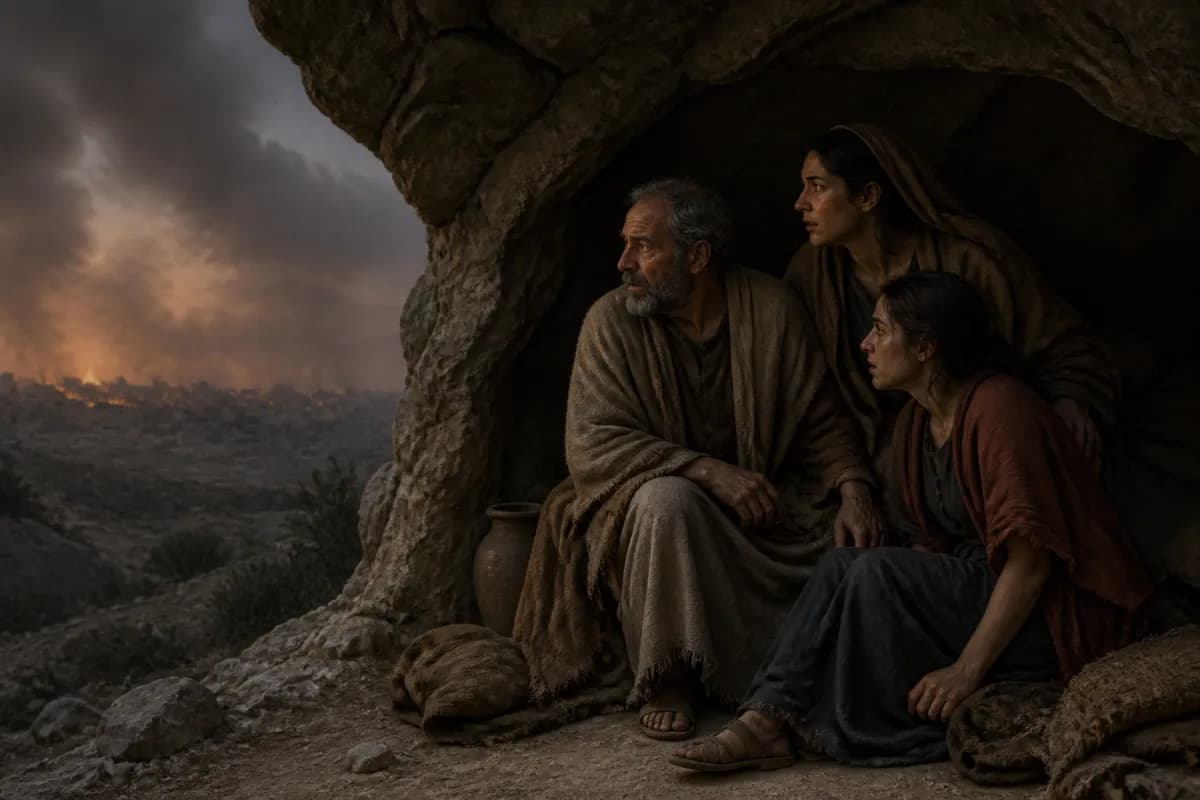
19:30Lot went up out of Zoar, and lived in the mountain, and his two daughters with him; for he was afraid to live in Zoar. He lived in a cave with his two daughters.
19:31The firstborn said to the younger, “Our father is old, and there is not a man in the earth to come in to us in the way of all the earth.
19:32Come, let’s make our father drink wine, and we will lie with him, that we may preserve our father’s family line.”
19:33They made their father drink wine that night: and the firstborn went in, and lay with her father. He didn’t know when she lay down, nor when she arose.
19:34It came to pass on the next day, that the firstborn said to the younger, “Behold, I lay last night with my father. Let’s make him drink wine again tonight. You go in, and lie with him, that we may preserve our father’s family line.”
19:35They made their father drink wine that night also. The younger went and lay with him. He didn’t know when she lay down, nor when she got up.
19:36Thus both of Lot’s daughters were with child by their father.
19:37The firstborn bore a son, and named him Moab. He is the father of the Moabites to this day.
19:38The younger also bore a son, and called his name Ben Ammi. He is the father of the children of Ammon to this day.
CONTEXTUAL OVERVIEW
The destruction of Sodom does not end Lot’s story with a clean new beginning. Though the angels had urged him to flee to the hills, Lot had asked to go to Zoar; now he leaves Zoar because he is afraid and settles in a cave with his daughters. The family that escaped the city is physically alive but spiritually and emotionally disoriented.
The daughters conclude that there is no man left “in all the earth” to preserve their father’s line. Whether this is panic, a limited view of their world, or both, the text does not invite readers to accept their conclusion as true. Their chosen means—intoxication, deception, and incest—are narrated without praise. Genesis names the sons and their later peoples, but never calls the act a faithful solution.
HISTORICAL AND LITERARY CONTEXT
This episode closes the Lot material begun when he chose the Jordan valley. It creates the origin story of Moab and Ammon, neighboring peoples who will matter repeatedly in Israel’s later history. The genealogy is not a joke or a license for contempt; it explains a difficult kinship relationship and prepares readers for later encounters marked by both conflict and unexpected mercy.
Ancient cultures deeply valued descendants and family continuity, which helps explain the daughters’ stated fear. That pressure does not justify the act. Genesis has already shown God preserving a family through impossible circumstances, so this scene sharply contrasts trust in God’s promise with a fear-driven attempt to manufacture a future through actions that dishonor father, daughters, and kinship boundaries.
Did you know?
Moab’s own king left a written monument: the Mesha Stele, discovered at Dhiban, is now in the Louvre. The British Museum preserves a cast of this inscription made for Mesha, king of Moab.
Why it matters: The people named at the end of Lot’s story later appear in a royal inscription of their own.
SECTION-BY-SECTION ANALYSIS
- The cave · Genesis 19:30Lot’s fear leaves the family isolated, a setting in which panic is allowed to become its own moral guide.
- The wine · Genesis 19:32Intoxication is used to conceal and enable an act that should never have occurred.
- The names · Genesis 19:34Moab and Ben-ammi preserve the episode as a troubled family origin, not a heroic foundation story.
CHRIST IN THIS PASSAGE
Genesis 19 does not turn this episode into a hidden allegory of Christ. Its connection to Jesus comes through the larger biblical story: God’s promise is not defeated by the deeply compromised people through whom history moves. Later Ruth the Moabite becomes an ancestor of David and, in Matthew’s genealogy, part of Jesus’ human family. That inclusion magnifies grace without sanitizing the earlier sin.
Jesus’ saving mission meets people whose families, choices, and histories contain real shame. He neither calls darkness light nor leaves sinners defined by it. Through His death and resurrection He forgives, restores, and creates a new family in which identity is received from God’s mercy rather than secured by desperate, destructive control.
REFLECTION
This passage should be read with sobriety, especially by anyone whose family history includes exploitation, addiction, sexual sin, or secrecy. Scripture tells the truth about what was done. It does not require a wounded person to carry false blame for another person’s choices, and it does not make a dark family story the final word over anyone who comes to Christ.
Fear often promises that we must seize control because there will be no future otherwise. The gospel tells a better truth: Jesus can be trusted with the future, and His people can bring hidden sin into the light where confession, protection, wise care, and restoration become possible. His grace does not erase consequences, but it breaks shame’s claim to be ultimate.
Original Hebrew Word Study
Genesis 19:5
יָדַע
yada · H3045
Usually translated: to know
Yada normally means to know, but in this context it is a sexual euphemism. The episode’s blunt language exposes the disordered desire and family collapse that continue after Sodom’s destruction.
Follow the Scripture trail
Lot and His Daughters: Fear, Shame, and God’s Unbroken Purpose in the larger story
The connection: Lot’s family reaches a terrible point of fear and sin, yet God’s redemptive purpose continues even through histories marked by shame. Jesus, descended through David’s line that includes Ruth the Moabite, brings forgiveness and a new identity to people no family story can finally disqualify.
Respond to the passage
Bring to Jesus any fear that tempts you to control the future through secrecy, compromise, or harm. If this passage touches family trauma, seek safe pastoral and professional help. Receive Christ’s invitation to truth, forgiveness, and a future not governed by shame.
- How does the cave setting expose the way fear has narrowed Lot’s family’s imagination?
- Why is it important that Genesis records this episode without either hiding it or approving it?
- How does Ruth’s later place in the biblical story show grace without minimizing the darkness of Genesis 19?
Prayer
Lord Jesus, You see every part of my history, including what I would rather hide. Protect those harmed by sin, bring truth into the light, and free me from fear-driven control. Thank You that Your grace gives a new name and a real future. Amen.