Passage Study
Cain’s City and the Name of Enoch
Genesis 4:17–4:18
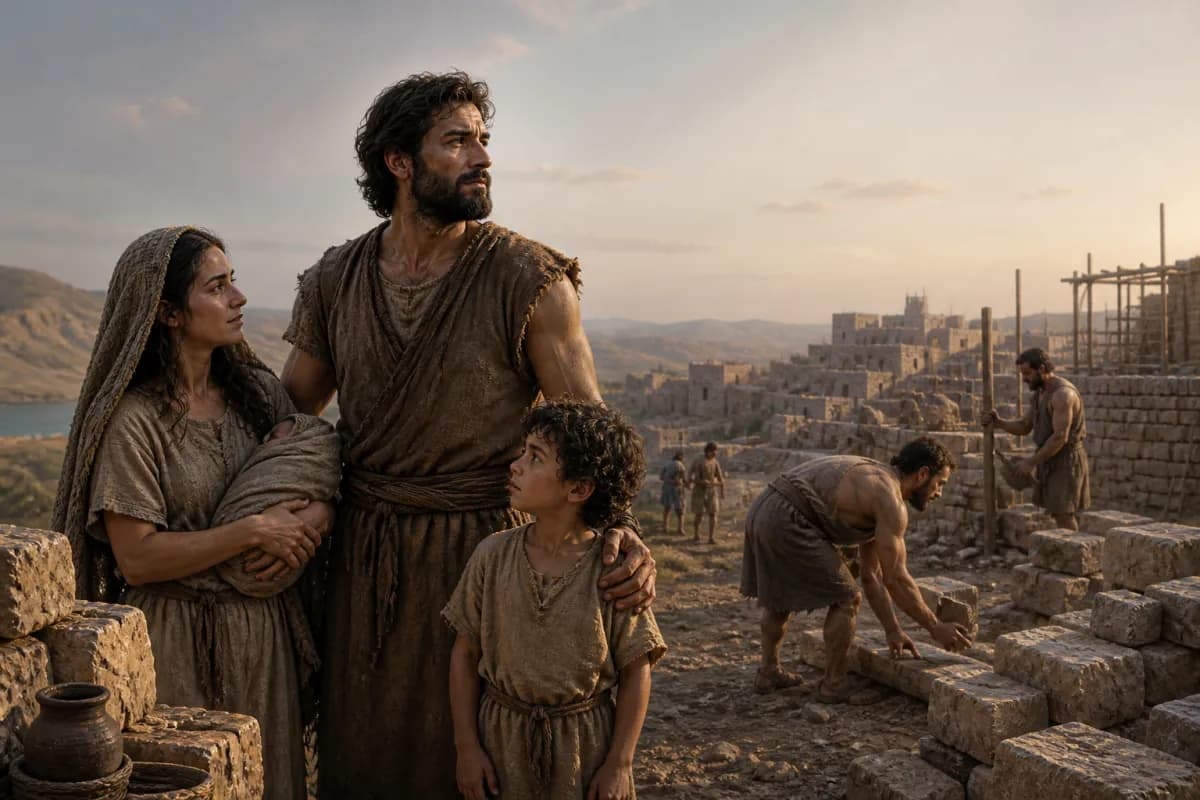
Genesis 4:17–18 records Cain building a city and naming it for his son Enoch. After exile from Eden, human beings still build, name, and establish households, but Genesis keeps Cain’s line inside the story of alienation from God. The passage exposes the limits of self-made security and points toward Jesus, who gathers an enduring city and family by grace.
- In this study
- 2 verses · 5 movements
CONTEXTUAL OVERVIEW
Cain has just been sentenced to life as a wanderer after killing Abel. The city therefore stands in deliberate tension with his punishment: a man marked by restless exile seeks a settled place and places his son’s name upon it.
Genesis does not reject city-building as such. Its concern is the human impulse to secure a name and future apart from restored fellowship with God. Cain’s line will soon reach Lamech’s boast of violence.
HISTORICAL AND LITERARY CONTEXT
The genealogy is compressed, but it has a literary task. It connects Cain’s murder to the developing culture and violence of his descendants, while Genesis 4 later introduces Seth’s line and the beginning of calling upon the Lord’s name.
The text gives no basis for reconstructing the location or archaeology of Cain’s city. Its theological setting is clear: even outside Eden, human life continues with work, family, memory, and the unresolved problem of sin.
SECTION-BY-SECTION ANALYSIS
- The city · Genesis 4:17The city represents human settlement and cultural continuity, but it cannot become a substitute for reconciliation with God.
- The name · Genesis 4:18Cain gives his son’s name to the city, while later Genesis shows God preserving the name and future of the family through whom His promise advances.
- The line · Genesis 4:17This short genealogy prepares for Lamech, where Cain’s violence develops into proud retaliation.
CHRIST IN THIS PASSAGE
The passage gives a thematic rather than direct messianic connection. Cain seeks security in a named city after rejecting God’s way, while the New Testament presents Jesus as the builder of a people who receive a lasting city from God rather than establish themselves by pride or violence.
Christ’s mission creates a household held together by His mercy. Hebrews directs believers toward the city to come, and Revelation ends with the holy city descending from God, where His presence—not human self-preservation—makes the people secure.
REFLECTION
Work, family, institutions, and places can all be good gifts. Genesis warns against asking them to carry the weight of an identity that only God can give. A name on a city cannot quiet a guilty conscience or heal the distance sin creates.
Jesus invites people to receive their place in God’s family rather than manufacture significance. His church can build homes, neighborhoods, and institutions faithfully when it remembers that its truest security is the presence and promise of the crucified and risen King.
Original Hebrew Word Study
Genesis 4:17
בָּנָה
banah · H1129
Usually translated: to build
Banah means to build. Cain builds a city after leaving the Lord’s presence, placing human cultural achievement beside the unresolved exile that follows violence and rebellion.
Follow the Scripture trail
Cain’s City and the Name of Enoch in the larger story
The connection: Cain’s city reveals humanity seeking a durable name after exile from God. Jesus fulfills God’s restoring mission by making sinners members of His household and leading them toward the city where God dwells permanently with His people.
Respond to the passage
Receive work, family, and place as gifts, but do not make them the foundation of your name or safety. Jesus gives a deeper belonging: you are brought into God’s household by grace and sent to build faithfully without making earthly security your savior.
- Why does Cain’s city stand in tension with his sentence to restless wandering?
- What good gift are you tempted to use as a substitute for security in God?
- How does the city God prepares reshape the way Christians build and serve in present places?
Prayer
Father, forgive me for seeking a name and security apart from You. Thank You for bringing me into Your household through Jesus. Help me serve faithfully where You have placed me while longing for the city where Your presence makes all things new. Amen.