Passage Study
Lamech’s Vengeance: Violence Multiplied
Genesis 4:19–4:24
Genesis 4:19–24 shows the violence begun with Cain becoming a boast in Lamech’s household. Lamech turns a measured protection spoken over Cain into a self-exalting threat of seventy-sevenfold retaliation. The passage exposes the escalation of sin and directs readers toward Jesus, who breaks the cycle by teaching costly forgiveness and bearing violence without returning it.
- In this study
- 6 verses · 5 movements
Genesis 4
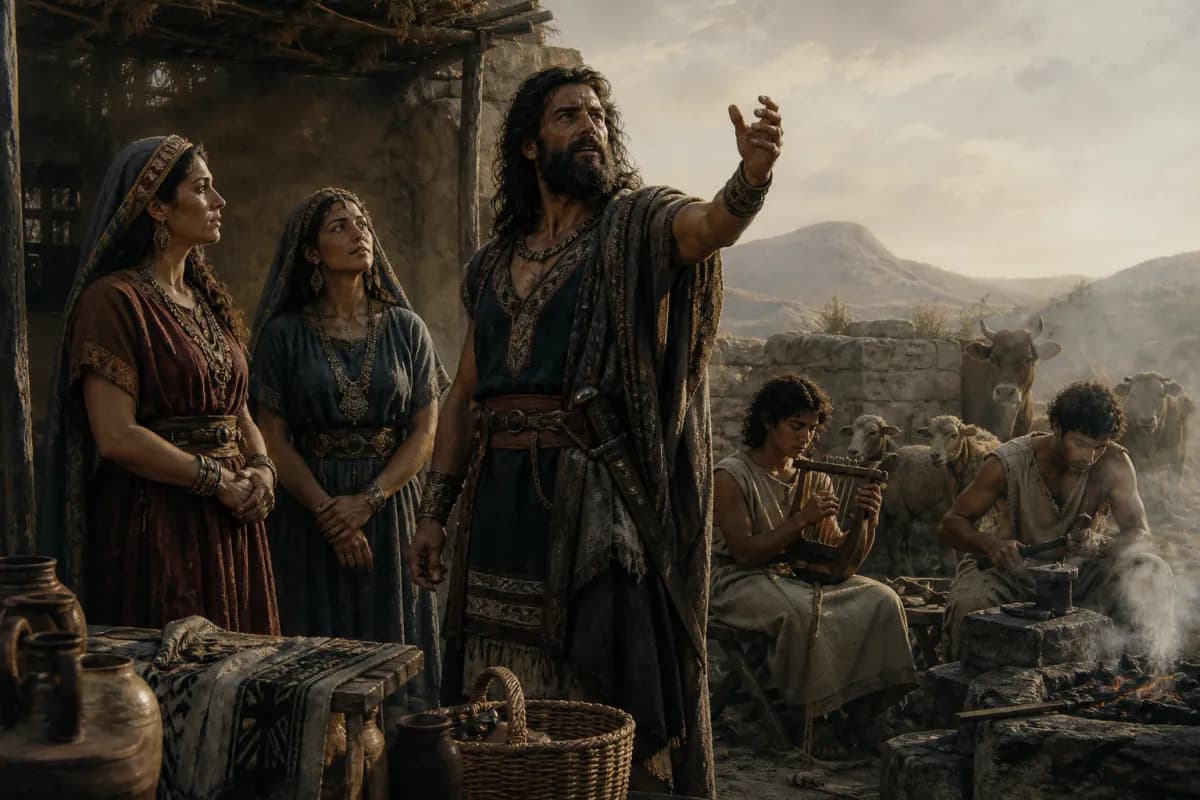
4:19Lamech took two wives: the name of the first one was Adah, and the name of the second one was Zillah.
4:20Adah gave birth to Jabal, who was the father of those who dwell in tents and have livestock.
4:21His brother’s name was Jubal, who was the father of all who handle the harp and pipe.
4:22Zillah also gave birth to Tubal Cain, the forger of every cutting instrument of bronze and iron. Tubal Cain’s sister was Naamah.
4:23Lamech said to his wives, “Adah and Zillah, hear my voice. You wives of Lamech, listen to my speech, for I have slain a man for wounding me, a young man for bruising me.
4:24If Cain will be avenged seven times, truly Lamech seventy-seven times.”
CONTEXTUAL OVERVIEW
This brief family notice follows Cain’s exile and city-building. Genesis does not condemn music, livestock care, or metalworking; it names ordinary cultural development alongside a household where violence has become speech to be celebrated before Lamech’s wives.
Lamech’s poem deliberately echoes God’s protection of Cain. God’s word restrained vengeance after Cain’s murder; Lamech seizes that language and magnifies it into a personal threat.
HISTORICAL AND LITERARY CONTEXT
The passage advances Genesis 4’s movement from concealed murder to public boasting. Sin no longer appears only as a crouching threat at one man’s door; it is becoming a pattern of family, power, and retaliation that prepares for the earth’s later violence in Genesis 6.
The first mention of two wives is descriptive, not an endorsement. The narrative places Lamech’s distorted household order beside his distorted use of power, leaving readers to see how rebellion disorders both worship and neighbor-love.
SECTION-BY-SECTION ANALYSIS
- Culture · Genesis 4:19Human creativity continues outside Eden, but it cannot heal the violence of a heart ruled by self.
- The boast · Genesis 4:23Lamech speaks death as an achievement, revealing how revenge can become an identity rather than a response to wrongdoing.
- The escalation · Genesis 4:24The movement from Cain’s murder to Lamech’s boast shows sin multiplying when it is cherished rather than confessed.
CHRIST IN THIS PASSAGE
Jesus deliberately answers a disciple’s calculation of forgiveness with “seventy-seven times” in Matthew 18:22. The wording fittingly reverses Lamech’s seventy-sevenfold vengeance: Christ’s kingdom does not multiply retaliation but extends forgiveness from people who know how much mercy they have received.
At the cross Jesus endures unjust violence and prays for His enemies. His mission is not passive acceptance of evil; He bears sin’s judgment, defeats its claim, and forms a people who pursue reconciliation under the just rule of God.
REFLECTION
Lamech’s temptation survives whenever injury becomes a story we keep rehearsing to justify contempt, threats, or revenge. Jesus names the wound without allowing it to become a throne. His forgiveness frees believers to refuse retaliation while entrusting final justice to God.
The church’s witness matters here. In a world trained to answer insult with escalation, Christ sends His people to tell the truth, seek protection for the vulnerable, forgive personal wrongs, and overcome evil with the good He has secured.
Original Hebrew Word Study
Genesis 4:24
נָקַם
naqam · H5358
Usually translated: to avenge or take vengeance
Naqam is vengeance. Lamech’s boast magnifies Cain’s violence, showing how sin grows when personal injury becomes a reason to claim unlimited retaliation.
Follow the Scripture trail
Lamech’s Vengeance: Violence Multiplied in the larger story
The connection: Lamech’s boast shows the old humanity multiplying violence by self-justifying revenge. Jesus reverses that pattern through His saving mission: He bears evil’s judgment, forgives enemies, and creates a reconciled people who refuse to let retaliation rule them.
Respond to the passage
Bring the injury you keep rehearsing to Jesus. He does not call evil good, but He forbids it from becoming your master. Ask Him for the courage to pursue truth, protection, and reconciliation without turning revenge into your identity.
- How does Lamech change God’s sevenfold protection of Cain into a claim of self-exalting vengeance?
- Where are you tempted to magnify a wound into a justification for contempt or retaliation?
- How does Jesus’ seventy-sevenfold forgiveness answer the culture Lamech represents?
Prayer
Lord Jesus, keep resentment from becoming a boast or revenge from becoming my refuge. Thank You that You bore violence without returning it and offer forgiveness through Your cross. Make me truthful, courageous, and quick to seek the peace of Your kingdom. Amen.