Passage Study
Noah’s Vineyard: Grace after the Flood
Genesis 9:20–9:27
Genesis 9:20–27 shows that a renewed earth has not produced a sinless humanity. Noah’s drunken exposure, Ham’s dishonoring response, and Shem and Japheth’s careful covering reveal shame and family disorder after the flood. God’s covenant mercy preserves the world, but only Christ can finally deal with the sin that survives every fresh start.
- In this study
- 8 verses · 5 movements
Genesis 9
9:20Noah began to be a farmer, and planted a vineyard.
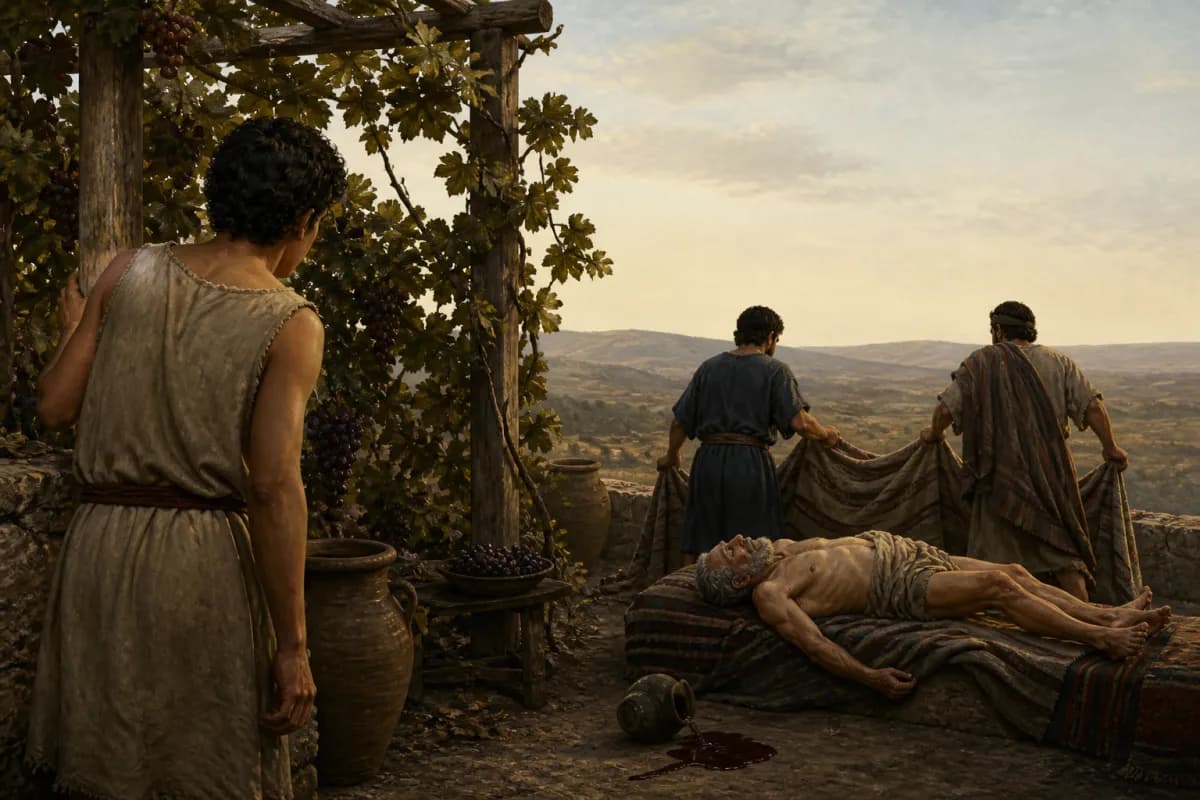
9:21He drank of the wine and got drunk. He was uncovered within his tent.
9:22Ham, the father of Canaan, saw the nakedness of his father, and told his two brothers outside.
9:23Shem and Japheth took a garment, and laid it on both their shoulders, went in backwards, and covered the nakedness of their father. Their faces were backwards, and they didn’t see their father’s nakedness.
9:24Noah awoke from his wine, and knew what his youngest son had done to him.
9:25He said, “Canaan is cursed. He will be a servant of servants to his brothers.”
9:26He said, “Blessed be the LORD, the God of Shem. Let Canaan be his servant.
9:27May God enlarge Japheth. Let him dwell in the tents of Shem. Let Canaan be his servant.”
CONTEXTUAL OVERVIEW
Noah has just emerged from the ark, offered worship, and received God’s covenant blessing. The vineyard scene immediately prevents readers from treating Noah as a new Adam who can reverse the human problem by his own righteousness.
The central contrast is not voyeuristic curiosity but the brothers’ responses to a father’s shame. Ham publicizes what he sees; Shem and Japheth act together to protect their father’s dignity without looking on his nakedness.
HISTORICAL AND LITERARY CONTEXT
The story follows the flood’s new-beginning language and shows the persistence of sin afterward. A cleansed earth does not cleanse the human heart; Genesis will soon trace this same problem into Babel and the nations.
The difficult words concerning Canaan must be read as part of Genesis’s later land and covenant story. They cannot be used to justify racial hierarchy or inherited guilt for modern peoples. The passage gives no warrant for that misuse.
Did you know?
Ancient wine drinkers used strainers. One silver example from the fifth or fourth century BCE, made in the Levant, has a calf’s head decorating its handle and two engraved Aramaic letters.
Why it matters: This later object offers a glimpse of the practical equipment surrounding wine in the biblical region.
SECTION-BY-SECTION ANALYSIS
- The vineyard · Genesis 9:20Cultivation continues after the flood, but new provision does not remove the need for self-control.
- The covering · Genesis 9:23Shem and Japheth respond to shame with restrained, protective care rather than public exposure.
- The future · Genesis 9:21Noah’s words place this household episode within the unfolding story of peoples and covenant promise.
CHRIST IN THIS PASSAGE
This is a thematic connection, not a direct prophecy. Genesis shows that shame cannot be solved by a new environment or a fresh start. Jesus enters the world’s shame, bears rejection and exposure at the cross, and provides the cleansing and reconciliation Noah’s household cannot create for itself.
The brothers’ covering points toward the biblical concern for mercy without denial of truth. In Christ, sin is neither public entertainment nor hidden away as harmless; it is confessed, forgiven, and transformed into a life of protecting and restoring others.
REFLECTION
The passage asks how we handle another person’s failure. Ham’s response turns shame into something to report; Shem and Japheth protect dignity without calling evil good. Christian love refuses both gossip and denial.
Jesus sends His people to be agents of restoration. That means truthfulness about sin, careful protection of the vulnerable, and a refusal to make another person’s collapse a source of superiority.
Original Hebrew Word Study
Genesis 9:22
עֶרְוָה
ervah · H6172
Usually translated: nakedness or shameful exposure
Ervah names nakedness in a setting of shameful exposure. The scene refuses to present Noah as a flawless new Adam and presses the family toward honor rather than exploiting another person’s disgrace.
Follow the Scripture trail
Noah’s Vineyard: Grace after the Flood in the larger story
The connection: Noah’s household shows that the flood did not remove sin or shame from the human heart. Jesus fulfills God’s saving mission by bearing shame, forgiving sinners, and forming a people who restore one another with truth and mercy.
Respond to the passage
Ask Jesus to show you where you treat another person’s weakness as news, leverage, or proof of your own superiority. Receive His mercy for your own shame and practice the kind of truthful, protective care that helps people return to God.
- How do Ham’s response and the response of Shem and Japheth differ?
- Why does this scene after the flood matter for understanding the persistence of sin?
- What would truthful and protective care look like in a relationship where someone has failed?
Prayer
Lord Jesus, forgive me for using another person’s weakness to elevate myself. Thank You for bearing my shame and bringing me near to God. Give me wisdom to speak truth, protect the vulnerable, and restore others with the mercy I have received. Amen.