Passage Study
From Noah to the Nations: One Family Spread Across the Earth
Genesis 9:28–10:32
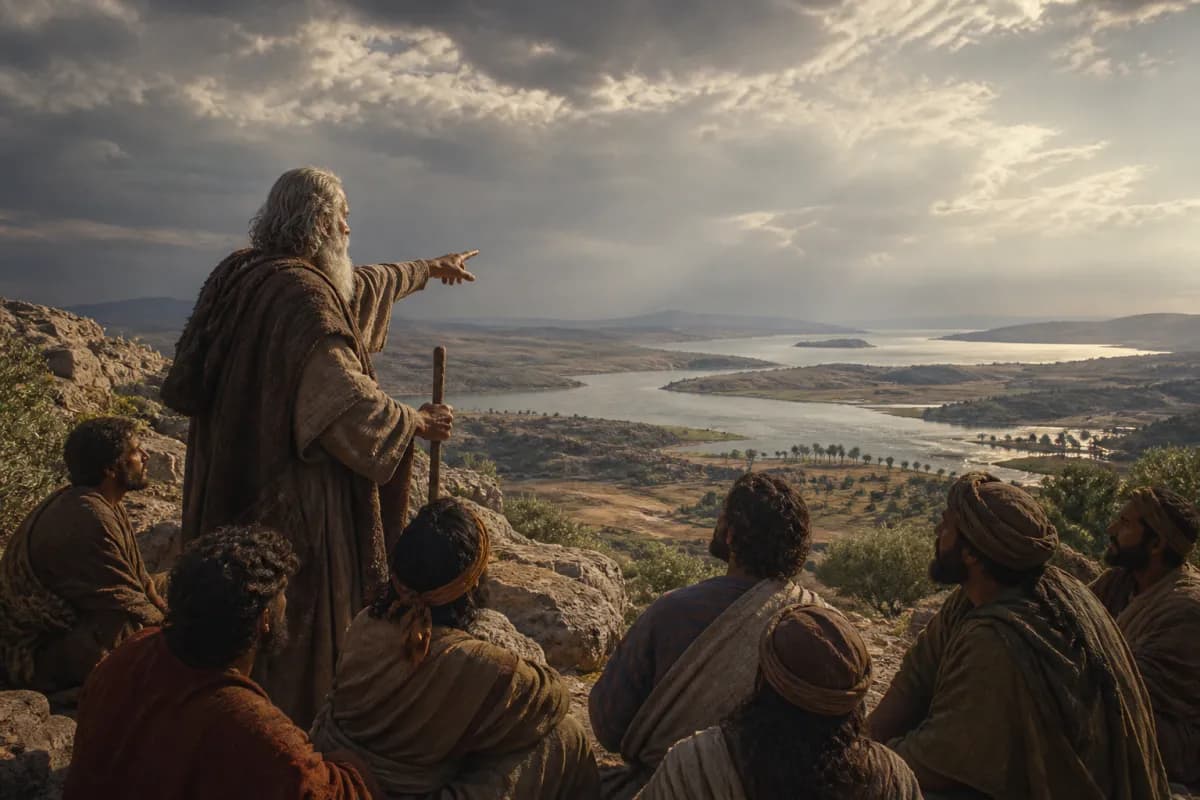
Genesis 9:28–10:32 records Noah’s remaining years and the table of nations descended from Shem, Ham, and Japheth. It maps the ancient world as a family of clans, languages, lands, and peoples under God’s providence, then leads directly to Babel’s scattering. The passage prepares for Jesus’ mission to redeem people from every nation and to unite them in worship without erasing their God-given diversity.
- In this study
- 34 verses · 5 movements
Genesis 9
9:28Noah lived three hundred fifty years after the flood.
9:29All the days of Noah were nine hundred fifty years, and then he died.
Genesis 10
10:1Now this is the history of the generations of the sons of Noah and of Shem, Ham, and Japheth. Sons were born to them after the flood.
10:2The sons of Japheth were: Gomer, Magog, Madai, Javan, Tubal, Meshech, and Tiras.
10:3The sons of Gomer were: Ashkenaz, Riphath, and Togarmah.
10:4The sons of Javan were: Elishah, Tarshish, Kittim, and Dodanim.
10:5Of these were the islands of the nations divided in their lands, everyone after his language, after their families, in their nations.
10:6The sons of Ham were: Cush, Mizraim, Put, and Canaan.
10:7The sons of Cush were: Seba, Havilah, Sabtah, Raamah, and Sabteca. The sons of Raamah were: Sheba and Dedan.
10:8Cush became the father of Nimrod. He began to be a mighty one in the earth.
10:9He was a mighty hunter before the LORD. Therefore it is said, “like Nimrod, a mighty hunter before the LORD”.
10:10The beginning of his kingdom was Babel, Erech, Accad, and Calneh, in the land of Shinar.
10:11Out of that land he went into Assyria, and built Nineveh, Rehoboth Ir, Calah,
10:12and Resen between Nineveh and the great city Calah.
10:13Mizraim became the father of Ludim, Anamim, Lehabim, Naphtuhim,
10:14Pathrusim, Casluhim (which the Philistines descended from), and Caphtorim.
10:15Canaan became the father of Sidon (his firstborn), Heth,
10:16the Jebusites, the Amorites, the Girgashites,
10:17the Hivites, the Arkites, the Sinites,
10:18the Arvadites, the Zemarites, and the Hamathites. Afterward the families of the Canaanites were spread abroad.
10:19The border of the Canaanites was from Sidon—as you go toward Gerar—to Gaza—as you go toward Sodom, Gomorrah, Admah, and Zeboiim—to Lasha.
10:20These are the sons of Ham, after their families, according to their languages, in their lands and their nations.
10:21Children were also born to Shem (the elder brother of Japheth), the father of all the children of Eber.
10:22The sons of Shem were: Elam, Asshur, Arpachshad, Lud, and Aram.
10:23The sons of Aram were: Uz, Hul, Gether, and Mash.
10:24Arpachshad became the father of Shelah. Shelah became the father of Eber.
10:25To Eber were born two sons. The name of the one was Peleg, for in his days the earth was divided. His brother’s name was Joktan.
10:26Joktan became the father of Almodad, Sheleph, Hazarmaveth, Jerah,
10:27Hadoram, Uzal, Diklah,
10:28Obal, Abimael, Sheba,
10:29Ophir, Havilah, and Jobab. All these were the sons of Joktan.
10:30Their dwelling extended from Mesha, as you go toward Sephar, the mountain of the east.
10:31These are the sons of Shem, by their families, according to their languages, lands, and nations.
10:32These are the families of the sons of Noah, by their generations, according to their nations. The nations divided from these in the earth after the flood.
CONTEXTUAL OVERVIEW
Genesis 10 follows the flood with a wide-angle view of the world. Instead of staying only with Noah’s household, it traces the peoples who spread from his sons. The chapter is often called the table of nations because it groups descendants by family lines, territories, languages, and nations.
The list does more than satisfy curiosity about ancestry. It shows that the nations are not outside God’s story. They arise from one family under His providence, and the chapter’s final language of scattering prepares the reader for Babel. Before Genesis narrows toward Abram, it first gives the broad horizon of the peoples whom God will ultimately bless.
HISTORICAL AND LITERARY CONTEXT
The table uses ancient Israel’s geographic and relational horizon, not modern ethnic categories or a contemporary atlas. Some names identify ancestors, some clans, some cities, and some regions. Its purpose is theological and literary: it places Israel among real neighboring peoples while insisting that every people belongs within the Creator’s ordering of humanity.
The arrangement is not a simple census. Japheth’s line is listed first, Ham’s line next, and Shem’s line last, where the narrative will eventually narrow toward Abram. The chapter includes both large imperial centers and smaller family groups, refusing to let political power become the measure of a people’s importance before God.
SECTION-BY-SECTION ANALYSIS
- Clans and languages · Genesis 10:20The recurring categories show that cultural and linguistic diversity belongs within God’s providential history of one human family.
- Nimrod’s kingdom · Genesis 10:10The brief imperial notice anticipates Babel and warns readers not to confuse city-building power with covenant faithfulness.
- Shem and Eber · Genesis 10:21The final line directs the story toward the family through whom God will call Abram and promise blessing to the nations.
CHRIST IN THIS PASSAGE
Genesis 10 does not give a direct messianic prediction, but its worldwide horizon is essential to the promise that follows. God will call Abram so that all families of the earth may be blessed through him. The table identifies those families before the promise names its missionary scope.
Jesus fulfills that promise as Abraham’s descendant and risen Lord. His mission does not make the nations disposable or demand that every culture become identical. At Pentecost the gospel is heard in many languages, and Revelation envisions people from every tribe and nation praising the Lamb. Christ overcomes the hostility and sin that divide peoples while gathering them into one redeemed worshiping family.
REFLECTION
Genealogies can train us to see people whom our world treats as distant, foreign, or strategically useful as members of a shared human family before God. Geography, language, and political history matter, but none gives permission for contempt. The God who knows the nations also knows their wounds, ambitions, and need for mercy.
The contrast between Nimrod’s kingdom and the promise to come challenges Christians to ask where they look for security. Power, scale, and reputation can build impressive structures without reconciling anyone to God. Jesus sends His people to bear witness with humility, serve neighbors across boundaries, and trust His kingdom rather than our own attempts to make a name.
Original Hebrew Word Study
Genesis 10:32
מִשְׁפָּחָה
mishpachah · H4940
Usually translated: clan, family, or people group
Mishpachah is a clan or family group. The table of nations traces the spread of peoples from Noah’s sons, preparing the reader to see God’s concern for the nations throughout the rest of Scripture.
Follow the Scripture trail
From Noah to the Nations: One Family Spread Across the Earth in the larger story
The connection: The table of nations gives the world-wide setting for God’s promise to Abram. Jesus fulfills that promise by bringing salvation to people from every people group and forming one worshiping family around the Lamb.
Respond to the passage
Ask Jesus to reveal any place where you have measured people by nationality, language, power, or usefulness instead of their God-given dignity. Pray by name for a people or place beyond your own experience, and consider one way to support Christ’s witness among the nations.
- Why does Genesis trace the nations before telling the story of Babel and Abram?
- What does the chapter’s attention to languages, lands, and clans teach about human diversity?
- How do Pentecost and Revelation show Christ fulfilling God’s purpose for the nations without erasing their particularity?
Prayer
Lord Jesus, You are worthy of worship from every nation and language. Free me from pride in my own group, enlarge my love for the peoples You have made, and make my life serve Your reconciling mission in the world. Amen.