Passage Study
Jesus, the True Temple
John 2:12–2:25
Jesus confronts commerce that has overtaken His Father’s house, then identifies His own body as the temple that will be raised after three days. John presents His death and resurrection as the decisive place where God meets sinful people and gives them access to Himself.
- In this study
- 14 verses · 5 movements
John 2
2:12After this, he went down to Capernaum, he, and his mother, his brothers, and his disciples; and they stayed there a few days.
2:13The Passover of the Jews was at hand, and Jesus went up to Jerusalem.
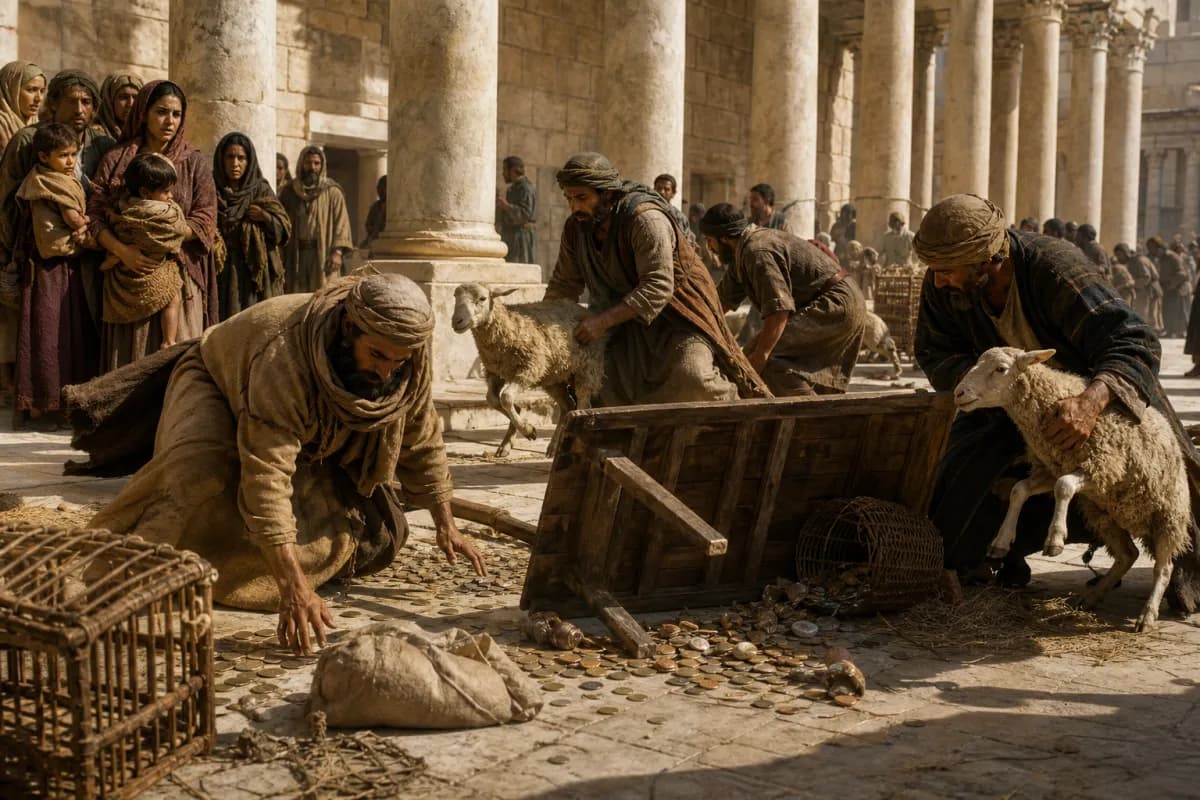
2:14He found in the temple those who sold oxen, sheep, and doves, and the changers of money sitting.
2:15He made a whip of cords and drove all out of the temple, both the sheep and the oxen; and he poured out the changers’ money and overthrew their tables.
2:16To those who sold the doves, he said, “Take these things out of here! Don’t make my Father’s house a marketplace!”
2:17His disciples remembered that it was written, “Zeal for your house will eat me up.”
2:18The Jews therefore answered him, “What sign do you show us, seeing that you do these things?”
2:19Jesus answered them, “Destroy this temple, and in three days I will raise it up.”
2:20The Jews therefore said, “It took forty-six years to build this temple! Will you raise it up in three days?”
2:21But he spoke of the temple of his body.
2:22When therefore he was raised from the dead, his disciples remembered that he said this, and they believed the Scripture and the word which Jesus had said.
2:23Now when he was in Jerusalem at the Passover, during the feast, many believed in his name, observing his signs which he did.
2:24But Jesus didn’t entrust himself to them, because he knew everyone,
2:25and because he didn’t need for anyone to testify concerning man; for he himself knew what was in man.
CONTEXTUAL OVERVIEW
The temple scene follows Cana’s revelation of glory. At the wedding, Jesus supplies abundant wine in jars associated with purification; in Jerusalem, He confronts a temple marketplace and speaks of a deeper cleansing. John places these scenes side by side to show that Jesus brings joy and access to God in His own person.
This passage is also the first Passover marker in John’s Gospel. Passover remembers God’s rescue of Israel from slavery, so the setting makes Jesus’ authority and coming death impossible to treat as a private spiritual experience. The Gospel is moving toward a greater exodus in which the Lamb of God deals with sin and opens the way to the Father.
HISTORICAL AND LITERARY CONTEXT
The Jerusalem temple was the appointed center of Israel’s sacrificial worship and pilgrimage. Animals and exchanged currency served practical needs for many worshipers, especially travelers. John does not pause to diagnose every commercial arrangement; the decisive fact is Jesus’ judgment that His Father’s house has been made into a marketplace.
The disciples remember the psalmist’s zeal for God’s house, while Jesus’ opponents demand a sign for His authority. Jesus answers with a saying they misunderstand. After the resurrection, the disciples recognize that He spoke about the temple of His body. John therefore gives the interpretive key: the physical temple points beyond itself to the crucified and risen Jesus.
SECTION-BY-SECTION ANALYSIS
- The Father’s house · John 2:16Jesus speaks as the Son whose zeal protects worship from being reduced to transaction and display.
- The raised temple · John 2:19Jesus’ death and resurrection establish His own body as the decisive place of God’s saving presence.
- The searching Lord · John 2:13Jesus knows the human heart, exposing the difference between admiration of signs and saving trust in Him.
CHRIST IN THIS PASSAGE
Jesus does not merely reform a sacred building. He identifies Himself as the true temple, the place where God comes near and sinners receive access through His death and resurrection. This fulfills rather than despises Israel’s worship: the temple’s God-given purpose of meeting God reaches its goal in the incarnate Son who gives His body for the world.
The temple saying also joins Christ’s authority to His sacrifice. Jesus will be handed over to death, but His resurrection is not an afterthought or a human recovery project. The Son speaks of raising the temple of His body, showing that the cross and resurrection together reveal His glory and secure the access to God that religious commerce, moral effort, and fascination with signs cannot create.
REFLECTION
This scene asks what we expect worship to do for us. It is possible to be near sacred activity while treating God as a means of transaction: give time, money, or religious effort in hopes of controlling an outcome. Jesus confronts that posture. He invites people to come to the Father through His person, mercy, and finished work rather than through spiritual bargaining.
The closing verses also search shallow belief. A person may be impressed by Jesus’ power yet resist the new birth, repentance, and trust He calls for. Let Christ’s knowledge of the heart lead not to fear-driven hiding but to honest faith. Bring Him the motives you want to conceal and receive the welcome He secured through His death and resurrection.
Original Greek Word Study
John 2:21
ναός
naos · G3485
Usually translated: temple or sanctuary
Naos refers to the temple or sanctuary. John explains that Jesus speaks about the temple of His body, identifying His death and resurrection as the decisive place where God meets His people.
Follow the Scripture trail
Jesus, the True Temple in the larger story
The connection: Jesus is the true temple: through His crucified and risen body God meets sinners and brings them near. The Passover setting points toward the Lamb of God whose death secures the access to the Father that no building, market, or moral effort can supply.
Respond to the passage
Name one way you have treated prayer, worship, or obedience as a transaction meant to control God. Turn to Jesus as the true temple, thank Him for opening access to the Father, and practice one act of worship that receives His grace rather than trying to earn it.
- Why does the Passover setting matter for Jesus’ action in the temple?
- How does John explain the meaning of Jesus’ temple saying?
- What is the difference between being impressed by Jesus’ signs and entrusting yourself to Him?
Prayer
Lord Jesus, true temple and risen Savior, forgive me for trying to bargain with God or manage You through religious effort. Thank You for opening the way to the Father through Your death and resurrection. Give me honest faith, reverent worship, and joy in Your presence. Amen.