Passage Study
The Poor, the Disciplined Child, and the Lord’s Purpose
Proverbs 19:1–19:29
Proverbs 19 joins integrity in poverty, patience with anger, compassion for the poor, parental discipline, honest testimony, and God’s sovereign purpose. The chapter sees how wealth can attract shallow friends and how folly can ruin a life before blaming the Lord. Jesus meets the poor and sinful with mercy, bears judgment for falsehood, and forms a people whose plans yield to God’s purpose.
- In this study
- 29 verses · 5 movements
Proverbs 19
19:1Better is the poor who walks in his integrity than he who is perverse in his lips and is a fool.
19:2It isn’t good to have zeal without knowledge, nor to be hasty with one’s feet and miss the way.
19:3The foolishness of man subverts his way; his heart rages against the LORD.
19:4Wealth adds many friends, but the poor is separated from his friend.
19:5A false witness shall not be unpunished. He who pours out lies shall not go free.
19:6Many will entreat the favor of a ruler, and everyone is a friend to a man who gives gifts.
19:7All the relatives of the poor shun him; how much more do his friends avoid him! He pursues them with pleas, but they are gone.
19:8He who gets wisdom loves his own soul. He who keeps understanding shall find good.
19:9A false witness shall not be unpunished. He who utters lies shall perish.
19:10Delicate living is not appropriate for a fool, much less for a servant to have rule over princes.
19:11The discretion of a man makes him slow to anger. It is his glory to overlook an offense.
19:12The king’s wrath is like the roaring of a lion, but his favor is like dew on the grass.
19:13A foolish son is the calamity of his father. A wife’s quarrels are a continual dripping.
19:14House and riches are an inheritance from fathers, but a prudent wife is from the LORD.
19:15Slothfulness casts into a deep sleep. The idle soul shall suffer hunger.
19:16He who keeps the commandment keeps his soul, but he who is contemptuous in his ways shall die.
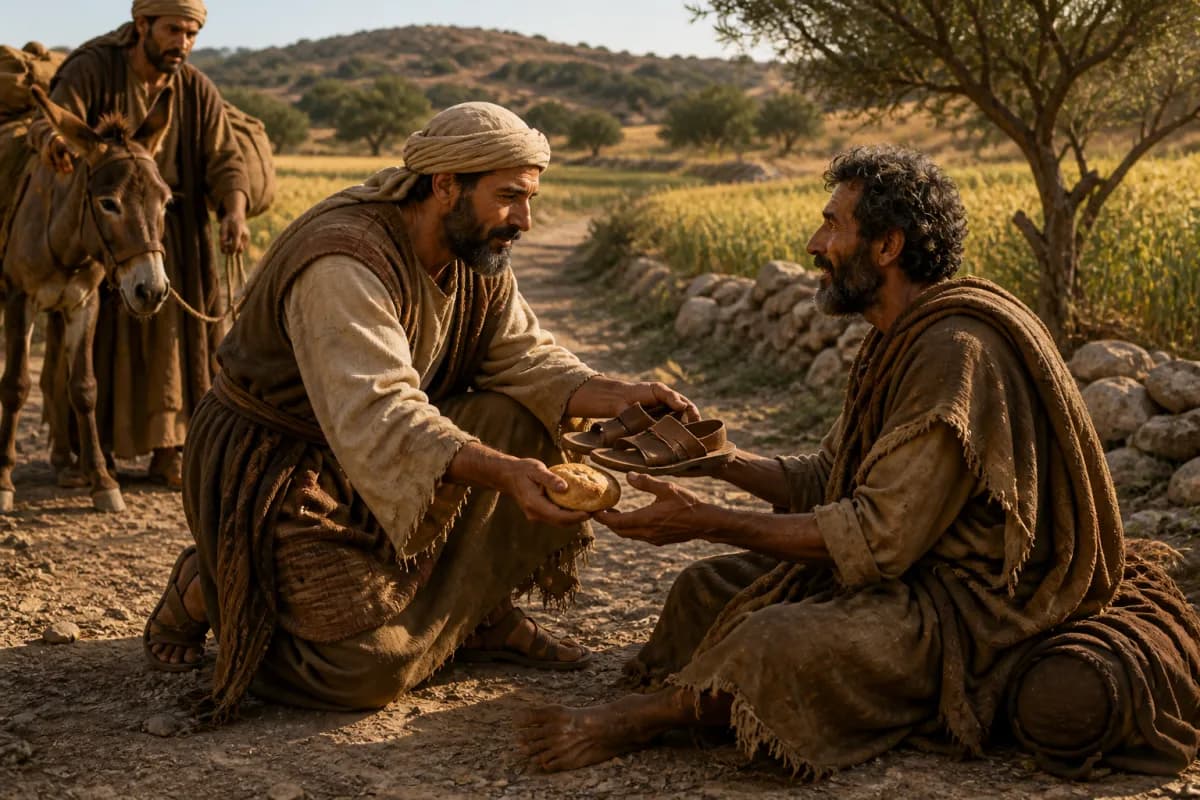
19:17He who has pity on the poor lends to the LORD; he will reward him.
19:18Discipline your son, for there is hope; don’t be a willing party to his death.
19:19A hot-tempered man must pay the penalty, for if you rescue him, you must do it again.
19:20Listen to counsel and receive instruction, that you may be wise in your latter end.
19:21There are many plans in a man’s heart, but the LORD’s counsel will prevail.
19:22That which makes a man to be desired is his kindness. A poor man is better than a liar.
19:23The fear of the LORD leads to life, then contentment; he rests and will not be touched by trouble.
19:24The sluggard buries his hand in the dish; he will not so much as bring it to his mouth again.
19:25Flog a scoffer, and the simple will learn prudence; rebuke one who has understanding, and he will gain knowledge.
19:26He who robs his father and drives away his mother is a son who causes shame and brings reproach.
19:27If you stop listening to instruction, my son, you will stray from the words of knowledge.
19:28A corrupt witness mocks justice, and the mouth of the wicked gulps down iniquity.
19:29Penalties are prepared for scoffers, and beatings for the backs of fools.
CONTEXTUAL OVERVIEW
Proverbs 19 refuses to let prosperity conceal character. It is better to be poor and walk in integrity than to be crooked in speech; wealth draws many friends while a poor person may be separated even from companions. The chapter gives the reader a sober social vision in which money can expose false loyalty, and God sees both the person with little and the person tempted to exploit them.
The chapter also attends to the household. A foolish child grieves a father, a quarrelsome wife is compared to incessant dripping, and parental discipline must be timely. These sayings are not detached rules for controlling others. They warn that unrestrained folly, anger, and falsehood damage the very relationships people most depend upon.
HISTORICAL AND LITERARY CONTEXT
Proverbs 19 belongs to the Solomonic sayings and repeatedly contrasts social appearance with God’s moral assessment. Its references to witnesses, rulers, discipline, and loans reflect ordinary Israelite settings: a legal dispute required reliable testimony, a household required formation of children, and lending to the poor could be either merciful assistance or an opportunity for manipulation.
Verse 17 speaks of giving to the poor as lending to the Lord. This is wisdom language, not a promise that every gift produces immediate material return. It means the Lord identifies His concern with a needy person and treats mercy toward that person as an act He will not overlook. That claim exposes the indifference of someone who treats poverty as another person’s inconvenience.
SECTION-BY-SECTION ANALYSIS
- Verses 1–12 · Proverbs 19:1Integrity, knowledge, patience, and sober responsibility correct the lies that wealth or anger tell about life.
- Verses 13–20 · Proverbs 19:4Household faithfulness includes timely discipline, mercy to the poor, and refusal to excuse false testimony.
- Verses 21–29 · Proverbs 19:21Human plans are many, but the Lord’s purpose stands against laziness, contempt for instruction, and deceit.
CHRIST IN THIS PASSAGE
Proverbs 19 is not a direct prediction of Jesus. Its clearest gospel connection comes through the Lord’s concern for the poor and His judgment of falsehood. Jesus announces good news to the poor, exposes religious hardness that disregards the vulnerable, and bears the sentence of sinners whose crooked speech and selfish plans cannot stand before God.
The chapter’s declaration that the Lord’s purpose stands gains its saving center in Christ’s cross and resurrection. Human rulers, false witnesses, and fearful disciples all acted within real responsibility, yet God’s purpose brought redemption through His Son. That does not excuse our folly; it gives repentant people hope that God can redirect ruined plans and make them serve His good purpose.
REFLECTION
Ask whether you have explained away a consequence of your own folly by blaming God, circumstances, or another person. Bring the specific failure to Jesus without self-protection. His mercy invites repentance, and wisdom may look like accepting correction, seeking help, or changing a pattern before it harms a household further.
Then let verse 17 make mercy visible. Notice a poor person whose need you normally pass at a distance, and respond with wise, concrete help rather than vague concern. The Savior who became poor for His people makes generosity an act of worship, not a way to buy His favor.
Original Hebrew Word Study
Proverbs 19:11
שֵׂכֶל
sekhel · H7922
Usually translated: insight, prudence, or good sense
Sekhel means wise insight. Prudence slows anger and makes it possible to overlook an offense rather than multiplying conflict.
Follow the Scripture trail
The Poor, the Disciplined Child, and the Lord’s Purpose in the larger story
The connection: Proverbs 19 names the folly that ruins lives, the injustice that neglects the poor, and the plans that cannot finally defeat God’s purpose. Jesus bears sinners’ judgment, brings good news to the poor, and turns repentant people toward the Father’s enduring purpose.
Respond to the passage
Name one consequence you have been tempted to blame on God rather than own before Him. Confess it to Christ, seek the correction it requires, and offer one practical act of mercy to a neighbor with less power or provision.
- Why does Proverbs 19 say it is better to be poor than crooked?
- How does kindness to the poor become lending to the Lord?
- What hope does the Lord’s enduring purpose give when human plans fail?
Prayer
Lord Jesus, forgive my crooked words, blame-shifting, and hard-heartedness. Establish Your good purpose in me, give me patience in correction, and make me attentive to the poor You see. Amen.