Passage Study
Honest Scales, Patient Kings, and the Search of the Heart
Proverbs 20:1–20:30
Proverbs 20 gathers warnings about wine, anger, sloth, dishonest scales, false testimony, revenge, and premature boasting beneath the Lord who searches the human spirit. The chapter calls for patient, truthful life in a world of hidden motives and contested claims. Jesus alone knows the heart without deception, bears the guilt of sinners, and makes His people wait for the Lord rather than retaliate.
- In this study
- 30 verses · 5 movements
Proverbs 20
20:1Wine is a mocker and beer is a brawler. Whoever is led astray by them is not wise.
20:2The terror of a king is like the roaring of a lion. He who provokes him to anger forfeits his own life.
20:3It is an honor for a man to keep aloof from strife, but every fool will be quarreling.
20:4The sluggard will not plow by reason of the winter; therefore he shall beg in harvest, and have nothing.
20:5Counsel in the heart of man is like deep water, but a man of understanding will draw it out.
20:6Many men claim to be men of unfailing love, but who can find a faithful man?
20:7A righteous man walks in integrity. Blessed are his children after him.
20:8A king who sits on the throne of judgment scatters away all evil with his eyes.
20:9Who can say, “I have made my heart pure. I am clean and without sin”?
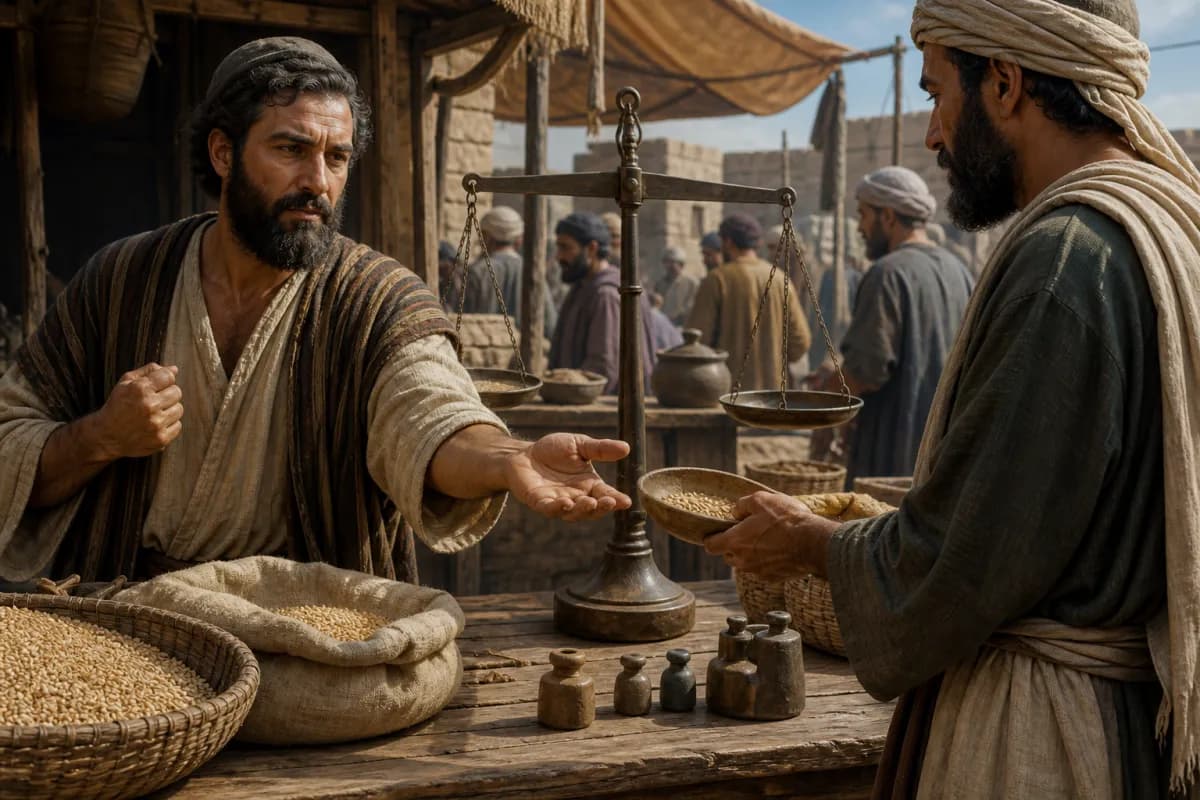
20:10Differing weights and differing measures, both of them alike are an abomination to the LORD.
20:11Even a child makes himself known by his doings, whether his work is pure, and whether it is right.
20:12The hearing ear, and the seeing eye, the LORD has made even both of them.
20:13Don’t love sleep, lest you come to poverty. Open your eyes, and you shall be satisfied with bread.
20:14“It’s no good, it’s no good,” says the buyer; but when he is gone his way, then he boasts.
20:15There is gold and abundance of rubies, but the lips of knowledge are a rare jewel.
20:16Take the garment of one who puts up collateral for a stranger; and hold him in pledge for a wayward woman.
20:17Fraudulent food is sweet to a man, but afterwards his mouth is filled with gravel.
20:18Plans are established by advice; by wise guidance you wage war!
20:19He who goes about as a tale-bearer reveals secrets; therefore don’t keep company with him who opens wide his lips.
20:20Whoever curses his father or his mother, his lamp shall be put out in blackness of darkness.
20:21An inheritance quickly gained at the beginning won’t be blessed in the end.
20:22Don’t say, “I will pay back evil.” Wait for the LORD, and he will save you.
20:23The LORD detests differing weights, and dishonest scales are not pleasing.
20:24A man’s steps are from the LORD; how then can man understand his way?
20:25It is a snare to a man to make a rash dedication, then later to consider his vows.
20:26A wise king winnows out the wicked, and drives the threshing wheel over them.
20:27The spirit of man is the LORD’s lamp, searching all his innermost parts.
20:28Love and faithfulness keep the king safe. His throne is sustained by love.
20:29The glory of young men is their strength. The splendor of old men is their gray hair.
20:30Wounding blows cleanse away evil, and beatings purge the innermost parts.
CONTEXTUAL OVERVIEW
Proverbs 20 opens with wine that mocks and strong drink that leads astray, then immediately turns to the terror of provoking a king. Both images warn against surrendering judgment to forces that feel powerful in the moment. Across the chapter, wisdom looks like slowing down: do not pick a quarrel, do not answer every insult with revenge, do not boast about tomorrow, and do not buy with false measures.
The Lord’s searching presence anchors these practical warnings. Verse 5 compares another person’s purpose to deep water that a person of understanding can draw out; verse 27 says the human spirit is the lamp of the Lord, searching the inward parts. The chapter calls readers to discernment while refusing the pretense that anyone can hide a heart from God.
HISTORICAL AND LITERARY CONTEXT
Proverbs 20 continues the short, parallel sayings of the Solomonic collection. Its scenes include a royal court, a field left unplowed, a merchant’s transaction, parents and children, and a legal accusation. The range matters: wisdom does not belong only to religious speech but appears in sober judgment, honest work, and patient responses to injury.
Several sayings use commercial practice. Verses 10 and 23 condemn differing weights and measures, a way a seller could cheat a buyer without obvious violence. Verse 14 portrays a buyer disparaging an item before bargaining, then boasting after leaving. These concrete market scenes reveal the chapter’s concern with truthfulness when profit and reputation are at stake.
SECTION-BY-SECTION ANALYSIS
- Verses 1–12 · Proverbs 20:5Sobriety, counsel, diligence, and honest measures confront the fantasy that anyone can cleanse his own heart.
- Verses 13–22 · Proverbs 20:10Truthful trade, careful listening, and waiting for the Lord restrain greed, shallow loyalty, and personal revenge.
- Verses 23–30 · Proverbs 20:28The Lord searches hidden motives and establishes just authority through steadfast love, faithfulness, and necessary correction.
CHRIST IN THIS PASSAGE
Proverbs 20 does not directly predict Jesus, but it raises a question the gospel answers: “Who can say, ‘I have made my heart clean’?” No sinner can cleanse the inward parts that the Lord searches. Jesus, who knew what was in people and remained without sin, gives Himself so that guilty people may be forgiven and cleansed rather than defending their own moral record.
The command to wait for the Lord rather than repay evil finds a decisive pattern in Christ’s passion. Jesus entrusts Himself to the Father when He suffers unjustly, and His cross deals with evil without giving disciples permission for private vengeance. His resurrection guarantees that waiting for God’s salvation is not passive resignation; it is trust in the King whose steadfast love and faithfulness endure.
REFLECTION
Let Proverbs 20 examine the quiet compromises that seem commercially normal: a claim shaded to close a sale, a fee obscured, a bargain secured by misrepresentation, or a work habit excused as harmless. Bring the matter before Jesus, who searches the heart and offers real cleansing. Make the terms plain and repair what your gain has cost another person.
When insulted or wronged, refuse the quick sentence, “I will repay.” Tell the Lord what happened, pursue lawful and truthful help where needed, and leave vengeance to Him. The crucified and risen Christ gives courage to endure wrong without calling wrong good, and He trains His people to wait for His righteous salvation.
Original Hebrew Word Study
Proverbs 20:1
יַיִן
yayin · H3196
Usually translated: wine
Yayin means wine. The warning names alcohol’s power to mock and lead astray, calling for alert self-control rather than overconfidence.
Follow the Scripture trail
Honest Scales, Patient Kings, and the Search of the Heart in the larger story
The connection: Proverbs 20 exposes the unclean heart, crooked trade, and revenge that people cannot cure by themselves. Jesus searches without deception, bears sinners’ guilt, and teaches His redeemed people to live honestly and wait for the Father’s just salvation.
Respond to the passage
Bring one hidden motive, dishonest practice, or desire for revenge into prayer before Jesus. Confess it plainly, make any necessary restitution or truthful disclosure, and choose one way to wait for God rather than taking repayment into your own hands.
- Why does Proverbs 20 connect dishonest scales with the question of a clean heart?
- What does waiting for the Lord require when someone has genuinely wronged you?
- How does Christ’s response to unjust suffering guide the chapter’s command against revenge?
Prayer
Lord Jesus, You know the inward parts I hide and You gave Yourself to cleanse sinners. Make my work honest, restrain my anger, and teach me to wait for Your righteous salvation. Amen.