Passage Study
The King’s Heart, the Sacrifice God Desires, and the Way of Justice
Proverbs 21:1–21:31
Proverbs 21 places royal power, private desire, worship, work, speech, and conflict under the Lord who weighs the heart. It insists that righteousness and justice matter more to God than sacrifice offered by the wicked. Jesus fulfills the righteous obedience this chapter requires and, by His saving mercy, forms a people who seek justice rather than trusting religious appearance.
- In this study
- 31 verses · 5 movements
Proverbs 21
21:1The king’s heart is in the LORD’s hand like the watercourses. He turns it wherever he desires.
21:2Every way of a man is right in his own eyes, but the LORD weighs the hearts.
21:3To do righteousness and justice is more acceptable to the LORD than sacrifice.
21:4A high look and a proud heart, the lamp of the wicked, is sin.
21:5The plans of the diligent surely lead to profit; and everyone who is hasty surely rushes to poverty.
21:6Getting treasures by a lying tongue is a fleeting vapor for those who seek death.
21:7The violence of the wicked will drive them away, because they refuse to do what is right.
21:8The way of the guilty is devious, but the conduct of the innocent is upright.
21:9It is better to dwell in the corner of the housetop than to share a house with a contentious woman.
21:10The soul of the wicked desires evil; his neighbor finds no mercy in his eyes.
21:11When the mocker is punished, the simple gains wisdom. When the wise is instructed, he receives knowledge.
21:12The Righteous One considers the house of the wicked, and brings the wicked to ruin.
21:13Whoever stops his ears at the cry of the poor, he will also cry out, but shall not be heard.
21:14A gift in secret pacifies anger, and a bribe in the cloak, strong wrath.
21:15It is joy to the righteous to do justice; but it is a destruction to the workers of iniquity.
21:16The man who wanders out of the way of understanding shall rest in the assembly of the departed spirits.
21:17He who loves pleasure will be a poor man. He who loves wine and oil won’t be rich.
21:18The wicked is a ransom for the righteous, the treacherous for the upright.
21:19It is better to dwell in a desert land, than with a contentious and fretful woman.
21:20There is precious treasure and oil in the dwelling of the wise, but a foolish man swallows it up.
21:21He who follows after righteousness and kindness finds life, righteousness, and honor.
21:22A wise man scales the city of the mighty, and brings down the strength of its confidence.
21:23Whoever guards his mouth and his tongue keeps his soul from troubles.
21:24The proud and arrogant man—“Scoffer” is his name— he works in the arrogance of pride.
21:25The desire of the sluggard kills him, for his hands refuse to labor.
21:26There are those who covet greedily all day long; but the righteous give and don’t withhold.
21:27The sacrifice of the wicked is an abomination— how much more, when he brings it with a wicked mind!
21:28A false witness will perish. A man who listens speaks to eternity.
21:29A wicked man hardens his face; but as for the upright, he establishes his ways.
21:30There is no wisdom nor understanding nor counsel against the LORD.
21:31The horse is prepared for the day of battle; but victory is with the LORD.
CONTEXTUAL OVERVIEW
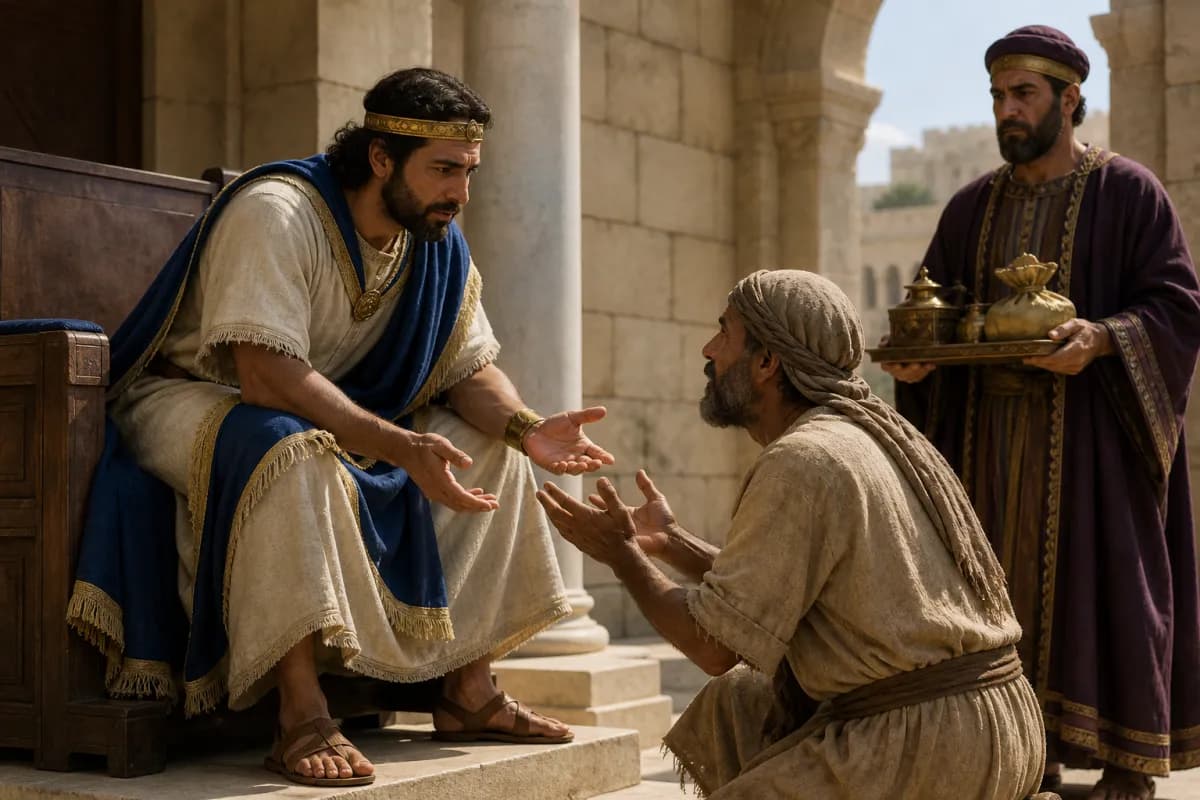
Proverbs 21 opens at the highest point of public power: a king’s heart is like water in the Lord’s hand. It then moves through courts, farms, homes, markets, and battle preparations. No setting allows a person to escape God’s moral assessment. He sees the motives behind a path, the justice denied to a neighbor, the labor avoided, and the sacrifice offered without repentance.
The chapter repeatedly contrasts what looks secure with what God approves. A proud lamp and a wicked person’s sacrifice may appear impressive, but they are sin. A house may be large, yet a roof corner is better than sharing it with relentless contention. A horse may be prepared for battle, yet victory belongs to the Lord.
HISTORICAL AND LITERARY CONTEXT
Proverbs 21 belongs to the compact sayings of Proverbs 10–22:16. Its movement is associative, but the repeated concern for the Lord’s judgment holds the sayings together. Kings and battle horses represent public power; sacrifices represent Israel’s worship; and fields, debts, and houses represent ordinary life. Wisdom refuses to divide those spheres.
Verse 3 does not reject the sacrificial system given in the Torah. It confronts the hypocrisy of bringing an offering while neglecting righteousness and justice. Israel’s prophets make the same covenantal point: God does not accept worship as a substitute for obedience to Him and care for one’s neighbor.
SECTION-BY-SECTION ANALYSIS
- Verses 1–8 · Proverbs 21:2The Lord weighs motives and requires justice that cannot be replaced by religious performance or dishonest gain.
- Verses 9–19 · Proverbs 21:30Household strife, indifference to the poor, and delight in evil reveal the social wreckage of a heart set against wisdom.
- Verses 20–31 · Proverbs 21:31Diligence and guarded speech are wise, but human preparation finally depends on the Lord who gives victory.
CHRIST IN THIS PASSAGE
Proverbs 21 does not directly predict Jesus, but its demand for righteousness and justice finds its decisive fulfillment in Him. Jesus is the righteous King who never used power for selfish gain, welcomed the poor, and exposed worship that honored God with lips while hearts remained far from Him. His obedience was not an outward sacrifice masking sin; it was wholehearted obedience to the Father.
The chapter’s contrast between sacrifice and justice also makes the cross clearer. Jesus offers Himself once for sinners, not so that religious activity may excuse injustice, but so that forgiven people may be reconciled to God and learn His righteous way. His resurrection establishes that victory ultimately belongs to the Lord, even when human strength and preparation seem decisive.
REFLECTION
Examine one religious habit—giving, serving, singing, studying, or attending—and ask whether it is being used to avoid a matter of justice, honesty, or mercy. Bring the concrete inconsistency to Jesus. His sacrifice opens the way for honest repentance rather than religious self-protection.
Then let this chapter shape a practical choice: hear the need of a poor neighbor, slow down a hasty plan, or change a pattern of speech that feeds contention at home. Prepare responsibly, but entrust the result to Christ the King, whose victory does not depend on your ability to control every outcome.
Original Hebrew Word Study
Proverbs 21:2
לֵב
lev · H3820
Usually translated: heart, mind, or inner self
Lev names the inner self. People may judge their own ways as right, but the Lord weighs the heart that lies beneath the action.
Follow the Scripture trail
The King’s Heart, the Sacrifice God Desires, and the Way of Justice in the larger story
The connection: Proverbs 21 exposes worship, power, and planning that try to stand without a righteous heart. Jesus is the just King whose obedient self-offering reconciles sinners to God and sends them into ordinary life as people who seek justice, mercy, and His final victory.
Respond to the passage
Ask Jesus to show you one place where religious appearance has become a cover for neglecting justice or mercy. Confess it, take a concrete righteous action, and entrust its outcome to the King who gives victory.
- Why does Proverbs 21 place a king’s heart and an ordinary person’s path under the same Lord?
- How does verse 3 guard against using worship to avoid justice?
- What kind of preparation does verse 31 affirm, and what kind of trust does it forbid?
Prayer
Lord Jesus, righteous King, forgive the ways I use appearance to hide an unjust heart. Make me attentive to the poor, truthful in my work, and steady in doing what is right while I trust Your victory. Amen.