Passage Study
A Good Name, the Poor at the Gate, and the Fear of the Lord
Proverbs 22:1–22:29
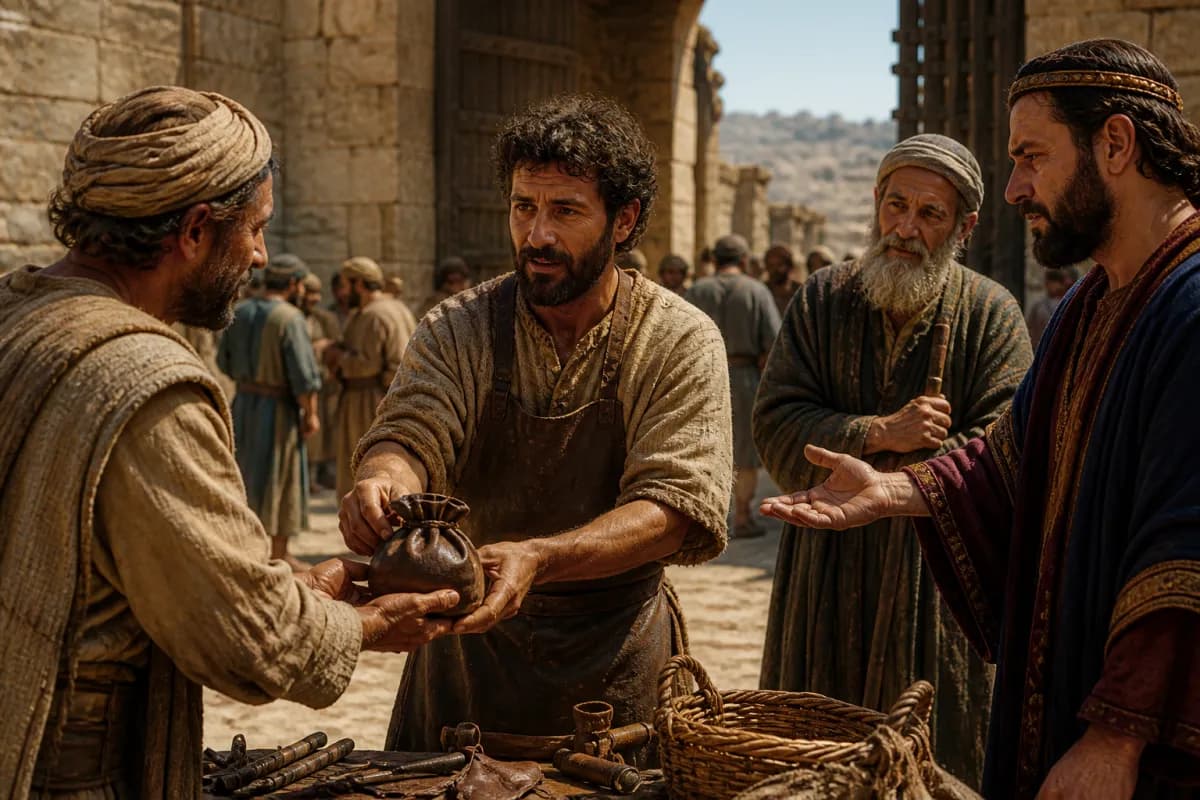
Proverbs 22 values a good name above riches and brings rich and poor alike before their Maker. It warns against haste, oppression, debt, and corrupt influence while commending humility, wise instruction, and careful formation of children. Jesus receives the lowly, bears the debt of sinners, and teaches His people to honor God by dealing honestly and generously with their neighbors.
- In this study
- 29 verses · 5 movements
Proverbs 22
22:1A good name is more desirable than great riches, and loving favor is better than silver and gold.
22:2The rich and the poor have this in common: The LORD is the maker of them all.
22:3A prudent man sees danger and hides himself; but the simple pass on, and suffer for it.
22:4The result of humility and the fear of the LORD is wealth, honor, and life.
22:5Thorns and snares are in the path of the wicked; whoever guards his soul stays far from them.
22:6Train up a child in the way he should go, and when he is old he will not depart from it.
22:7The rich rule over the poor. The borrower is servant to the lender.
22:8He who sows wickedness reaps trouble, and the rod of his fury will be destroyed.
22:9He who has a generous eye will be blessed, for he shares his food with the poor.
22:10Drive out the mocker, and strife will go out; yes, quarrels and insults will stop.
22:11He who loves purity of heart and speaks gracefully is the king’s friend.
22:12The LORD’s eyes watch over knowledge, but he frustrates the words of the unfaithful.
22:13The sluggard says, “There is a lion outside! I will be killed in the streets!”
22:14The mouth of an adulteress is a deep pit. He who is under the LORD’s wrath will fall into it.
22:15Folly is bound up in the heart of a child; the rod of discipline drives it far from him.
22:16Whoever oppresses the poor for his own increase and whoever gives to the rich, both come to poverty.
22:17Turn your ear, and listen to the words of the wise. Apply your heart to my teaching.
22:18For it is a pleasant thing if you keep them within you, if all of them are ready on your lips.
22:19I teach you today, even you, so that your trust may be in the LORD.
22:20Haven’t I written to you thirty excellent things of counsel and knowledge,
22:21To teach you truth, reliable words, to give sound answers to the ones who sent you?
22:22Don’t exploit the poor because he is poor; and don’t crush the needy in court;
22:23for the LORD will plead their case, and plunder the life of those who plunder them.
22:24Don’t befriend a hot-tempered man. Don’t associate with one who harbors anger,
22:25lest you learn his ways and ensnare your soul.
22:26Don’t you be one of those who strike hands, of those who are collateral for debts.
22:27If you don’t have means to pay, why should he take away your bed from under you?
22:28Don’t move the ancient boundary stone which your fathers have set up.
22:29Do you see a man skilled in his work? He will serve kings. He won’t serve obscure men.
CONTEXTUAL OVERVIEW
Proverbs 22 begins by challenging a culture of visible status: a good name and favor are better than great riches. The rich and poor meet on one level because the Lord made them both. That opening governs the chapter’s warnings about exploiting the poor, moving ancient boundaries, joining violent people, and becoming trapped by a debt one cannot bear.
The chapter also addresses formation. Parents are told to train a child in the way he should go, and learners are told to incline their ears to the sayings of the wise. These instructions are weighty because the book has already shown that character grows through repeated paths, companions, habits, and responses to correction.
HISTORICAL AND LITERARY CONTEXT
Verses 1–16 continue the Solomonic proverb collection; verse 17 introduces a new section often called the sayings of the wise. The shift is visible in its more sustained address: “Incline your ear” and “apply your mind.” Proverbs therefore moves from short observations to a teacher personally forming a student for truthful speech and trustworthy living.
The “ancient landmark” in verse 28 was a boundary marker for inherited land. Moving it could quietly steal a family’s livelihood. The warnings about pledging for a neighbor and borrowing serve the same concern: economic arrangements may place a household under another’s power, so wisdom seeks freedom to serve God and neighbor rather than reckless obligation.
SECTION-BY-SECTION ANALYSIS
- Verses 1–16 · Proverbs 22:1A good name grows through humility, prudence, generous bread, and refusal to gain from another person’s weakness.
- Verses 17–21 · Proverbs 22:19The teacher calls the listener to receive words of truth so that trust may be placed in the Lord.
- Verses 22–29 · Proverbs 22:2The wise learner protects the poor, avoids enslaving debt and violent companionship, respects boundaries, and works with skill.
CHRIST IN THIS PASSAGE
Proverbs 22 does not directly identify Jesus, but its concern for the poor, the oppressed at the gate, and truthful words points toward His mission. Jesus announces good news to the poor and confronts leaders who use religious authority to burden the vulnerable. He receives people the powerful dismiss and calls His disciples to a righteousness that cannot coexist with exploiting a neighbor.
The chapter’s debt warning also gives a sober gospel analogy, not an allegory of every loan. Human debt can place a person under another’s power; sin leaves people unable to free themselves before God. Jesus gives His life to redeem sinners and makes them servants of His gracious kingdom, free to use possessions, skill, and reputation for love rather than self-advancement.
REFLECTION
Consider whether your pursuit of a good name is becoming image management or whether it is the fruit of truthful conduct. Let Christ search the difference. Repair a misrepresentation, honor a commitment, or give credit where it is due, remembering that favor before God matters more than public recognition.
Look for a place where someone has less leverage than you: a customer, employee, debtor, tenant, child, or neighbor. Refuse the easy advantage. In Christ’s name, deal plainly, protect what belongs to them, and share practical help with someone whose need is visible.
Original Hebrew Word Study
Proverbs 22:1
שֵׁם
shem · H8034
Usually translated: name or reputation
Shem means name and, by extension, reputation. A good name is better than great wealth because character carries a worth money cannot secure.
Follow the Scripture trail
A Good Name, the Poor at the Gate, and the Fear of the Lord in the larger story
The connection: Proverbs 22 measures honor by fear of the Lord and care for people with little power. Jesus brings good news to the poor, redeems those enslaved by sin, and creates a people whose truthful words and economic practices display His kingdom.
Respond to the passage
Identify one relationship in which you hold more economic or social power. Ask Christ to show you any unfair advantage, make the next dealing plain and just, and give practical help where He has put need before you.
- Why is a good name better than great riches in this chapter?
- How do the poor and rich meeting under one Maker change economic conduct?
- What does the warning about an ancient landmark reveal about love of neighbor?
Prayer
Lord Jesus, You drew near to the poor and oppressed. Free me from image-making and selfish gain; make my words true, my dealings just, and my hands open in Your service. Amen.