Passage Study
Do Not Envy Evil: Wisdom for Building, Falling, and Rescue
Proverbs 24:1–24:34
Proverbs 24 forbids envy of evildoers and calls for wisdom that builds a household, strength that endures adversity, truthful witness, and active rescue for those led toward death. It warns against rejoicing at an enemy’s fall and against lazy fields left to ruin. Jesus rescues people from death by His cross and trains His people to practice patient, courageous love rather than envy, revenge, or neglect.
- In this study
- 34 verses · 5 movements
Proverbs 24
24:1Don’t be envious of evil men, neither desire to be with them;
24:2for their hearts plot violence and their lips talk about mischief.
24:3Through wisdom a house is built; by understanding it is established;
24:4by knowledge the rooms are filled with all rare and beautiful treasure.
24:5A wise man has great power. A knowledgeable man increases strength,
24:6for by wise guidance you wage your war, and victory is in many advisors.
24:7Wisdom is too high for a fool. He doesn’t open his mouth in the gate.
24:8One who plots to do evil will be called a schemer.
24:9The schemes of folly are sin. The mocker is detested by men.
24:10If you falter in the time of trouble, your strength is small.
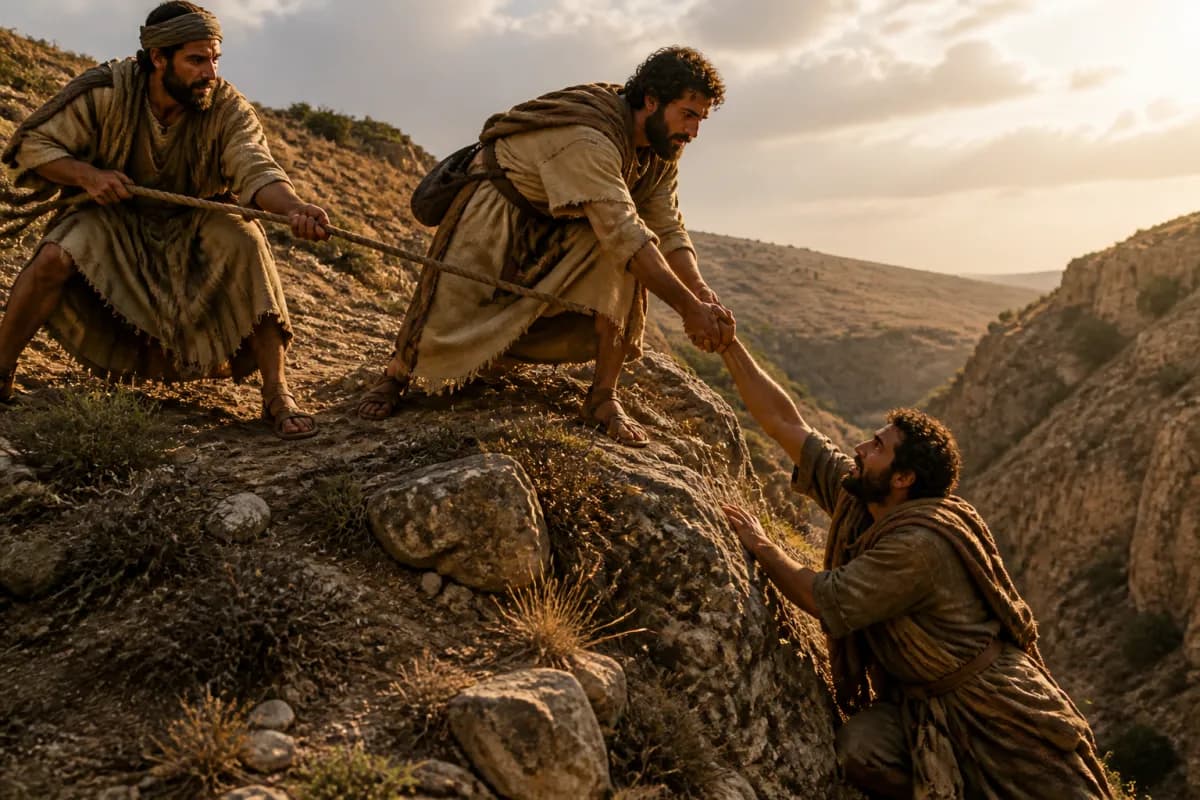
24:11Rescue those who are being led away to death! Indeed, hold back those who are staggering to the slaughter!
24:12If you say, “Behold, we didn’t know this,” doesn’t he who weighs the hearts consider it? He who keeps your soul, doesn’t he know it? Shall he not give to every man according to his work?
24:13My son, eat honey, for it is good, the droppings of the honeycomb, which are sweet to your taste;
24:14so you shall know wisdom to be to your soul. If you have found it, then there will be a reward: Your hope will not be cut off.
24:15Don’t lay in wait, wicked man, against the habitation of the righteous. Don’t destroy his resting place;
24:16for a righteous man falls seven times and rises up again, but the wicked are overthrown by calamity.
24:17Don’t rejoice when your enemy falls. Don’t let your heart be glad when he is overthrown,
24:18lest the LORD see it, and it displease him, and he turn away his wrath from him.
24:19Don’t fret yourself because of evildoers, neither be envious of the wicked;
24:20for there will be no reward to the evil man. The lamp of the wicked will be snuffed out.
24:21My son, fear the LORD and the king. Don’t join those who are rebellious,
24:22for their calamity will rise suddenly. Who knows what destruction may come from them both?
24:23These also are sayings of the wise: To show partiality in judgment is not good.
24:24He who says to the wicked, “You are righteous,” peoples will curse him, and nations will abhor him—
24:25but it will go well with those who convict the guilty, and a rich blessing will come on them.
24:26An honest answer is like a kiss on the lips.
24:27Prepare your work outside, and get your fields ready. Afterwards, build your house.
24:28Don’t be a witness against your neighbor without cause. Don’t deceive with your lips.
24:29Don’t say, “I will do to him as he has done to me; I will repay the man according to his work.”
24:30I went by the field of the sluggard, by the vineyard of the man void of understanding.
24:31Behold, it was all grown over with thorns. Its surface was covered with nettles, and its stone wall was broken down.
24:32Then I saw, and considered well. I saw, and received instruction:
24:33a little sleep, a little slumber, a little folding of the hands to sleep,
24:34so your poverty will come as a robber and your want as an armed man.
CONTEXTUAL OVERVIEW
Proverbs 24 asks what kind of life can stand when evil appears to succeed. Do not envy evildoers, because their plans are violent and their future is cut off. Instead, a house is built by wisdom, rooms are filled through understanding, and strength comes through knowledge. The chapter locates real security in God-shaped character rather than in the quick advantage of the wicked.
Its wisdom is active. The reader must not withhold rescue from those being taken to death, must not offer false or partial witness, must not gloat when an enemy falls, and must learn from a field overgrown through neglect. The chapter’s concern is not private insight alone; it is responsibility before God in danger, court, conflict, and work.
HISTORICAL AND LITERARY CONTEXT
Proverbs 24 completes the sayings of the wise before the heading at 25:1 introduces further Solomonic proverbs copied by Hezekiah’s officials. Several sayings assume public justice: a witness can answer at the gate, rulers can establish a land through judgment, and a neighbor can be harmed by a false accusation. Wisdom therefore belongs in Israel’s shared life.
The rescue language of verses 11–12 is intentionally urgent. The exact legal or social scenario is not specified, so the text should not be narrowed to one modern case. Its force is clear: claiming ignorance does not excuse a person who sees another headed toward death and refuses responsibility while God weighs the heart.
SECTION-BY-SECTION ANALYSIS
- Verses 1–10 · Proverbs 24:1Wisdom builds lasting strength and exposes the violence and instability hidden beneath the apparent success of evil people.
- Verses 11–22 · Proverbs 24:17God requires truthful witness, costly concern for the endangered, and restraint when an enemy falls or wrongs us.
- Verses 23–34 · Proverbs 24:23Impartial judgment and diligent cultivation prevent the slow ruin produced by favoritism and neglect.
CHRIST IN THIS PASSAGE
Proverbs 24 does not directly predict Jesus, but its rescue language points strongly to the saving mission He accomplishes. The chapter commands people not to stand aside while others are carried toward death. Jesus does more than witness danger: He enters the place of death, bears sin’s judgment, and rises to bring people who were perishing into life with God.
His cross also reshapes the chapter’s commands about enemies and justice. Jesus does not gloat over the fallen or return evil for evil; He entrusts judgment to the Father and offers mercy to enemies. His people may pursue truthful justice and protect the vulnerable without becoming revenge-driven, because final judgment belongs to the righteous King.
REFLECTION
Ask where envy has made evil look attractive to you. It may appear as resentment at another person’s success, desire for a shortcut, or quiet admiration for someone who gets ahead through harm. Bring that envy to Jesus, and choose one wisdom-shaped action that builds your house rather than copying another person’s crooked way.
Then notice a form of danger or neglect within your reach. It may be a person being mistreated, a truth being obscured, or a responsibility in your own life becoming overgrown. Do not claim helpless ignorance. Pray for courage, seek wise counsel, and take the next faithful step in the strength Christ supplies.
Original Hebrew Word Study
Proverbs 24:1
קָנָא
qana · H7065
Usually translated: to envy or be jealous
Qana means to envy. Wisdom warns against craving the apparent success of evil people because their house is built for destruction.
Follow the Scripture trail
Do Not Envy Evil: Wisdom for Building, Falling, and Rescue in the larger story
The connection: Proverbs 24 calls God’s people from envy and passivity into wise building, truthful justice, and rescue. Jesus enters death to rescue sinners and forms a community that resists evil without becoming vengeful, trusting His final judgment.
Respond to the passage
Identify one area where envy, retaliation, or slow neglect has weakened your obedience. Ask Jesus for wisdom, bring in trustworthy counsel, and take one observable step toward protection, truthful work, or repair this week.
- Why does Proverbs 24 connect wisdom with building a house and strength in adversity?
- What does the command to rescue those being led to death require without assuming every situation is identical?
- How does Jesus free His people from both envy of evil and revenge against evil?
Prayer
Lord Jesus, You rescued me when I was headed toward death. Deliver me from envy and retaliation, strengthen me in adversity, and make me alert to the people and responsibilities You call me to protect. Amen.