Passage Study
The Glory of Searching, the Discipline of Speech, and Peace with an Enemy
Proverbs 25:1–25:28
Proverbs 25 gathers sayings copied in Hezekiah’s day that train readers to honor God’s hidden wisdom, approach rulers carefully, speak truthfully, govern anger, and show practical kindness to an enemy. The chapter values restraint over display and patient persuasion over force. Jesus reveals the Father with perfect wisdom, bears hostility without retaliation, and forms people whose truthful speech and costly love point to His kingdom.
- In this study
- 28 verses · 5 movements
Proverbs 25
25:1These also are proverbs of Solomon, which the men of Hezekiah king of Judah copied out.
25:2It is the glory of God to conceal a thing, but the glory of kings is to search out a matter.
25:3As the heavens for height, and the earth for depth, so the hearts of kings are unsearchable.
25:4Take away the dross from the silver, and material comes out for the refiner.
25:5Take away the wicked from the king’s presence, and his throne will be established in righteousness.
25:6Don’t exalt yourself in the presence of the king, or claim a place among great men;
25:7for it is better that it be said to you, “Come up here,” than that you should be put lower in the presence of the prince, whom your eyes have seen.
25:8Don’t be hasty in bringing charges to court. What will you do in the end when your neighbor shames you?
25:9Debate your case with your neighbor, and don’t betray the confidence of another,
25:10lest one who hears it put you to shame, and your bad reputation never depart.
25:11A word fitly spoken is like apples of gold in settings of silver.
25:12As an earring of gold, and an ornament of fine gold, so is a wise reprover to an obedient ear.
25:13As the cold of snow in the time of harvest, so is a faithful messenger to those who send him; for he refreshes the soul of his masters.
25:14As clouds and wind without rain, so is he who boasts of gifts deceptively.
25:15By patience a ruler is persuaded. A soft tongue breaks the bone.
25:16Have you found honey? Eat as much as is sufficient for you, lest you eat too much, and vomit it.
25:17Let your foot be seldom in your neighbor’s house, lest he be weary of you, and hate you.
25:18A man who gives false testimony against his neighbor is like a club, a sword, or a sharp arrow.
25:19Confidence in someone unfaithful in time of trouble is like a bad tooth or a lame foot.
25:20As one who takes away a garment in cold weather, or vinegar on soda, so is one who sings songs to a heavy heart.
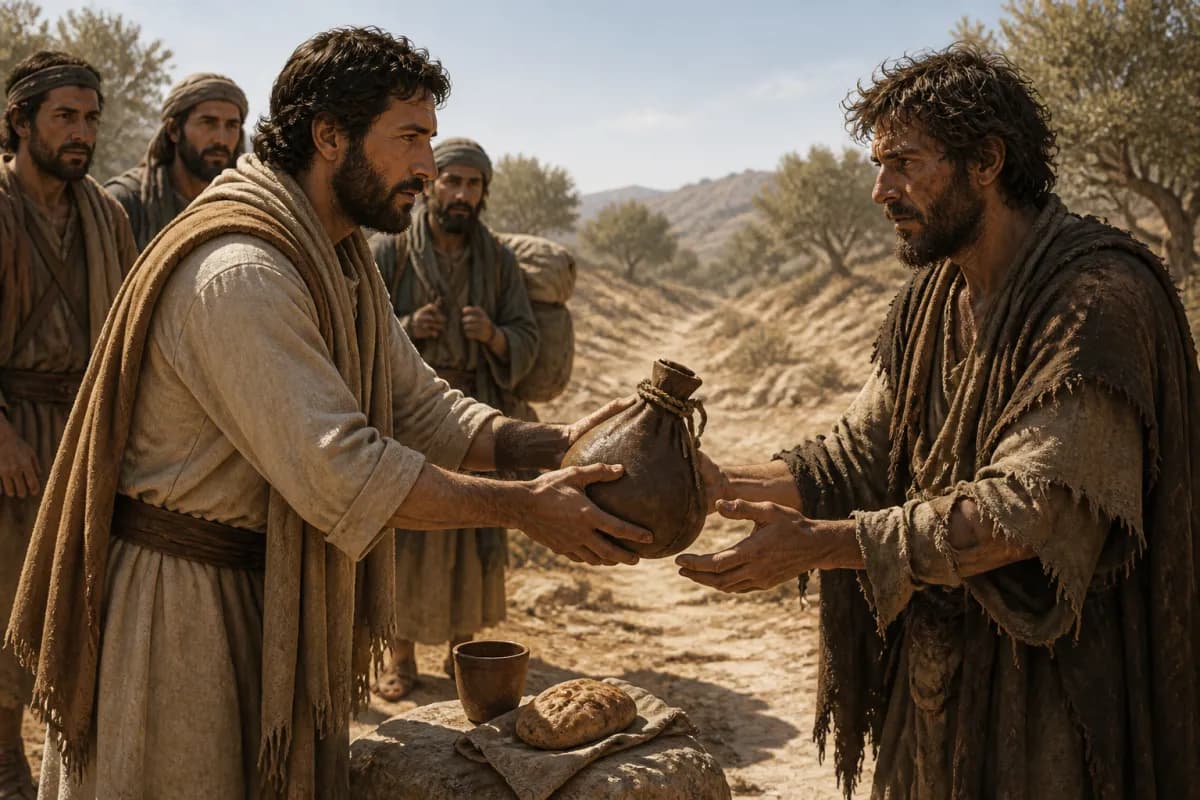
25:21If your enemy is hungry, give him food to eat. If he is thirsty, give him water to drink;
25:22for you will heap coals of fire on his head, and the LORD will reward you.
25:23The north wind produces rain; so a backbiting tongue brings an angry face.
25:24It is better to dwell in the corner of the housetop than to share a house with a contentious woman.
25:25Like cold water to a thirsty soul, so is good news from a far country.
25:26Like a muddied spring and a polluted well, so is a righteous man who gives way before the wicked.
25:27It is not good to eat much honey, nor is it honorable to seek one’s own honor.
25:28Like a city that is broken down and without walls is a man whose spirit is without restraint.
CONTEXTUAL OVERVIEW
Proverbs 25 begins a collection attributed to Solomon and copied by the officials of King Hezekiah. Its first saying holds together divine mystery and human responsibility: God is glorified by concealing a matter, while kings are honored by searching it out. The chapter then shows what such humble searching looks like in public life—do not rush into a dispute, do not exalt yourself before a ruler, and do not reveal a neighbor’s secret.
Speech and self-control dominate the chapter. A word fitly spoken is compared to crafted gold, a gentle tongue can break a bone, a city without walls resembles a person without self-control, and wind without rain resembles someone who boasts of a gift never given. Wisdom values words that fit reality and serve peace rather than words that make the speaker look impressive.
HISTORICAL AND LITERARY CONTEXT
The heading in verse 1 distinguishes this collection from the earlier Solomonic sayings. Hezekiah’s officials preserved and arranged proverbs associated with Solomon, likely for instruction within a later royal setting. The chapter’s references to kings, lawsuits, public honor, and diplomatic-like gifts fit that concern without requiring a specific court incident behind each saying.
Several images depend on familiar ancient life. A city without walls was exposed to attack; snow at harvest was an untimely and damaging anomaly; and coals carried on a head likely describe a tangible provision associated with heat or transport. Verse 22’s meaning should be read with verse 21: the commanded action is concrete kindness to a hungry or thirsty enemy, while the Lord alone handles the moral result.
SECTION-BY-SECTION ANALYSIS
- Verses 1–10 · Proverbs 25:2God’s hidden wisdom calls rulers and neighbors to patient investigation, humility, and truthful handling of disputes.
- Verses 11–20 · Proverbs 25:13Fitting speech, faithful service, and measured desire protect relationships from empty promises, false witness, and careless comfort.
- Verses 21–28 · Proverbs 25:17Practical kindness toward an enemy and disciplined self-control refuse to let anger or gossip govern a person’s life.
CHRIST IN THIS PASSAGE
Proverbs 25 does not directly predict Jesus, but its wisdom of humble speech, patient restraint, and kindness to enemies has a clear fulfillment-pattern in His life. Jesus reveals the Father truly, refuses self-exaltation, and remains faithful when false witnesses and hostile rulers surround Him. He speaks fitting words, yet He will not answer every accusation on the terms of His enemies.
Verses 21–22 make a strong canonical connection to the gospel-shaped enemy-love Jesus commands and embodies. Christ gives Himself for enemies while they are still hostile to God; His people therefore feed, serve, and pray for opponents without pretending that evil is good. This mercy belongs to the kingdom of the King who will finally judge with perfect truth.
REFLECTION
Before entering a conflict, resist the urge to make your case first and fastest. Search the matter carefully, speak only what you can truthfully support, and refuse to expose a neighbor’s confidential weakness for advantage. Ask Jesus to make your words fitting for the actual person and moment rather than merely sharp.
Choose one enemy or difficult person and practice the chapter’s concrete kindness without expectation of control or applause. It may be a needed meal, a fair response, a prayer, or an act that removes an unnecessary burden. Christ’s mercy frees you to love this way while leaving judgment with Him.
Original Hebrew Word Study
Proverbs 25:11
תַּפּוּחַ
tappuach · H8598
Usually translated: apple or fruit
Tappuach names the fruit in the proverb’s picture of a word rightly spoken. Timely speech has beauty and value because it fits the need of the moment.
Follow the Scripture trail
The Glory of Searching, the Discipline of Speech, and Peace with an Enemy in the larger story
The connection: Proverbs 25 trains people to seek truth humbly, govern speech, and show kindness where hostility expects revenge. Jesus reveals God’s wisdom without self-exaltation, loves enemies through His cross, and forms a people whose restraint and mercy bear witness to His kingdom.
Respond to the passage
Bring one tense relationship before Jesus. Refuse gossip or rushed accusation, identify one fitting truthful word, and take one tangible act of kindness that leaves the other person’s response and God’s judgment in His hands.
- How does Proverbs 25:2 join reverence for God with responsibility to investigate matters carefully?
- Why can a fitting word be more valuable than a quick or impressive word?
- What does feeding an enemy require, and what does it leave to the Lord?
Prayer
Lord Jesus, You spoke truth without self-exaltation and loved enemies at great cost. Guard my mouth, strengthen my self-control, and make me a patient witness to Your mercy. Amen.