Passage Study
Faithful Wounds, Daily Attention, and Life Before the Lord
Proverbs 27:1–27:27
Proverbs 27 turns the reader from boasting about tomorrow to faithful attention today. It values a friend who tells the truth, warns against envy and ungoverned anger, and ends with the patient care of flocks. Jesus is the faithful Friend who speaks truth, lays down His life for His sheep, and teaches His people to receive correction and serve one another with steady love.
- In this study
- 27 verses · 5 movements
Proverbs 27
27:1Don’t boast about tomorrow; for you don’t know what a day may bring.
27:2Let another man praise you, and not your own mouth; a stranger, and not your own lips.
27:3A stone is heavy, and sand is a burden; but a fool’s provocation is heavier than both.
27:4Wrath is cruel, and anger is overwhelming; but who is able to stand before jealousy?
27:5Better is open rebuke than hidden love.
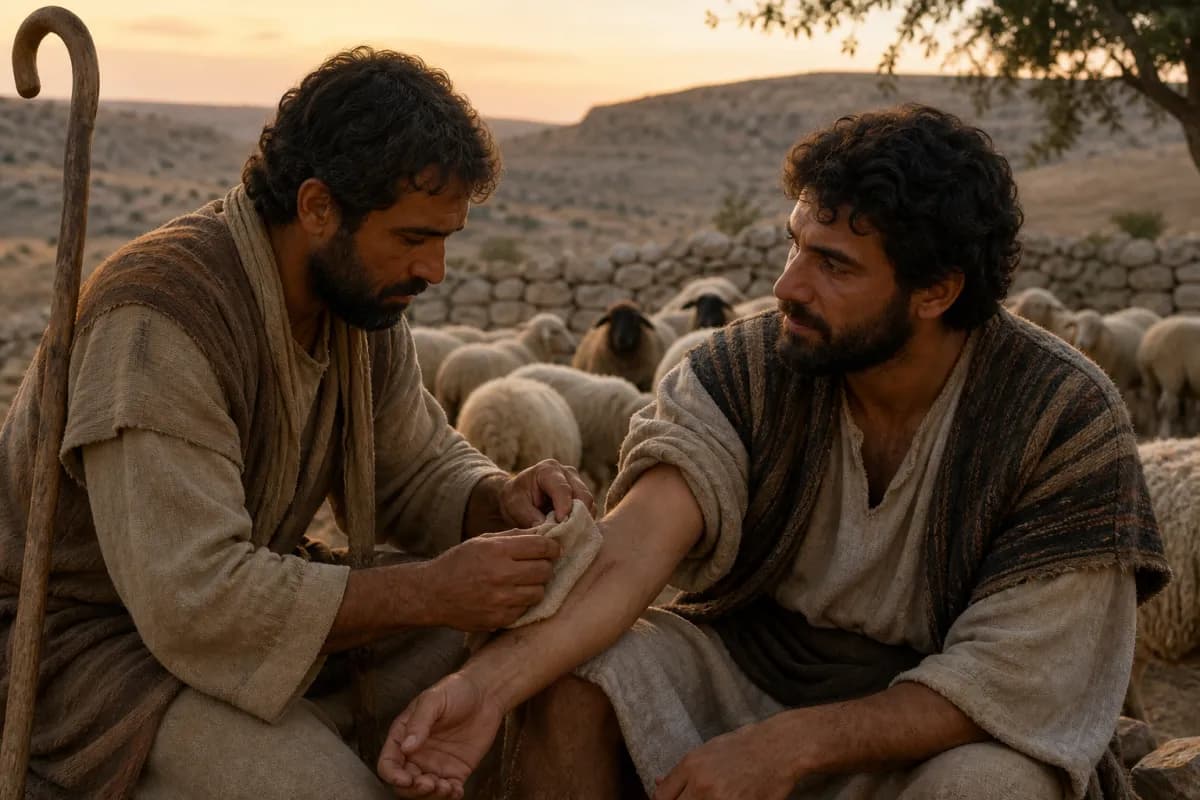
27:6The wounds of a friend are faithful, although the kisses of an enemy are profuse.
27:7A full soul loathes a honeycomb; but to a hungry soul, every bitter thing is sweet.
27:8As a bird that wanders from her nest, so is a man who wanders from his home.
27:9Perfume and incense bring joy to the heart; so does earnest counsel from a man’s friend.
27:10Don’t forsake your friend and your father’s friend. Don’t go to your brother’s house in the day of your disaster. A neighbor who is near is better than a distant brother.
27:11Be wise, my son, and bring joy to my heart, then I can answer my tormentor.
27:12A prudent man sees danger and takes refuge; but the simple pass on, and suffer for it.
27:13Take his garment when he puts up collateral for a stranger. Hold it for a wayward woman!
27:14He who blesses his neighbor with a loud voice early in the morning, it will be taken as a curse by him.
27:15A continual dropping on a rainy day and a contentious wife are alike:
27:16restraining her is like restraining the wind, or like grasping oil in his right hand.
27:17Iron sharpens iron; so a man sharpens his friend’s countenance.
27:18Whoever tends the fig tree shall eat its fruit. He who looks after his master shall be honored.
27:19Like water reflects a face, so a man’s heart reflects the man.
27:20Sheol and Abaddon are never satisfied; and a man’s eyes are never satisfied.
27:21The crucible is for silver, and the furnace for gold; but man is refined by his praise.
27:22Though you grind a fool in a mortar with a pestle along with grain, yet his foolishness will not be removed from him.
27:23Know well the state of your flocks, and pay attention to your herds,
27:24for riches are not forever, nor does the crown endure to all generations.
27:25The hay is removed, and the new growth appears, the grasses of the hills are gathered in.
27:26The lambs are for your clothing, and the goats are the price of a field.
27:27There will be plenty of goats’ milk for your food, for your family’s food, and for the nourishment of your servant girls.
CONTEXTUAL OVERVIEW
Proverbs 27 repeatedly brings the learner back to what can actually be attended to. Tomorrow is unknown, so another person’s praise is safer than self-praise. A friend who wounds faithfully is better than an enemy who multiplies kisses. A person should know the condition of flocks, because riches and crowns do not last forever.
The chapter treats relationships as places of moral formation. Envy can be more threatening than rage, a neighbor may become closer than a distant brother in trouble, and iron sharpens iron. Friendship here is not mere affirmation; it includes presence, candor, mutual usefulness, and the willingness to endure a truthful word.
HISTORICAL AND LITERARY CONTEXT
As part of Proverbs 25–29, this chapter gathers sayings that Hezekiah’s officials copied from Solomonic wisdom. Its rural conclusion assumes a household economy in which sheep and goats supplied clothing, food, and income. The instruction to know the condition of the flock is therefore a call to responsible oversight, not simply a decorative pastoral image.
The “wounds” of a friend in verse 6 are not permission for cruelty or spiritual domination. In the chapter’s setting, they stand opposite an enemy’s abundant kisses: a difficult truth offered in loyal love may hurt, while flattering speech can conceal betrayal. Wisdom asks whether a word seeks the other person’s good before God.
SECTION-BY-SECTION ANALYSIS
- Verses 1–10 · Proverbs 27:1Unknown tomorrow and genuine adversity reveal why humble speech and faithful friendship matter.
- Verses 11–22 · Proverbs 27:4Anger, flattery, quarrels, and stubborn folly damage relationships, while honest counsel gives life.
- Verses 23–27 · Proverbs 27:20Daily knowledge of the flock teaches responsible care for provision that is never permanently secure.
CHRIST IN THIS PASSAGE
Proverbs 27 does not directly predict Jesus, but its picture of a faithful friend reaches a strong fulfillment in Him. Jesus calls His disciples friends and proves His love by laying down His life for them. His words sometimes wound proud self-reliance, as when He calls sinners to repent, but they are the wounds of the One who gives Himself to heal and restore.
The command to know the condition of the flock also has a canonical echo in Jesus the Good Shepherd. Proverbs addresses responsible household care; John 10 explicitly reveals Christ as the Shepherd who knows His own and gives His life for the sheep. His saving care frees Christian leaders and households to attend faithfully to people and responsibilities rather than boasting in unstable security.
REFLECTION
Receive one faithful wound rather than defending yourself immediately. Ask a mature Christian who knows you well whether there is a pattern of pride, anger, or avoidance that you have stopped seeing. Bring the answer to Jesus, whose truth is always joined to His mercy.
Then attend to a real trust placed in your hands: a relationship, work responsibility, financial commitment, child, customer, or church member. Do the next ordinary act of care without claiming tomorrow. Christ the Shepherd sees what you tend and supplies what you need to serve faithfully.
Original Hebrew Word Study
Proverbs 27:23
יָדַע
yada · H3045
Usually translated: to know or pay careful attention
Yada means to know attentively. Wisdom includes close care for the condition of one’s flock and resources rather than careless presumption.
Follow the Scripture trail
Faithful Wounds, Daily Attention, and Life Before the Lord in the larger story
The connection: Proverbs 27 exposes the instability of self-praise, tomorrow, and wealth while commending loyal friendship and vigilant care. Jesus, the Friend who died for His people and the Good Shepherd who knows them, gives the lasting security that equips them for humble faithfulness today.
Respond to the passage
Ask Jesus to help you receive one needed correction without retreating into defensiveness. Then give close, practical attention to one person or responsibility He has placed before you today.
- Why does boasting about tomorrow ignore the limits of creaturely knowledge?
- What makes a friend’s wound faithful rather than cruel?
- How does knowing the condition of the flock challenge careless stewardship?
Prayer
Lord Jesus, faithful Friend and Good Shepherd, keep me from proud predictions and empty praise. Give me courage to receive true correction and patience to care well for what You entrust to me. Amen.