Passage Study
Trusting the Lord with the Whole Heart
Proverbs 3:1–3:35
Proverbs 3 calls a son to keep steadfast love and faithfulness, trust the Lord rather than make his own understanding final, honor God with wealth, and receive the Lord’s discipline as a fatherly act of love. Wisdom is pictured as more precious than silver and as a tree of life. The chapter points to Jesus, who brings believers to the Father and forms them through grace into a life of trusting obedience.
- In this study
- 35 verses · 5 movements
Proverbs 3
3:1My son, don’t forget my teaching, but let your heart keep my commandments,
3:2for they will add to you length of days, years of life, and peace.
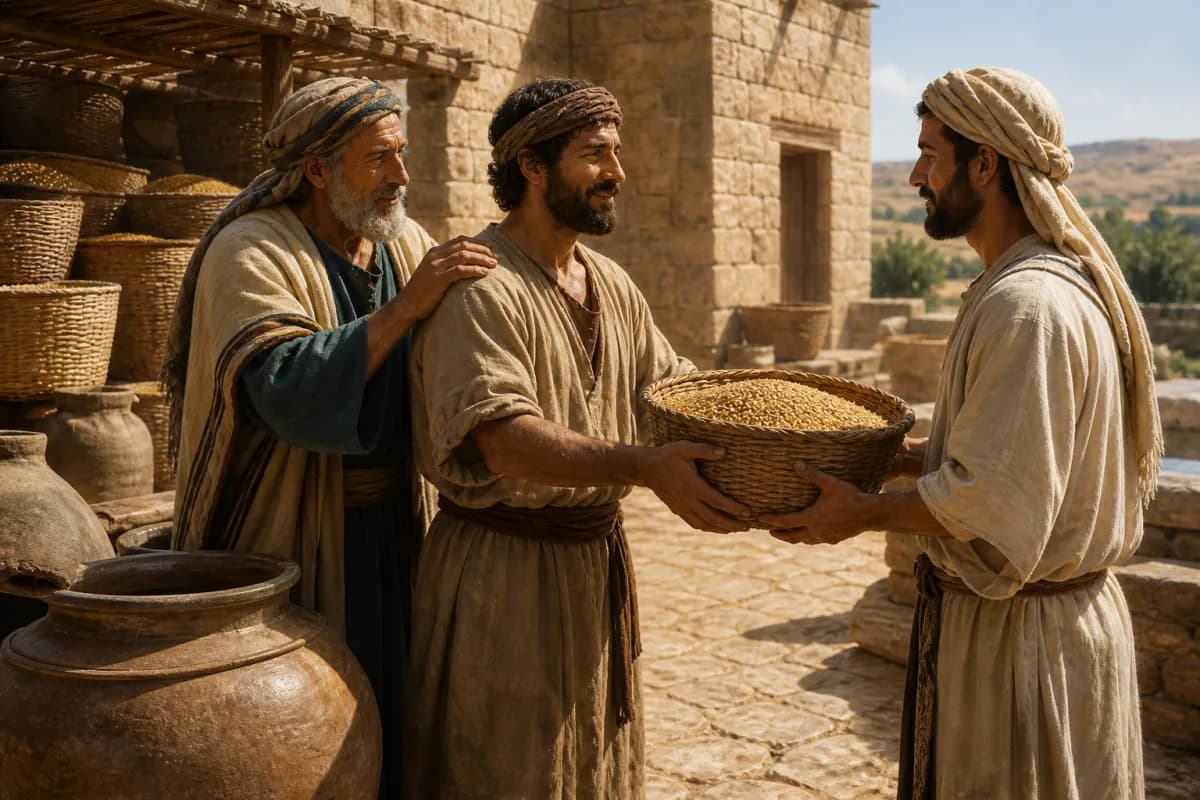
3:3Don’t let kindness and truth forsake you. Bind them around your neck. Write them on the tablet of your heart.
3:4So you will find favor, and good understanding in the sight of God and man.
3:5Trust in the LORD with all your heart, and don’t lean on your own understanding.
3:6In all your ways acknowledge him, and he will make your paths straight.
3:7Don’t be wise in your own eyes. Fear the LORD, and depart from evil.
3:8It will be health to your body, and nourishment to your bones.
3:9Honor the LORD with your substance, with the first fruits of all your increase;
3:10so your barns will be filled with plenty, and your vats will overflow with new wine.
3:11My son, don’t despise the LORD’s discipline, neither be weary of his correction;
3:12for whom the LORD loves, he corrects, even as a father reproves the son in whom he delights.
3:13Happy is the man who finds wisdom, the man who gets understanding.
3:14For her good profit is better than getting silver, and her return is better than fine gold.
3:15She is more precious than rubies. None of the things you can desire are to be compared to her.
3:16Length of days is in her right hand. In her left hand are riches and honor.
3:17Her ways are ways of pleasantness. All her paths are peace.
3:18She is a tree of life to those who lay hold of her. Happy is everyone who retains her.
3:19By wisdom the LORD founded the earth. By understanding, he established the heavens.
3:20By his knowledge, the depths were broken up, and the skies drop down the dew.
3:21My son, let them not depart from your eyes. Keep sound wisdom and discretion,
3:22so they will be life to your soul, and grace for your neck.
3:23Then you shall walk in your way securely. Your foot won’t stumble.
3:24When you lie down, you will not be afraid. Yes, you will lie down, and your sleep will be sweet.
3:25Don’t be afraid of sudden fear, neither of the desolation of the wicked, when it comes;
3:26for the LORD will be your confidence, and will keep your foot from being taken.
3:27Don’t withhold good from those to whom it is due, when it is in the power of your hand to do it.
3:28Don’t say to your neighbor, “Go, and come again; tomorrow I will give it to you,” when you have it by you.
3:29Don’t devise evil against your neighbor, since he dwells securely by you.
3:30Don’t strive with a man without cause, if he has done you no harm.
3:31Don’t envy the man of violence. Choose none of his ways.
3:32For the perverse is an abomination to the LORD, but his friendship is with the upright.
3:33The LORD’s curse is in the house of the wicked, but he blesses the habitation of the righteous.
3:34Surely he mocks the mockers, but he gives grace to the humble.
3:35The wise will inherit glory, but shame will be the promotion of fools.
CONTEXTUAL OVERVIEW
Proverbs 3 moves from the heart’s trust to the body’s habits, the household’s resources, and the neighborhood’s peace. The supplied word note on batach clarifies the central command: to trust is to rely securely on the Lord. “Do not rely on your own insight” does not condemn thought or planning; it rejects treating personal judgment as the final authority over God’s revealed way.
The chapter names ordinary places where trust is tested. A person must keep steadfast love and faithfulness, honor God with produce, receive correction, refuse envy of a violent person, and avoid plotting against a neighbor who lives in safety nearby. Wisdom is not detached spirituality; it is covenant loyalty expressed in money, conflict, discipline, and daily relationships.
HISTORICAL AND LITERARY CONTEXT
Proverbs 3 is another parental address, woven together by commands and reasons. Its promises about health, barns, and paths describe the moral goodness of living under God’s wise order. They should not be used to accuse a sick or poor believer of failing to trust. Other Scriptures, including Job and the Psalms, refuse that simplistic conclusion.
The image of wisdom as a tree of life reaches back to Genesis, where the tree signifies life with God. Here it is a poetic image for the life-giving goodness of embracing wisdom; it is not a claim that an object appears before the reader. The chapter also connects wisdom with creation, saying the Lord founded the earth by wisdom and established the heavens by understanding.
SECTION-BY-SECTION ANALYSIS
- Verses 5–6 · Proverbs 3:5Wholehearted trust submits personal understanding to the Lord and seeks His direction in every ordinary path.
- Verses 11–12 · Proverbs 3:11The father interprets loving discipline as belonging, not abandonment.
- Verses 27–31 · Proverbs 3:31Wisdom refuses delayed good, neighborly betrayal, and envy of people whose strength is violence.
CHRIST IN THIS PASSAGE
Proverbs 3 does not directly predict Jesus, but its father-child pattern and its call to receive the Lord’s discipline prepare readers to understand Christ’s filial obedience. Jesus trusted the Father perfectly, even in suffering, and through His saving work brings believers into God’s family. In Him, discipline is not payment for condemnation; the condemned sinner is forgiven, and the child is formed in love.
The tree-of-life image is a strong canonical echo rather than a one-to-one allegory. Revelation presents the tree of life in God’s final healing world, made possible through the Lamb’s victory. Christ fulfills the chapter’s deepest hope by reconciling people to God and giving the life that wisdom’s paths can only anticipate.
REFLECTION
Trusting the Lord with your whole heart may look less dramatic than expected: asking whether a financial decision honors Him, doing good for a neighbor today rather than delaying it, or receiving a correction without defending every instinct. Bring your “own insight” to Jesus honestly. He does not ask you to stop thinking; He teaches you to stop enthroning yourself.
When hardship comes, do not rush to label it a simple reward or punishment. Ask the Father to use it to form patience and faith while you seek wise care and help. Christ has borne the condemnation of His people, so discipline can be received as the painful but hopeful work of a Father who will not abandon His children.
Original Hebrew Word Study
Proverbs 3:5
בָּטַח
batach · H982
Usually translated: to trust or rely on
Batach means to trust securely. The proverb calls for whole-hearted reliance on the Lord instead of treating personal understanding as final.
Follow the Scripture trail
Trusting the Lord with the Whole Heart in the larger story
The connection: Proverbs 3 teaches trustful, childlike dependence on the Lord and holds out life through wisdom. Jesus, the obedient Son, bears sin’s condemnation and brings believers into the Father’s family, where they are formed by grace for the life God gives.
Respond to the passage
Choose one decision involving money, conflict, or correction and consciously acknowledge the Lord in it before acting. Ask Jesus to replace self-rule with obedient trust and to make your good toward a neighbor prompt rather than postponed.
- What is the difference between using understanding wisely and relying on it as final authority?
- Why does Proverbs 3 place trust, wealth, and discipline near each other?
- How does Christ’s saving work change the way believers receive the Father’s correction?
Prayer
Lord Jesus, keep me from making my own judgment the final word. Teach me to trust the Father, honor Him with what I have, receive His correction, and do timely good to my neighbor. Amen.