Passage Study
Psalm 149: The Holy Joy and Final Justice of God’s People
Psalms 149:1–149:9
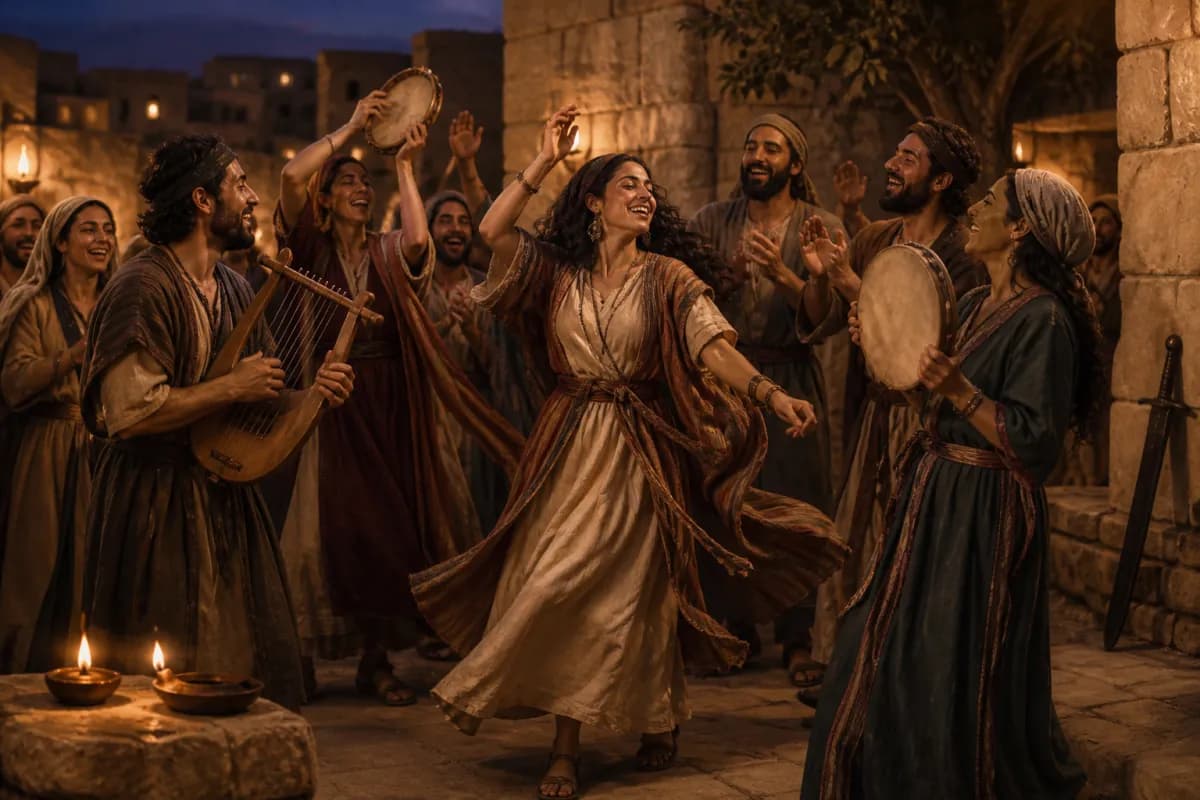
Psalm 149 calls Israel to sing a new song because the Lord delights in His people and adorns the humble with salvation. Dancing, tambourine, lyre, and joyful praise belong to the congregation, yet the psalm’s closing image of swords and judgment places the nations’ rebellion under God’s rule. Jesus saves the humble and will judge evil perfectly, so His church praises, witnesses, and waits without taking final vengeance into its own hands.
- In this study
- 9 verses · 5 movements
Psalms 149
149:1Praise the LORD! Sing to the LORD a new song, his praise in the assembly of the saints.
149:2Let Israel rejoice in him who made them. Let the children of Zion be joyful in their King.
149:3Let them praise his name in the dance! Let them sing praises to him with tambourine and harp!
149:4For the LORD takes pleasure in his people. He crowns the humble with salvation.
149:5Let the saints rejoice in honor. Let them sing for joy on their beds.
149:6May the high praises of God be in their mouths, and a two-edged sword in their hand,
149:7to execute vengeance on the nations, and punishments on the peoples;
149:8to bind their kings with chains, and their nobles with fetters of iron;
149:9to execute on them the written judgment. All his saints have this honor. Praise the LORD!
CONTEXTUAL OVERVIEW
Psalm 149 is a song for the gathered people of God. It begins with a “new song,” then calls Israel to rejoice in its Maker and the children of Zion to rejoice in their King. The immediate reason is not Israel’s military importance: the Lord takes pleasure in His people and adorns the humble with salvation.
The supplied note on chasid, “faithful, godly, or devoted one,” helps identify the singers in verses 5 and 9. These are not a self-appointed elite claiming moral superiority. They are the people who belong to the Lord and receive His saving favor. Their praise, even “on their beds,” reaches into ordinary and vulnerable places rather than only public celebration.
HISTORICAL AND LITERARY CONTEXT
Psalm 149 has no superscription and belongs to the final praise sequence. Its instruments, dancing, and assembly language fit Israel’s corporate worship. The later reference to a two-edged sword and the execution of judgment must be read inside the Old Testament setting, where Israel was at times an instrument of God’s covenant judgment under commands not given to every people or age.
The psalm itself calls the judgment “written,” placing it under God’s revealed authority rather than personal anger. It must not be detached from that framework and turned into permission for Christians to punish enemies or seize political power by force. The New Testament assigns final judgment to the risen Christ and teaches His church to bear witness, suffer faithfully, and leave vengeance to God.
SECTION-BY-SECTION ANALYSIS
- Verses 1–4 · Psalms 149:2Israel sings to its Maker and King because He delights in His people and saves the humble.
- Verses 5–6 · Psalms 149:1The faithful carry joyful praise into their resting places as those who belong to God.
- Verses 6–9 · Psalms 149:9Praise is joined to God’s written judgment against rebellious powers, not to autonomous personal vengeance.
CHRIST IN THIS PASSAGE
Psalm 149’s joy in a saving King reaches its fullest expression in Jesus. He comes humble and lowly, receives sinners who have no claim on God’s favor, and bears their judgment at the cross. Through faith in Him, people are clothed with the salvation Psalm 149 celebrates, so their new song rises from grace rather than ethnic pride or self-made righteousness.
The judgment imagery also belongs to Christ’s mission, but the New Testament locates its final exercise in Him. The risen Jesus will judge the nations with perfect knowledge and righteousness; His church does not wield the sword to compel belief. Until His return, believers overcome by faithful testimony, sacrificial love, prayer, and the word of God, trusting the King who will finally set all wrongs right.
REFLECTION
Receive the psalm’s opening command as permission to rejoice before God with your whole self. If shame or exhaustion has made praise feel artificial, begin with verse 4: the Lord’s pleasure rests on His saving grace toward the humble. Come to Jesus honestly, and let gratitude grow from being received rather than from performing happiness.
Where injustice has made anger feel righteous, let the closing verses relocate final judgment. Name evil truthfully, pursue lawful protection and justice, and refuse contempt or revenge. Jesus does not ask His people to pretend that rebellion is harmless; He asks them to trust His righteous verdict and bear witness to His mercy while there is time to repent.
Original Hebrew Word Study
Psalm 149:5
חָסִיד
chasid · H2623
Usually translated: faithful, godly, or devoted one
Chasid names God’s faithful people. Their praise rises from belonging to the King who delights in and saves the humble.
Follow the Scripture trail
Psalm 149: The Holy Joy and Final Justice of God’s People in the larger story
The connection: Psalm 149 gives God’s humble people a new song because their King saves them, while placing rebellion under His written judgment. Jesus bears judgment for sinners at the cross, clothes the humble with salvation, and will return as the righteous Judge, freeing His church to praise and witness without vengeance.
Respond to the passage
Bring one place where resentment has begun to feel like your only protection before Jesus. Receive His saving mercy, pursue any needed truthful and lawful action, and release the final verdict to the King who judges without error.
- Why is the Lord’s delight in the humble the center of the psalm’s praise?
- How does the phrase “written judgment” limit the use of the sword imagery?
- Why must the church leave final vengeance to the returning Christ?
Prayer
King Jesus, thank You for receiving the humble and clothing sinners with Your salvation. Keep my praise rooted in grace, guard me from revenge, and make me a faithful witness as I wait for Your righteous judgment. Amen.