Passage Study
Psalm 20: The Name of the Lord in the Day of Trouble
Psalms 20:1–20:9
Psalm 20 is a congregation’s prayer for the king as he goes into a day of trouble. They ask the Lord to answer him, remember his offerings, grant the desires shaped by God’s purpose, and give victory. The psalm refuses confidence in chariots and horses, locating Israel’s hope in the Lord’s name. Jesus, the anointed King who saves His people, fulfills this royal hope and turns self-reliance into faith.
- In this study
- 9 verses · 5 movements
Psalms 20
20:1May the LORD answer you in the day of trouble. May the name of the God of Jacob set you up on high,
20:2send you help from the sanctuary, grant you support from Zion,
20:3remember all your offerings, and accept your burned sacrifice. Selah.
20:4May he grant you your heart’s desire, and fulfill all your counsel.
20:5We will triumph in your salvation. In the name of our God, we will set up our banners. May the LORD grant all your requests.
20:6Now I know that the LORD saves his anointed. He will answer him from his holy heaven, with the saving strength of his right hand.
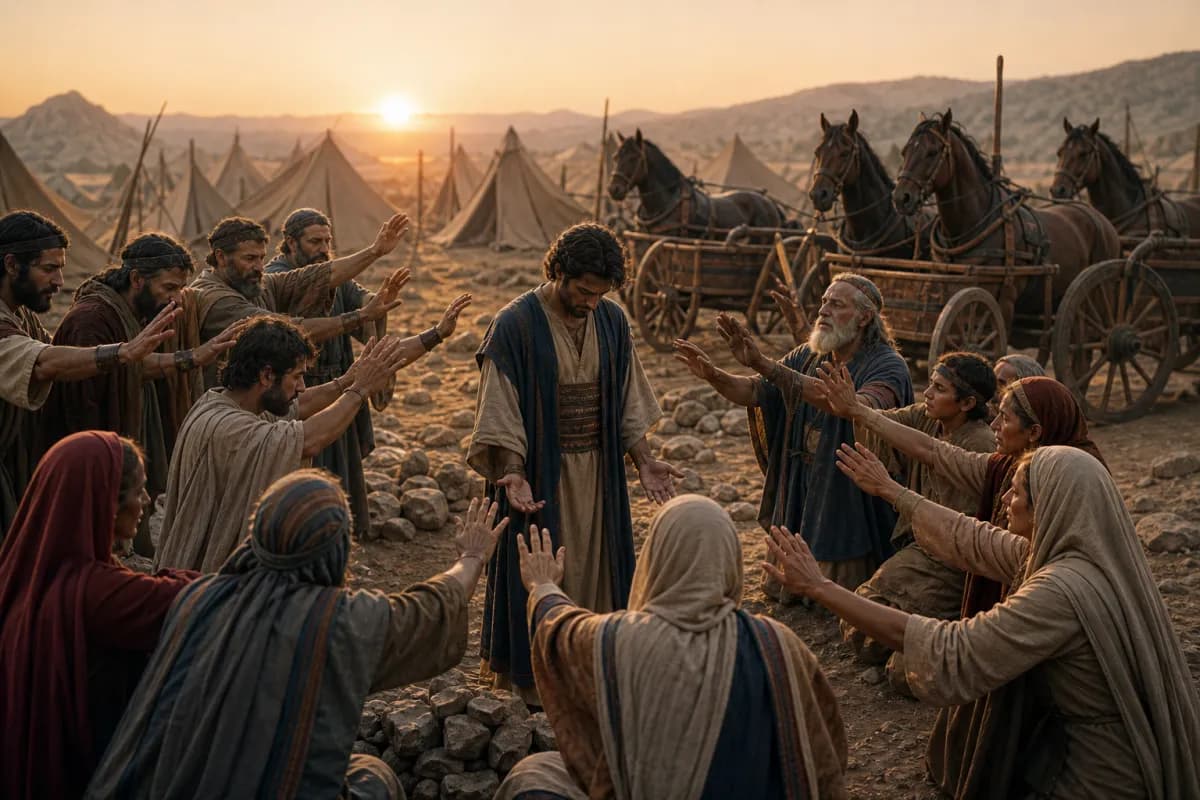
20:7Some trust in chariots, and some in horses, but we trust in the name of the LORD our God.
20:8They are bowed down and fallen, but we rise up, and stand upright.
20:9Save, LORD! Let the King answer us when we call!
CONTEXTUAL OVERVIEW
Psalm 20 lets Israel’s people speak for their king before a military crisis. Their repeated requests—“may the Lord answer,” “may he send,” “may he remember,” and “may he grant”—make clear that the king’s campaign cannot be secured by his office, plans, or troops. The help they seek comes from the God of Jacob, whose name protects him in the day of trouble.
The closing contrast gives the prayer its sharpest edge. Chariots and horses were visible signs of royal strength, yet the worshipers say that they will remember the name of the Lord their God. The supplied word note on *yasha*, “save” or “deliver,” fits verse 6: the Lord saves His anointed king, so rescue is received from God rather than manufactured by military confidence.
HISTORICAL AND LITERARY CONTEXT
This is a royal psalm, likely used when the Davidic king was preparing for battle or another grave public threat. The references to offerings and sacrifice place the king’s cause under covenant worship before the people celebrate any success. The poem does not bless every royal desire; it asks the Lord to fulfill the king’s plans in the context of an appeal made at God’s sanctuary.
Its speakers shift between addressing the king and confessing what the Lord has done for him. That communal voice matters. Israel’s welfare was bound up with the faithfulness of its king, but Psalm 20 keeps the king himself dependent. He is called the Lord’s “anointed,” not an independent savior who can command outcomes by force.
SECTION-BY-SECTION ANALYSIS
- Verses 1–5 · Psalms 20:1The people intercede for the anointed king, asking God to receive his worship and accomplish purposes brought before the sanctuary.
- Verses 6–8 · Psalms 20:7Assurance rests on the Lord’s saving power, while chariots and horses are exposed as inadequate objects of trust.
- Verse 9 · Psalms 20:9The prayer ends by asking the Lord to save the king and answer His people when they call.
CHRIST IN THIS PASSAGE
Psalm 20 is not a prediction of one battle in Jesus’ ministry, but it belongs to the royal hope fulfilled in David’s greater Son. Jesus is God’s Messiah, the Anointed One, whose mission did not advance through chariots, political force, or self-preservation. In His temptation and passion He refused to seize a kingdom by the means earthly rulers trust.
The Father answered the crucified King by raising Him from death and seating Him in heavenly authority. Through Jesus’ saving death, people who have trusted their own strength can be reconciled to God and learn to pray for His kingdom rather than merely for personal success. The psalm’s confidence in the Lord who saves the anointed King reaches its fullest canonical expression in the risen Christ.
REFLECTION
Psalm 20 asks what functions as your chariot or horse when trouble comes: savings, a strong résumé, influence, a plan, a diagnosis, or a person whose approval seems decisive. These may be real gifts and wise means, but they cannot bear the confidence that belongs to God’s name. Bring the actual day of trouble to Jesus without pretending you can secure its outcome.
Pray this psalm for leaders in Christ’s church and for believers facing consequential decisions. Ask that their desires be shaped by God’s purposes, that their work become worship rather than self-display, and that any good result make the Lord’s saving mercy more visible.
Original Hebrew Word Study
Psalm 20:6
יָשַׁע
yasha · H3467
Usually translated: to save or deliver
Yasha means to save. The king’s rescue comes from the Lord, so Israel’s confidence rests in God’s name rather than military strength.
Follow the Scripture trail
Psalm 20: The Name of the Lord in the Day of Trouble in the larger story
The connection: Psalm 20 teaches Israel to seek rescue through the Lord’s anointed king while refusing to make military strength its savior. Jesus is the greater Anointed King, raised after His self-giving death, who saves people from sin and teaches them to rest their hope in God rather than their own power.
Respond to the passage
Name the resource you are most tempted to treat as your security, thank God for any legitimate help it offers, and deliberately entrust the outcome to Jesus, the risen King who alone can save.
- Why do the people ask the Lord to remember the king’s offerings before they ask for victory?
- What is the difference between using wise means and trusting in chariots and horses?
- How does Jesus’ resurrection reshape the psalm’s confidence that God saves His Anointed One?
Prayer
Lord Jesus, You are God’s anointed and risen King. Forgive me for treating visible resources as my savior, shape my plans by Your kingdom, and teach me to remember the Father’s name when trouble comes. Amen.