Passage Study
Psalm 21: Joy in the Strength Given to the King
Psalms 21:1–21:13
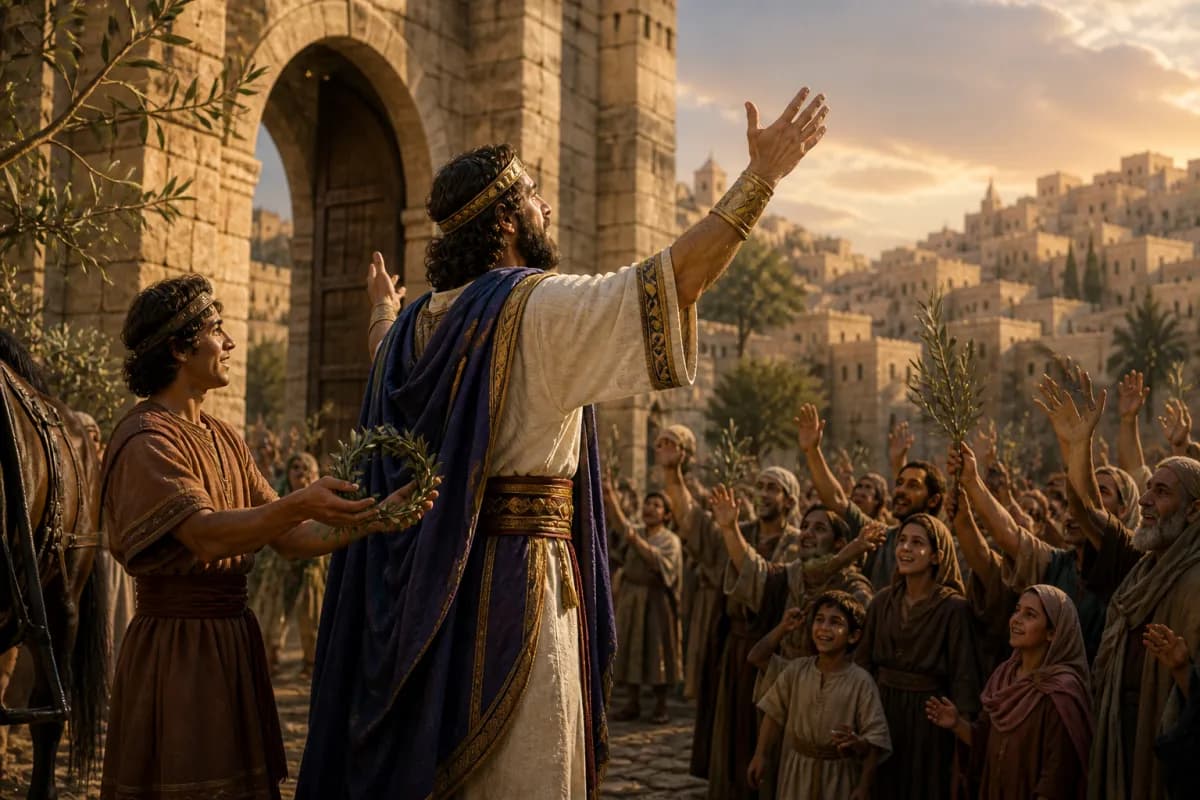
Psalm 21 answers Psalm 20’s plea with praise: the king rejoices because the Lord has given him strength, victory, life, glory, and enduring blessing. The people celebrate God’s faithfulness to His anointed king while also acknowledging that God will confront those who hate Him. Jesus, the risen Son of David, receives everlasting life and reigns with grace and justice for the salvation of His people.
- In this study
- 13 verses · 5 movements
Psalms 21
21:1The king rejoices in your strength, LORD! How greatly he rejoices in your salvation!
21:2You have given him his heart’s desire, and have not withheld the request of his lips. Selah.
21:3For you meet him with the blessings of goodness. You set a crown of fine gold on his head.
21:4He asked life of you and you gave it to him, even length of days forever and ever.
21:5His glory is great in your salvation. You lay honor and majesty on him.
21:6For you make him most blessed forever. You make him glad with joy in your presence.
21:7For the king trusts in the LORD. Through the loving kindness of the Most High, he shall not be moved.
21:8Your hand will find out all of your enemies. Your right hand will find out those who hate you.
21:9You will make them as a fiery furnace in the time of your anger. The LORD will swallow them up in his wrath. The fire shall devour them.
21:10You will destroy their descendants from the earth, their posterity from among the children of men.
21:11For they intended evil against you. They plotted evil against you which cannot succeed.
21:12For you will make them turn their back, when you aim drawn bows at their face.
21:13Be exalted, LORD, in your strength, so we will sing and praise your power.
CONTEXTUAL OVERVIEW
Psalm 21 is a thanksgiving for the king after the prayer of Psalm 20. The first line reverses the direction of attention: the king rejoices in “your strength,” and takes great joy in “your salvation.” What he has received—his heart’s desire, the request of his lips, a crown of pure gold, honor, majesty, and blessing—comes from the Lord before it becomes material for public celebration.
The request for life in verse 4 is especially important. The supplied word note identifies *chayyim* as life, and the poem says God gives the king “length of days forever and ever.” In its immediate royal setting this language celebrates God’s sustaining gift to David’s line; in the Bible’s larger story, it creates a strong canonical horizon toward the Son of David whose resurrection life truly cannot end.
HISTORICAL AND LITERARY CONTEXT
Like Psalm 20, Psalm 21 is a royal psalm. The exact occasion is not named, but its progression from answered petition to victory praise makes it a fitting companion to a king’s deliverance. The words “the king” and “your anointed” in the neighboring psalm locate it within Israel’s covenant hope that the Lord would establish David’s house and rule.
The psalm holds celebration and warning together. Verses 1–7 praise a king who trusts in the Lord’s steadfast love; verses 8–12 say that God will find and judge enemies who persist in hatred. This is not a blank permission for a human ruler’s anger. The focus remains on the Lord’s action against rebellion and on His strength as the final reason for the congregation’s song.
SECTION-BY-SECTION ANALYSIS
- Verses 1–6 · Psalms 21:1The king’s strength, desired victory, crown, life, and honor are all named as gifts given by the Lord.
- Verse 7 · Psalms 21:7The king’s stability rests on trusting the Lord and on the steadfast love of the Most High.
- Verses 8–13 · Psalms 21:8God opposes determined enemies of His rule, and the congregation ends by exalting His strength rather than the king’s achievement.
CHRIST IN THIS PASSAGE
Psalm 21’s royal language finds a strong fulfillment in Jesus, the promised Son of David. The Father gives Him resurrection life, crowns Him with glory and honor, and establishes His reign beyond death. Hebrews applies Psalm 8’s language of glory and honor to Jesus, while the resurrection accounts announce that death did not retain the Messiah who trusted the Father perfectly.
Christ’s kingship also explains the psalm’s sober judgment language. The risen Jesus receives those who turn from rebellion and trust Him because He bore sin’s judgment at the cross. Yet His grace is not moral indifference: He will finally defeat evil that resists His life-giving rule. The king’s joy in God’s salvation becomes gospel joy for those rescued into Christ’s kingdom.
REFLECTION
Psalm 21 corrects the habit of treating strength, longevity, honor, or success as possessions to protect. Whatever stability you have is received. Thank the Father for it, but let the king’s trust teach you to locate your confidence in steadfast love rather than in the gift itself.
Let Christ’s everlasting life steady you when your own strength is limited or your plans feel fragile. Bring the areas where you oppose His rule into the open, receive His forgiveness, and join the psalm’s final movement by making God’s strength—not your achievement—the subject of your praise.
Original Hebrew Word Study
Psalm 21:4
חַיִּים
chayyim · H2416
Usually translated: life
Chayyim means life. The king receives life from God, making royal strength a gift sustained by the Lord rather than a possession seized for himself.
Follow the Scripture trail
Psalm 21: Joy in the Strength Given to the King in the larger story
The connection: Psalm 21 praises the Lord for life, honor, and stability given to Israel’s trusting king. Jesus is the everlasting Son of David: God raised Him from death, exalted Him as King, and through His cross receives sinners into the blessing of His righteous reign.
Respond to the passage
Thank Christ for one strength or honor you have received, then surrender the fear of losing it to Him. Ask Him to make your joy rest in His resurrection life and His steadfast rule.
- Why does Psalm 21 attribute the king’s crown and glory to the Lord rather than to the king himself?
- How does verse 7 define true stability for a ruler?
- Why must Christ’s saving grace and His final judgment be held together in this psalm?
Prayer
Risen King Jesus, all life and honor are gifts from Your Father. Keep me from building my identity on fragile strength, bring my resistance to Your rule into repentance, and fill me with joy in Your everlasting reign. Amen.