Passage Study
Psalm 24: The King of Glory Enters
Psalms 24:1–24:10
Psalm 24 celebrates the Lord as Creator, asks who may enter His holy place, and summons the gates to receive the King of glory. The psalm joins God’s universal ownership with His holy presence: the whole earth is His, yet sinners cannot casually ascend His hill. Jesus, the sinless King and risen Lord, brings His people near through His saving work.
- In this study
- 10 verses · 5 movements
Psalms 24
24:1The earth is the LORD’s, with its fullness; the world, and those who dwell in it.
24:2For he has founded it on the seas, and established it on the floods.
24:3Who may ascend to the LORD’s hill? Who may stand in his holy place?
24:4He who has clean hands and a pure heart; who has not lifted up his soul to falsehood, and has not sworn deceitfully.
24:5He shall receive a blessing from the LORD, righteousness from the God of his salvation.
24:6This is the generation of those who seek Him, who seek your face—even Jacob. Selah.
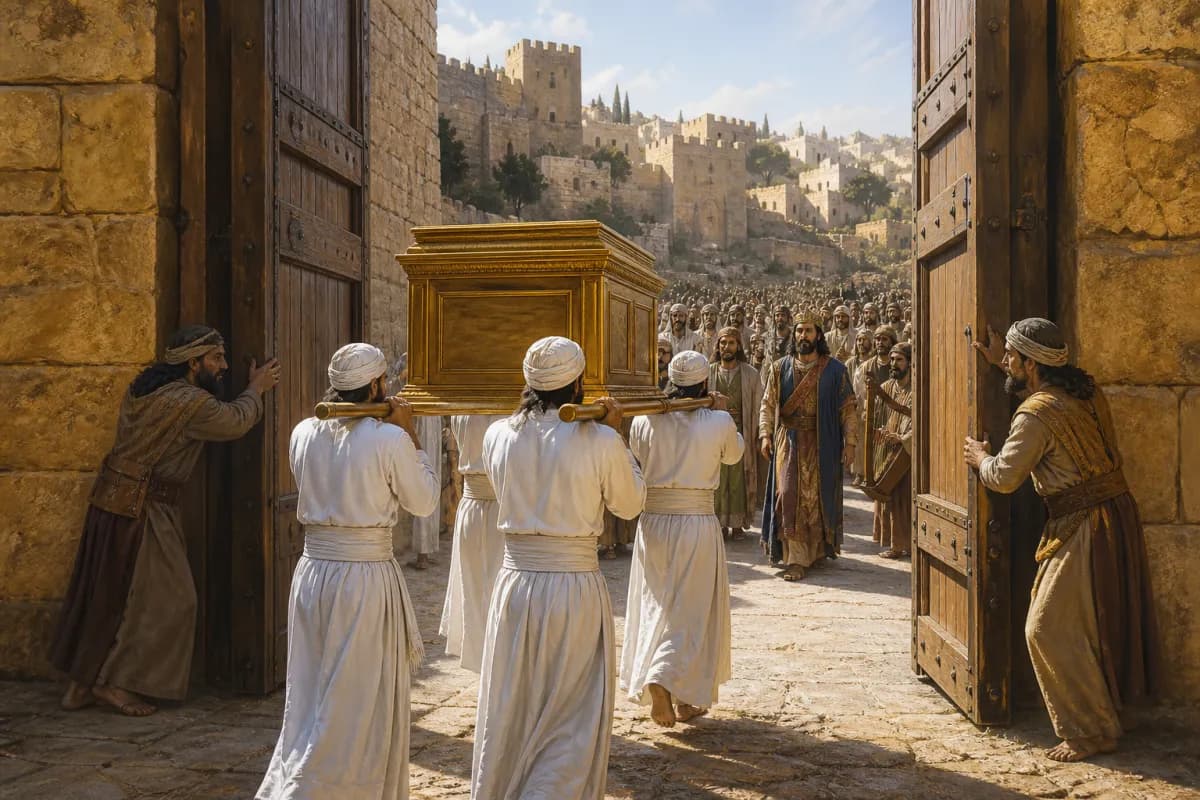
24:7Lift up your heads, you gates! Be lifted up, you everlasting doors, and the King of glory will come in.
24:8Who is the King of glory? The LORD strong and mighty, the LORD mighty in battle.
24:9Lift up your heads, you gates; yes, lift them up, you everlasting doors, and the King of glory will come in.
24:10Who is this King of glory? The LORD of Armies is the King of glory! Selah.
CONTEXTUAL OVERVIEW
Psalm 24 opens far beyond Jerusalem: the earth and all who live in it belong to the Lord because He founded it over the seas. That claim makes every human being accountable to the Creator. The next question narrows the focus: who can ascend the Lord’s hill and stand in His holy place? God’s ownership and God’s holiness belong together.
The final call is dramatic and public. Gates and ancient doors are summoned to lift up their heads for the King of glory. The psalm refuses to treat worship as private self-expression. The warrior-King who enters is the Lord, strong and mighty, and His people meet Him with reverence.
HISTORICAL AND LITERARY CONTEXT
The title attributes the psalm to David. Its references to the holy hill and holy place fit Zion and the place of worship, while the repeated question-and-answer structure sounds suited to a gathered congregation. The text itself does not specify one historical procession, so it is wiser to receive its liturgical movement than to claim a particular event with certainty.
“Clean hands” and a “pure heart” describe whole-person integrity: actions, desires, words, and loyalties come under the Lord’s gaze. The psalm does not say that ritual alone creates fitness for God’s presence. It asks for a life no longer shaped by falsehood or by lifting the self toward what is empty and false.
SECTION-BY-SECTION ANALYSIS
- Verses 1–2 · Psalms 24:3The Creator’s ownership establishes why every person and every place stands under the Lord’s authority.
- Verses 3–6 · Psalms 24:5The holy hill demands integrity in conduct, heart, speech, and worship, while blessing and righteousness come from God.
- Verses 7–10 · Psalms 24:8The repeated acclamation announces the Lord of hosts as the victorious King whose presence must be welcomed.
CHRIST IN THIS PASSAGE
Psalm 24 does not name Jesus directly, but its holy King and its demand for a truly clean worshiper make a strong canonical connection to Him. Jesus alone fulfills the psalm’s description without divided heart, falsehood, or idolatry. As the risen Lord, He is the King of glory whose reign reaches the whole earth that belongs to God.
The psalm also raises the question every sinner must face: who can stand before the holy God? Jesus answers it through His saving mission. He gives Himself for sin and brings those who trust Him into the Father’s presence, not by pretending their hands were clean, but by cleansing and reconciling them through grace.
REFLECTION
Psalm 24 calls for more than a worshipful mood. Ask the Lord to search the places where your hands, desires, speech, or loyalties are divided. Confession is not an attempt to earn access; it is the honest response of someone who comes to God through Jesus rather than through an imagined moral record.
Welcome the King of glory into the rooms of life that are easiest to keep closed: decisions, money, resentments, ambitions, and hidden habits. His authority is good because the Lord of hosts is also the Savior who brings repentant people near.
Original Hebrew Word Study
Psalm 24:3
קֹדֶשׁ
qodesh · H6944
Usually translated: holiness or holy place
Qodesh names holiness. The question of who may ascend the Lord’s holy hill makes worship a matter of cleansed hands, truthful hearts, and God-given access.
Follow the Scripture trail
Psalm 24: The King of Glory Enters in the larger story
The connection: Psalm 24’s Creator-King and holy hill find their clearest fulfillment in Jesus: the sinless Son who is exalted as Lord and who, through His sacrifice, brings unclean people into the presence of the holy God.
Respond to the passage
Bring one divided loyalty into the light before Christ, asking Him to cleanse and redirect it. Then let His kingship shape one concrete decision that you have treated as your own private territory.
- How do verses 1–2 change the way you think about ownership and accountability?
- Why does the psalm join clean hands with a pure heart and truthful speech?
- How does Christ’s sinlessness and saving work answer the question of who may stand before God?
Prayer
King of glory, the earth and my life belong to You. Forgive my divided heart and false loyalties. Thank You that Jesus brings sinners near by grace; make my worship truthful and my obedience glad. Amen.