Passage Study
Psalm 29: The Voice of the Lord over the Waters
Psalms 29:1–29:11
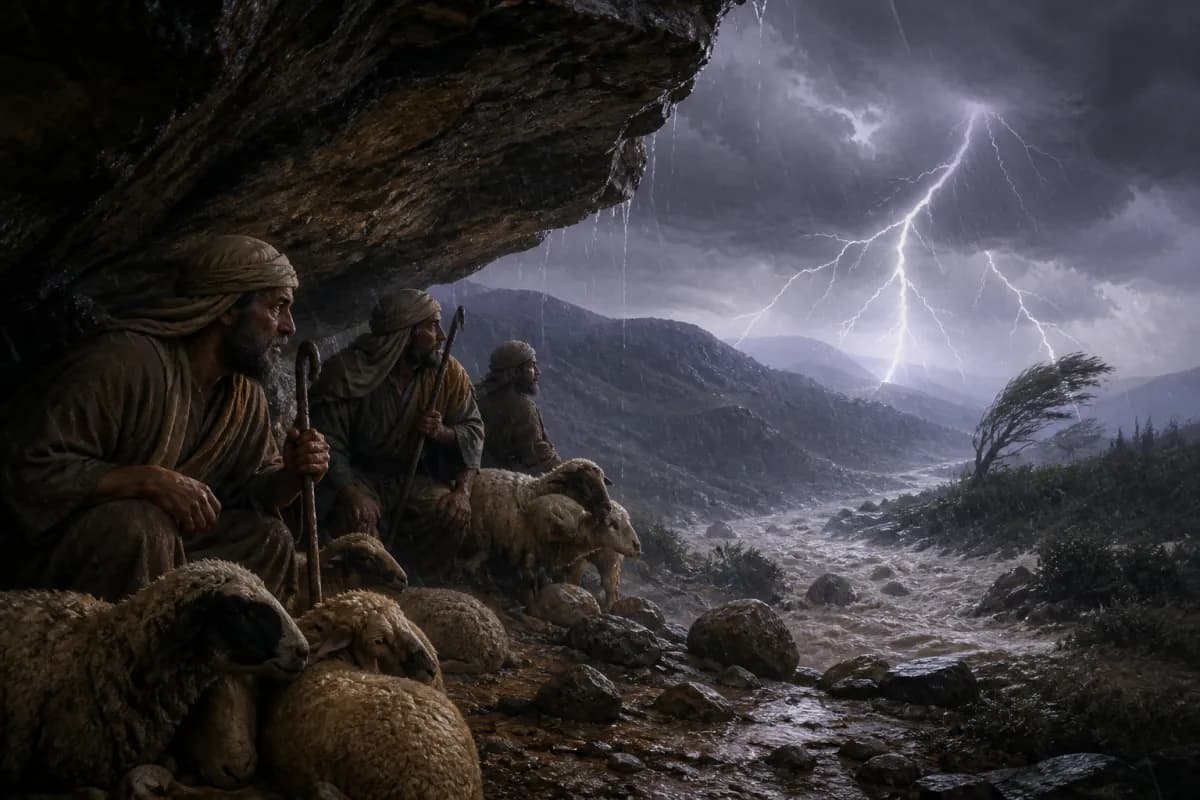
Psalm 29 hears a thunderstorm as a summons to worship the Lord whose voice rules waters, forests, wilderness, and creatures. The God who sits enthroned over the flood is not threatened by creation’s terror; He gives strength and peace to His people. Jesus shares the Father’s authority over wind and waves and gives His reconciled people peace.
- In this study
- 11 verses · 5 movements
Psalms 29
29:1Ascribe to the LORD, you sons of the mighty, ascribe to the LORD glory and strength.
29:2Ascribe to the LORD the glory due to his name. Worship the LORD in holy array.
29:3The LORD’s voice is on the waters. The God of glory thunders, even the LORD on many waters.
29:4The LORD’s voice is powerful. The LORD’s voice is full of majesty.
29:5The LORD’s voice breaks the cedars. Yes, the LORD breaks in pieces the cedars of Lebanon.
29:6He makes them also to skip like a calf; Lebanon and Sirion like a young, wild ox.
29:7The LORD’s voice strikes with flashes of lightning.
29:8The LORD’s voice shakes the wilderness. The LORD shakes the wilderness of Kadesh.
29:9The LORD’s voice makes the deer calve, and strips the forests bare. In his temple everything says, “Glory!”
29:10The LORD sat enthroned at the Flood. Yes, the LORD sits as King forever.
29:11The LORD will give strength to his people. The LORD will bless his people with peace.
CONTEXTUAL OVERVIEW
Psalm 29 does not ask the reader to imagine an illustrated storm scene. It uses the sound and force of a storm to confess what creation itself declares: the Lord’s voice is powerful, majestic, and uncontested. The repeated phrase “the voice of the Lord” carries the poem from the waters through Lebanon and Sirion to the wilderness of Kadesh.
The psalm begins with worship in heaven and ends with blessing on earth. Those addressed as heavenly beings are called to ascribe glory to the Lord, while God’s people receive strength and peace from the King who rules over forces no human can command. The terrifying middle is therefore framed by worship and gift.
HISTORICAL AND LITERARY CONTEXT
Psalm 29 is a hymn of divine kingship. Its references to the waters, Lebanon’s cedars, and the wilderness of Kadesh trace a broad sweep of places associated with overwhelming natural power. The poem praises the Lord of Israel as ruler of all creation, not a regional deity limited to the sanctuary in Jerusalem.
The supplied word note explains qol as “voice” or “sound.” In the psalm, the word does not reduce God to an impersonal noise; it identifies the storm’s force as a witness to the personal Lord’s authority. Verse 10 reaches back to the flood, saying that the Lord sits enthroned over it, so chaotic waters never outrank His kingship.
SECTION-BY-SECTION ANALYSIS
- Verses 1–2 · Psalms 29:2The heavenly court is summoned to recognize the Lord’s glory and worship Him in holy splendor.
- Verses 3–9 · Psalms 29:3The repeated voice of the Lord rules waters, mighty trees, mountains, wilderness, and living creatures.
- Verses 10–11 · Psalms 29:10The King enthroned over the flood gives strength and peace to His people.
CHRIST IN THIS PASSAGE
Psalm 29 does not identify the Lord’s voice with Jesus in a direct prediction. Its strongest Christological connection comes through the Gospels, where Jesus speaks to wind and sea and they obey Him. The disciples ask who He is because authority over chaotic waters belongs to the God Psalm 29 praises; Jesus’ command reveals His divine authority, not merely unusual spiritual power.
The peace at the psalm’s close reaches deeper than a calm weather report. Through His death, Jesus makes peace between sinners and God, and through His risen reign He strengthens people who still live in a storm-tossed world. The King over the flood gives His people a peace grounded in His rule and reconciliation.
REFLECTION
Psalm 29 can steady you when events feel larger than your ability to manage them. Name the actual force that has frightened you—a diagnosis, a conflict, a financial loss, or a disaster—and remember that it does not stand outside the reign of the Lord. God’s sovereignty is not emotional distance; the King gives strength to His people.
Receive Christ’s peace as more than a temporary feeling. In the next fearful moment, tell Him what you cannot control and ask for strength to obey Him in it. Let His authority over the waters move you toward worship rather than toward panic or a false need to control every outcome.
Original Hebrew Word Study
Psalm 29:3
קוֹל
qol · H6963
Usually translated: voice or sound
Qol means voice. The storm is heard as the Lord’s voice, declaring His power over waters, wilderness, and the fearful forces of creation.
Follow the Scripture trail
Psalm 29: The Voice of the Lord over the Waters in the larger story
The connection: Psalm 29 celebrates the Lord’s unmatched rule over waters and wilderness. Jesus displays that same divine authority when He commands the storm, and by His cross and resurrection He gives God’s people strength and peace with the Father.
Respond to the passage
Name one situation you cannot control before Jesus. Worship Him as the King over it, ask for the strength to obey Him today, and receive the peace He secured through reconciliation with God.
- Why does the psalm repeat “the voice of the Lord” so often?
- How does the flood statement keep the storm imagery from becoming only a display of power?
- What does Jesus calming the sea reveal about His identity and His gift of peace?
Prayer
Lord Jesus, You rule over every force that frightens me. Give me strength where I am weak and keep my heart in the peace You won through Your cross. Teach me to answer Your majesty with worship. Amen.