Passage Study
Psalm 31: Into Your Hand I Commit My Spirit
Psalms 31:1–31:24
Psalm 31 gathers David’s pleas for refuge amid conspiracy, physical distress, slander, and danger into a confession that the Lord is his rock and faithful God. He entrusts his spirit to God’s hand and ends by calling all who hope in the Lord to courage. Jesus speaks this trust from the cross and, through His death and resurrection, gives persecuted and frightened people a secure hope.
- In this study
- 24 verses · 5 movements
Psalms 31
31:1In you, LORD, I take refuge. Let me never be disappointed. Deliver me in your righteousness.
31:2Bow down your ear to me. Deliver me speedily. Be to me a strong rock, a house of defense to save me.
31:3For you are my rock and my fortress, therefore for your name’s sake lead me and guide me.
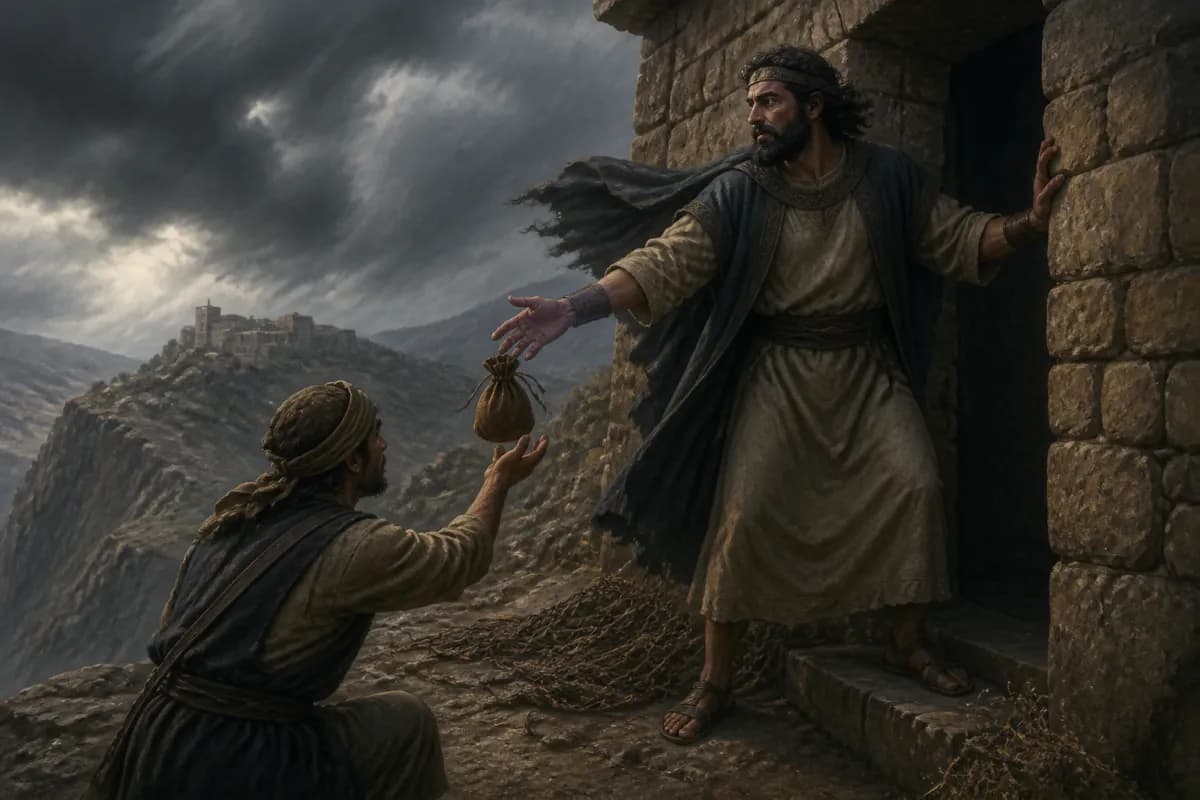
31:4Pluck me out of the net that they have laid secretly for me, for you are my stronghold.
31:5Into your hand I commend my spirit. You redeem me, LORD, God of truth.
31:6I hate those who regard lying vanities, but I trust in the LORD.
31:7I will be glad and rejoice in your loving kindness, for you have seen my affliction. You have known my soul in adversities.
31:8You have not shut me up into the hand of the enemy. You have set my feet in a large place.
31:9Have mercy on me, LORD, for I am in distress. My eye, my soul, and my body waste away with grief.
31:10For my life is spent with sorrow, my years with sighing. My strength fails because of my iniquity. My bones are wasted away.
31:11Because of all my adversaries I have become utterly contemptible to my neighbors, a horror to my acquaintances. Those who saw me on the street fled from me.
31:12I am forgotten from their hearts like a dead man. I am like broken pottery.
31:13For I have heard the slander of many, terror on every side, while they conspire together against me, they plot to take away my life.
31:14But I trust in you, LORD. I said, “You are my God.”
31:15My times are in your hand. Deliver me from the hand of my enemies, and from those who persecute me.
31:16Make your face to shine on your servant. Save me in your loving kindness.
31:17Let me not be disappointed, LORD, for I have called on you. Let the wicked be disappointed. Let them be silent in Sheol.
31:18Let the lying lips be mute, which speak against the righteous insolently, with pride and contempt.
31:19Oh how great is your goodness, which you have laid up for those who fear you, which you have worked for those who take refuge in you, before the sons of men!
31:20In the shelter of your presence you will hide them from the plotting of man. You will keep them secretly in a dwelling away from the strife of tongues.
31:21Praise be to the LORD, for he has shown me his marvelous loving kindness in a strong city.
31:22As for me, I said in my haste, “I am cut off from before your eyes.” Nevertheless you heard the voice of my petitions when I cried to you.
31:23Oh love the LORD, all you his saints! The LORD preserves the faithful, and fully recompenses him who behaves arrogantly.
31:24Be strong, and let your heart take courage, all you who hope in the LORD.
CONTEXTUAL OVERVIEW
Psalm 31 begins with refuge and reaches its sharpest point in the sentence, “Into your hand I commit my spirit.” David is surrounded by snares, hostile whispers, social isolation, and grief that has affected his strength. Yet he addresses God as rock, fortress, and faithful God, placing his life where no enemy can finally possess it.
The psalm’s final exhortation is important because it prevents David’s suffering from remaining private. God has displayed steadfast love in a besieged city, heard a cry of distress, and preserved the faithful. Therefore all who hope in the Lord are called to love Him, be strong, and take courage.
HISTORICAL AND LITERARY CONTEXT
This Davidic lament moves between confident trust, vivid complaint, and public thanksgiving. No single historical episode is identified, and the phrases may gather more than one experience of danger. That literary breadth gives worshipers language for threats that are physical, relational, and inward at the same time.
The supplied word note for chazaq, “be strong” or “strengthen,” clarifies the final charge to those who hope in the Lord. It is not a command to create courage by denial. The psalm has just shown courage as a response to God’s faithful care when a person’s times feel exposed and beyond personal control.
SECTION-BY-SECTION ANALYSIS
- Verses 1–8 · Psalms 31:5David entrusts his spirit to the faithful God who sees affliction and pulls His servant from hidden nets.
- Verses 9–18 · Psalms 31:15Grief, slander, and conspiracy press David, but he places his changing times in God’s hand.
- Verses 19–24 · Psalms 31:24Remembered steadfast love becomes public praise and courage for all who hope in the Lord.
CHRIST IN THIS PASSAGE
Jesus quotes Psalm 31’s central act of trust as He dies: “Father, into your hands I commend my spirit.” David’s words were a plea from danger; Jesus speaks them at the cross after bearing the sin of the world. The connection is explicit in Luke, showing that Christ enters death trusting the Father rather than escaping the suffering His saving mission required.
The resurrection confirms that the Father did not abandon the Son to death. Because Jesus gave Himself into the Father’s hands and was raised, believers can entrust their vulnerable lives to Him without claiming that every threat will disappear. His faithful death and victory make Psalm 31’s refuge a hope that reaches beyond persecution, grief, and the grave.
REFLECTION
Psalm 31 is especially suited for a time when your body is weary, people misunderstand you, or a threat has made you feel forgotten. Tell Jesus the details David names: the fear, the isolation, the voices, and the weakening strength. Then speak the psalm’s confession aloud: your times are in God’s hand, even when they are not in yours.
Use “into your hand I commit my spirit” as an act of faith rather than resignation. Because Jesus has died and risen, you can place a specific loss or outcome with the Father and continue in courageous love. Ask Christ to make your endurance a witness that hope rests in His faithfulness, not in your ability to control the day.
Original Hebrew Word Study
Psalm 31:24
חָזַק
chazaq · H2388
Usually translated: to be strong or strengthen
Chazaq means to be strong. Hope in the Lord strengthens the heart when danger has made courage feel impossible.
Follow the Scripture trail
Psalm 31: Into Your Hand I Commit My Spirit in the larger story
The connection: David entrusts his endangered life to the faithful God. Jesus speaks that trust from the cross, bears sin’s judgment, and rises again, so His people can place their times and their final future in the Father’s hands.
Respond to the passage
Tell Jesus one threat that has made you feel trapped or forgotten. Commit that part of your life to His Father, ask for strength to keep loving and obeying, and let Christ’s resurrection keep your hope from ending at the visible crisis.
- What forms of danger and distress does David name in this psalm?
- Why is “my times are in your hand” a stronger confession than pretending life is under control?
- How does Jesus’ use of verse 5 change the way Christians can pray it?
Prayer
Lord Jesus, into Your Father’s hands I commit my spirit and the circumstances I cannot master. Be my rock in fear, keep me faithful amid grief and slander, and make me courageous because You died and rose again. Amen.