Passage Study
Psalm 42: Thirsting for God in Exile
Psalms 42:1–42:11
Psalm 42 gives voice to a worshiper far from God’s house, mocked by enemies, overwhelmed by tears, and repeatedly speaking hope to his own downcast soul. He remembers leading worshiping crowds and longs to appear before God again. Jesus meets this longing as the living water who brings estranged sinners to the Father and sustains His people when worship feels distant.
- In this study
- 11 verses · 5 movements
Psalms 42
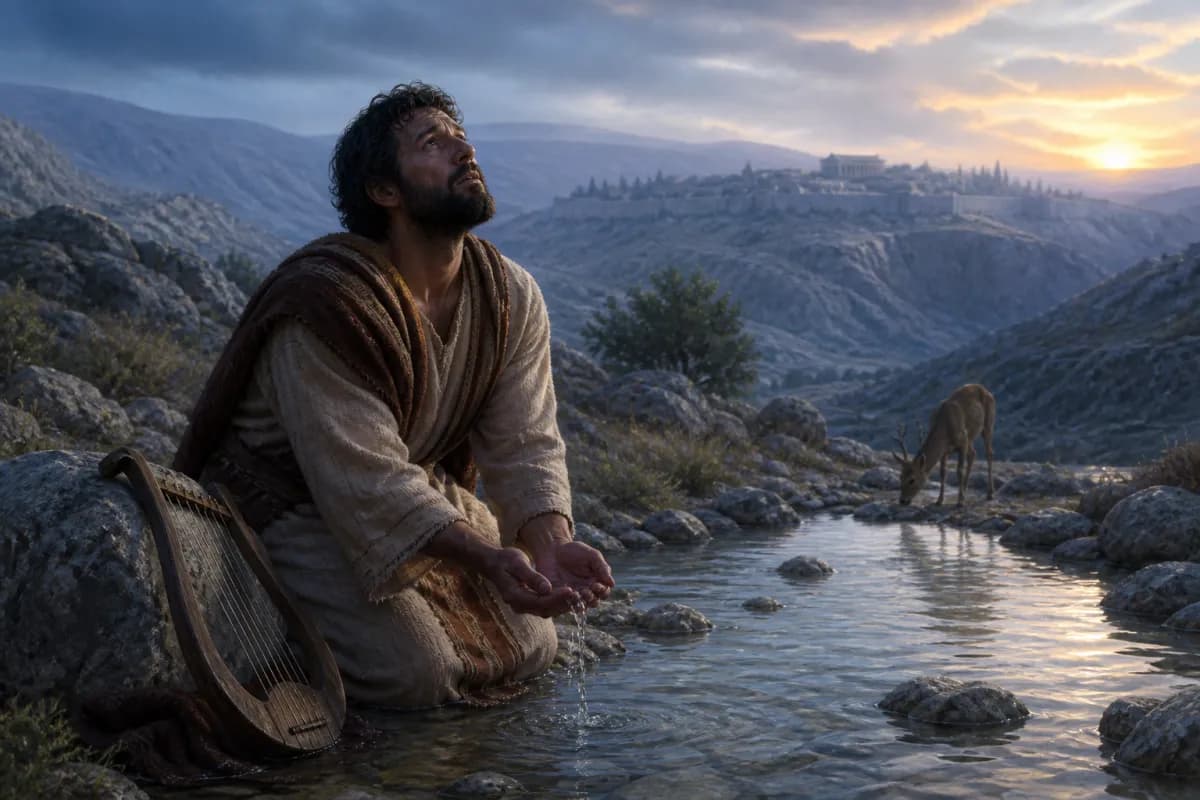
42:1As the deer pants for the water brooks, so my soul pants after you, God.
42:2My soul thirsts for God, for the living God. When shall I come and appear before God?
42:3My tears have been my food day and night, while they continually ask me, “Where is your God?”
42:4These things I remember, and pour out my soul within me, how I used to go with the crowd, and led them to God’s house, with the voice of joy and praise, a multitude keeping a holy day.
42:5Why are you in despair, my soul? Why are you disturbed within me? Hope in God! For I shall still praise him for the saving help of his presence.
42:6My God, my soul is in despair within me. Therefore I remember you from the land of the Jordan, the heights of Hermon, from the hill Mizar.
42:7Deep calls to deep at the noise of your waterfalls. All your waves and your billows have swept over me.
42:8The LORD will command his loving kindness in the daytime. In the night his song shall be with me: a prayer to the God of my life.
42:9I will ask God, my rock, “Why have you forgotten me? Why do I go mourning because of the oppression of the enemy?”
42:10As with a sword in my bones, my adversaries reproach me, while they continually ask me, “Where is your God?”
42:11Why are you in despair, my soul? Why are you disturbed within me? Hope in God! For I shall still praise him, the saving help of my countenance, and my God.
CONTEXTUAL OVERVIEW
Psalm 42 opens with thirst, not boredom. As a deer searches for flowing water, the singer longs for “the living God” and asks when he may again appear before God. His tears have been his food while opponents repeatedly ask, “Where is your God?” The question attacks both his suffering and his confidence that God is present.
The speaker remembers going with the multitude to God’s house, leading songs and thanksgiving in a festival crowd. That memory is painful because he is now away from that gathered worship. Still, the refrain refuses to let despair speak alone: “Hope in God; for I shall again praise him.” The psalm models a soul that argues from God’s character against its own collapse.
HISTORICAL AND LITERARY CONTEXT
Psalm 42 is attributed to the Korahites, a guild associated with Israel’s worship. The references to the land of Jordan, Hermon, and Mount Mizar suggest distance from Zion, but the exact occasion remains unspecified. It may reflect exile, displacement, or another separation from the sanctuary; the text gives no warrant for turning that possibility into a settled historical claim.
The psalm’s repeated refrain also appears in Psalm 43, and many readers recognize a close literary pairing between the two. Here the prayer moves between direct address to God, self-address, memory, and complaint. Its faith is not emotional ease. The singer keeps bringing his thirst and confusion to the God he cannot yet see clearly.
SECTION-BY-SECTION ANALYSIS
- Verses 1–4 · Psalms 42:2Thirst for the living God is intensified by tears, hostile questions, and remembered fellowship in worship.
- Verses 5–8 · Psalms 42:5The refrain answers despair, while the waves describe a sorrow that still remains under God’s sovereign hand.
- Verses 9–11 · Psalms 42:11The singer does not hide his complaint but returns to hope in the God he calls his help.
CHRIST IN THIS PASSAGE
Psalm 42 is not a direct prophecy of Jesus, but its longing for the living God reaches a central gospel need. Sin estranges people from the God for whom they were made; no change of scenery can finally satisfy that thirst. Jesus offers living water and brings people into a reconciled relationship with the Father through His saving death and resurrection.
Jesus also knows rejection, lament, and the experience of hostile voices. He does not scold afflicted people for every downcast moment. In Him, believers can bring their questions to God with honesty and receive a hope stronger than mood: the risen Christ will bring His people into the full joy of God’s presence.
REFLECTION
When tears, isolation, or an accusing question make God feel distant, Psalm 42 gives a faithful script. Speak to your soul with the truth you may not presently feel: hope in God. This is not self-deception; it is resistance to despair based on the God whose steadfast love remains active through the night.
Do not confuse thirst for God with spiritual failure. Bring it to Jesus. If you are separated from worshiping community by grief, illness, or distance, take one deliberate step toward prayer, Scripture, or a trusted believer who can help you remember God’s faithfulness when your own voice is weak.
Original Hebrew Word Study
Psalm 42:1
נֶפֶשׁ
nephesh · H5315
Usually translated: life, self, or whole person
Nephesh names the whole living self. The psalmist’s thirst for God reaches beneath mood into the deepest need of a person made to live before Him.
Follow the Scripture trail
Psalm 42: Thirsting for God in Exile in the larger story
The connection: The thirst of Psalm 42 exposes humanity’s deepest need for the living God. Jesus fulfills that need by reconciling sinners to the Father and giving living water, while His resurrection guarantees that longing believers will finally dwell with God without tears or exile.
Respond to the passage
Name the question or grief that has made your soul feel downcast, then answer it aloud with the psalm’s refrain. Come to Jesus in prayer, and contact one believer who can help you remain connected to the worship and hope you remember.
- What does the deer’s thirst reveal about what the singer most needs?
- How does the refrain differ from simply denying sadness or telling yourself to feel better?
- Why does Jesus’ promise of living water speak to the particular longing of Psalm 42?
Prayer
Living God, my soul thirsts for You. When grief and doubt drown out praise, hold me fast through Jesus and teach me again to hope in You. Let Your steadfast love meet me in the night until I praise You with joy in Your presence. Amen.