Passage Study
Psalm 45: The Royal Bridegroom Whose Throne Is Forever
Psalms 45:1–45:17
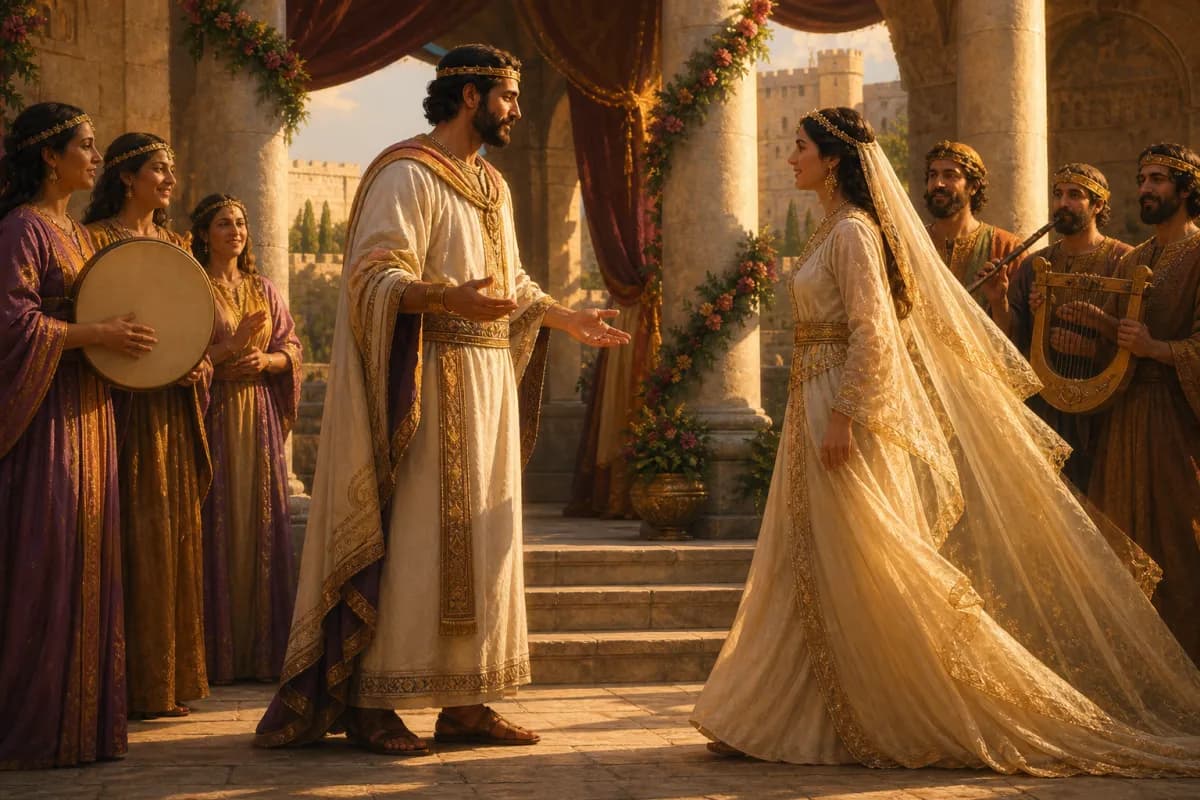
Psalm 45 celebrates a Davidic king whose beauty is joined to truth, humility, righteousness, and an enduring throne, then rejoices in his marriage and offspring. The poem was first a royal wedding song, yet Hebrews rightly hears its language reaching beyond every temporary king to Jesus, the Son whose righteous reign and saving love endure forever.
- In this study
- 17 verses · 5 movements
Psalms 45
45:1My heart overflows with a noble theme. I recite my verses for the king. My tongue is like the pen of a skillful writer.
45:2You are the most excellent of the sons of men. Grace has anointed your lips, therefore God has blessed you forever.
45:3Strap your sword on your thigh, O mighty one, in your splendor and your majesty.
45:4In your majesty ride on victoriously on behalf of truth, humility, and righteousness. Let your right hand display awesome deeds.
45:5Your arrows are sharp. The nations fall under you, with arrows in the heart of the king’s enemies.
45:6Your throne, God, is forever and ever. A scepter of equity is the scepter of your kingdom.
45:7You have loved righteousness, and hated wickedness. Therefore God, your God, has anointed you with the oil of gladness above your fellows.
45:8All your garments smell like myrrh, aloes, and cassia. Out of ivory palaces stringed instruments have made you glad.
45:9Kings’ daughters are among your honorable women. At your right hand the queen stands in gold of Ophir.
45:10Listen, daughter, consider, and turn your ear. Forget your own people, and also your father’s house.
45:11So the king will desire your beauty, honor him, for he is your lord.
45:12The daughter of Tyre comes with a gift. The rich among the people entreat your favor.
45:13The princess inside is all glorious. Her clothing is interwoven with gold.
45:14She shall be led to the king in embroidered work. The virgins, her companions who follow her, shall be brought to you.
45:15With gladness and rejoicing they shall be led. They shall enter into the king’s palace.
45:16Your sons will take the place of your fathers. You shall make them princes in all the earth.
45:17I will make your name to be remembered in all generations. Therefore the peoples shall give you thanks forever and ever.
CONTEXTUAL OVERVIEW
Psalm 45 is introduced as a love song for the king, not as a private devotional reflection. Its poet addresses the royal groom directly, admiring his speech, his sword, his cause of truth and humility, and his throne. The supplied note on yaphah, “beautiful” or “fair,” matters because the king’s splendor is immediately joined to moral excellence rather than mere appearance.
The second half turns to the bride. She is told to leave her people and father’s house, honor the king, and enter the palace with gladness. The song celebrates a real covenantal joy within Israel’s royal life, while its unusually expansive language about the king’s throne and name opens a canonical question: which son of David can finally bear such praise?
HISTORICAL AND LITERARY CONTEXT
This is a royal wedding psalm, probably composed for a Davidic king and his bride. It uses courtly language that can sound extravagant to modern readers, yet its political and marital imagery belongs to the public world of ancient kingship. The precise king and wedding cannot be identified from the psalm alone, so it is wiser to hear its stated claims than to attach them confidently to one coronation.
The poem connects kingship to justice. The ruler is urged to ride for truth, humility, and righteousness; his scepter is a scepter of equity. That moral frame prevents Psalm 45 from becoming flattery for raw power. Israel’s king was accountable to the Lord, and the promise of an everlasting Davidic throne created hope for a faithful ruler greater than the failures of Israel’s historical kings.
SECTION-BY-SECTION ANALYSIS
- Verses 1–9 · Psalms 45:1The king is praised for gracious speech, righteous warfare, an equitable scepter, and enduring honor.
- Verses 10–15 · Psalms 45:11The bride leaves her former household, honors her lord, and enters the palace in royal joy.
- Verses 16–17 · Psalms 45:17The song blesses the king’s descendants and anticipates a name remembered among the peoples.
CHRIST IN THIS PASSAGE
Psalm 45 first honors a Davidic wedding, but the New Testament gives its royal language a specific Christological use. Hebrews applies the words about the throne, the scepter of righteousness, and the anointing to the Son. This is more than a loose analogy: the earthly king’s righteous ideal reaches its final reality in Jesus, whose throne truly endures forever.
The bride imagery also belongs to the Bible’s larger covenant story. The psalm itself does not identify the bride as the church, so that should not be imposed on every detail. Yet Revelation portrays the redeemed people as the bride of the Lamb, and Jesus gathers them through His saving death into a faithful, joyful belonging that outlasts every earthly royal house.
REFLECTION
Psalm 45 asks what kind of ruler you truly want. It exposes the temptation to admire power, charm, or success while neglecting truth and righteousness. Bring your political hopes, personal ambitions, and desire for recognition under the reign of Jesus, whose authority is marked by justice and self-giving love.
Receive Christ’s welcome with the gladness this wedding song describes. Following Him brings a new governing loyalty that can reorder every other allegiance. Let that loyalty make you honest in speech, humble in influence, and hopeful when temporary powers look permanent.
Original Hebrew Word Study
Psalm 45:2
יָפָה
yaphah · H3302
Usually translated: to be beautiful or fair
Yaphah describes beauty and excellence. The royal poem celebrates a king whose splendor is joined to truth, humility, and righteousness.
Follow the Scripture trail
Psalm 45: The Royal Bridegroom Whose Throne Is Forever in the larger story
The connection: Psalm 45 celebrates the righteous Davidic king and his bride while looking beyond a single royal wedding toward an enduring throne. Hebrews identifies Jesus as the Son whose scepter is truly righteous and eternal; through His saving mission He prepares a redeemed people for the joy of the Lamb’s wedding feast.
Respond to the passage
Name one form of power or approval you have admired apart from righteousness, and submit that desire to King Jesus. Thank Him that His reign is neither corrupt nor fragile, and live this week as someone whose first loyalty belongs to His kingdom.
- Why does Psalm 45 join the king’s beauty and splendor to truth, humility, and righteousness?
- How does the bride’s new loyalty help explain the seriousness and joy of covenant commitment?
- What does Hebrews’ use of the psalm show about Jesus as the final righteous king?
Prayer
Lord Jesus, righteous King and faithful Bridegroom, rule the desires that compete for my loyalty. Make Your justice beautiful to me, gather me in Your saving love, and teach me to rejoice in Your kingdom that will never end. Amen.