Passage Study
Psalm 47: Sing to the King of All the Earth
Psalms 47:1–47:9
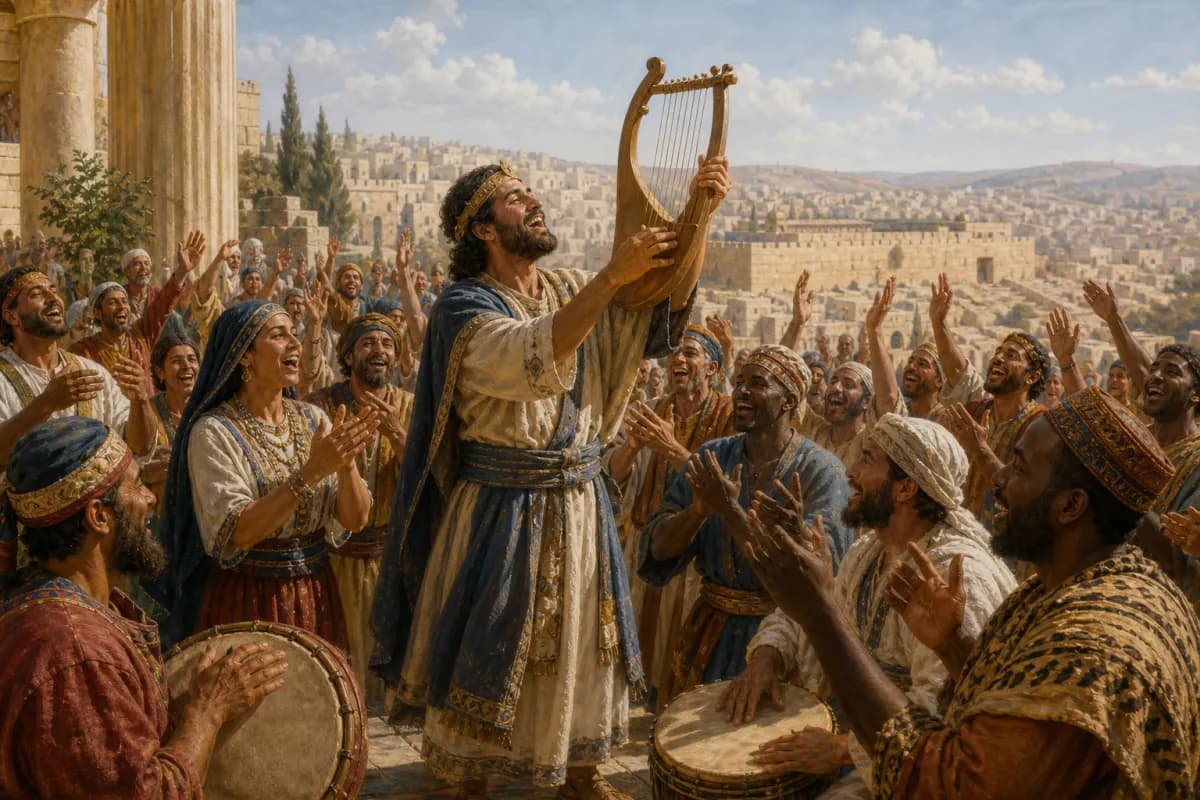
Psalm 47 calls every people to clap, shout, and sing because the Lord Most High is the great King over all the earth. Israel’s experience of God subduing enemies becomes a summons for the nations to acknowledge His universal rule. Jesus’ ascension reveals this kingship in its saving fullness and sends His church to invite every people under His gracious reign.
- In this study
- 9 verses · 5 movements
Psalms 47
47:1Oh clap your hands, all you nations. Shout to God with the voice of triumph!
47:2For the LORD Most High is awesome. He is a great King over all the earth.
47:3He subdues nations under us, and peoples under our feet.
47:4He chooses our inheritance for us, the glory of Jacob whom he loved. Selah.
47:5God has gone up with a shout, the LORD with the sound of a trumpet.
47:6Sing praises to God! Sing praises! Sing praises to our King! Sing praises!
47:7For God is the King of all the earth. Sing praises with understanding.
47:8God reigns over the nations. God sits on his holy throne.
47:9The princes of the peoples are gathered together, the people of the God of Abraham. For the shields of the earth belong to God. He is greatly exalted!
CONTEXTUAL OVERVIEW
Psalm 47 begins at full volume: clap your hands, all peoples; shout to God with loud songs of joy. The reason is not Israel’s own greatness. The Lord Most High is “awesome,” a word that here conveys awe before the great King over all the earth. The supplied note on malakh, “to reign,” captures the psalm’s central conviction: God’s kingship reaches every nation.
The song holds Israel’s particular history and the nations’ future together. God chose Jacob’s heritage and subdued peoples under Israel, yet its closing picture is not Israel praising alone. The princes of the peoples gather as the people of the God of Abraham. The Lord’s rule does not shrink to one ethnic boundary.
HISTORICAL AND LITERARY CONTEXT
Psalm 47 is a Zion and kingship hymn, likely used in public worship. Some readers associate its “God has gone up” language with an ark procession or an enthronement celebration, but the psalm itself does not identify a particular event. What is clear is its liturgical movement: instruments, shouts, and repeated singing announce that Israel’s God is King.
Verses 3–4 remember Israel’s inheritance, language that can be misused if detached from the covenant story and the psalm’s final horizon. The psalm celebrates God’s historical judgment and gift to Jacob while making room for leaders from the nations to belong to the God of Abraham. It therefore resists both national pride and a merely private view of worship.
SECTION-BY-SECTION ANALYSIS
- Verses 1–4 · Psalms 47:2All peoples are called to praise the Most High King who acted in Israel’s history and gave Jacob an inheritance.
- Verses 5–7 · Psalms 47:5Trumpet-accompanied praise celebrates God’s royal ascent and His kingship over the whole earth.
- Verses 8–9 · Psalms 47:8The nations’ leaders gather under God’s holy throne because all earthly shields and authorities belong to Him.
CHRIST IN THIS PASSAGE
Psalm 47 does not name Jesus, but its ascent and universal-kingship themes find a strong canonical fulfillment in His ascension. The risen Christ is exalted at the Father’s right hand above every authority, not as a distant ruler but as the crucified Savior who has defeated sin and death. The psalm’s command to sing becomes good news because this King gives mercy to rebels.
Its gathering of the princes of the peoples also fits the mission that flows from the ascended Lord. Jesus sends witnesses to the nations and forms one people from Jews and Gentiles. The connection is not that Psalm 47 predicts each detail of the ascension narrative; it is that the psalm’s royal horizon is realized in the enthroned Christ and His worldwide saving mission.
REFLECTION
Praise in Psalm 47 is not escape from the world’s fractured politics and competing powers. It is a declaration that no ruler, market, fear, or movement owns the final word. Bring the authority you fear most before Jesus, and let His ascended reign loosen the grip of panic or cynicism.
The psalm also turns worship outward. Pray by name for one people or place beyond your own experience, asking that its leaders and households would hear the gospel and gladly gather under the God of Abraham. Let joyful praise become fuel for Christ’s mission rather than a closed religious circle.
Original Hebrew Word Study
Psalm 47:7
מָלַךְ
malakh · H4427
Usually translated: to reign as king
Malakh means to reign. The Lord’s kingship reaches beyond Israel to every people, calling the whole earth into praise.
Follow the Scripture trail
Psalm 47: Sing to the King of All the Earth in the larger story
The connection: Psalm 47 announces the Lord as King over all peoples and foresees leaders from the nations gathering to Abraham’s God. Jesus ascends as the crucified and risen King, then sends His witnesses worldwide so that people from every nation may share in His salvation and praise.
Respond to the passage
Choose one anxious headline or power struggle that has been occupying your imagination, and declare in prayer that Jesus reigns above it. Then pray for one nation to hear His gospel and consider one concrete way your worship can support that mission.
- Why does Psalm 47 invite all peoples, not Israel alone, to clap and sing?
- What is gained by singing to God “with understanding” rather than treating worship as mere emotional release?
- How does Christ’s ascension turn this royal psalm into motivation for mission?
Prayer
Lord Jesus, ascended King over all the earth, free me from fear of lesser powers. Fill my worship with understanding, gather the nations through Your gospel, and make my life a glad witness to Your gracious reign. Amen.