Passage Study
Psalm 50: The God Who Judges Empty Worship
Psalms 50:1–50:23
Psalm 50 portrays the mighty God summoning heaven and earth as witnesses while He judges His covenant people. He does not need their animals; He calls for thanksgiving, fulfilled vows, and a life that orders its way rightly. Jesus fulfills the sacrificial system and brings worshipers to the Father whose gratitude, repentance, and obedience flow from grace rather than ritual performance.
- In this study
- 23 verses · 5 movements
Psalms 50
50:1The Mighty One, God, the LORD, speaks, and calls the earth from sunrise to sunset.
50:2Out of Zion, the perfection of beauty, God shines out.
50:3Our God comes, and does not keep silent. A fire devours before him. It is very stormy around him.
50:4He calls to the heavens above, to the earth, that he may judge his people:
50:5“Gather my saints together to me, those who have made a covenant with me by sacrifice.”
50:6The heavens shall declare his righteousness, for God himself is judge. Selah.
50:7“Hear, my people, and I will speak. Israel, I will testify against you. I am God, your God.
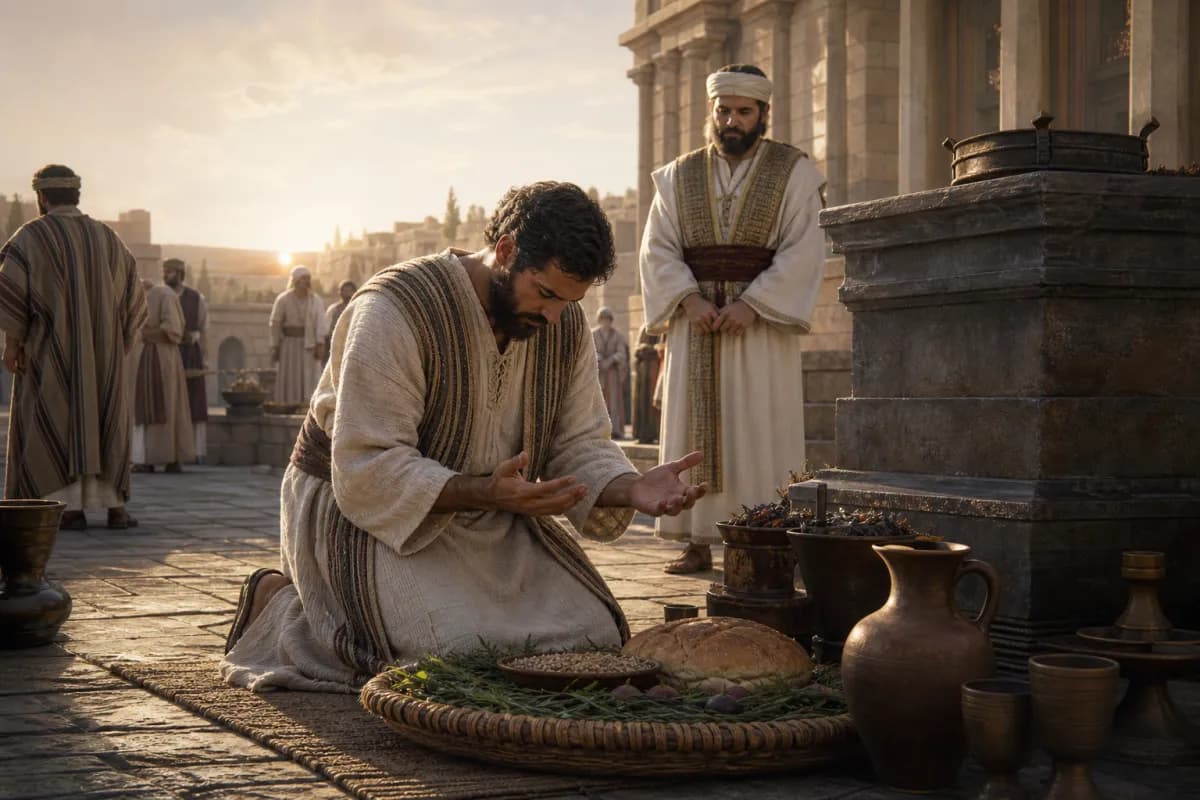
50:8I don’t rebuke you for your sacrifices. Your burnt offerings are continually before me.
50:9I have no need for a bull from your stall, nor male goats from your pens.
50:10For every animal of the forest is mine, and the livestock on a thousand hills.
50:11I know all the birds of the mountains. The wild animals of the field are mine.
50:12If I were hungry, I would not tell you, for the world is mine, and all that is in it.
50:13Will I eat the meat of bulls, or drink the blood of goats?
50:14Offer to God the sacrifice of thanksgiving. Pay your vows to the Most High.
50:15Call on me in the day of trouble. I will deliver you, and you will honor me.”
50:16But to the wicked God says, “What right do you have to declare my statutes, that you have taken my covenant on your lips,
50:17since you hate instruction, and throw my words behind you?
50:18When you saw a thief, you consented with him, and have participated with adulterers.
50:19“You give your mouth to evil. Your tongue frames deceit.
50:20You sit and speak against your brother. You slander your own mother’s son.
50:21You have done these things, and I kept silent. You thought that I was just like you. I will rebuke you, and accuse you in front of your eyes.
50:22“Now consider this, you who forget God, lest I tear you into pieces, and there be no one to deliver.
50:23Whoever offers the sacrifice of thanksgiving glorifies me, and prepares his way so that I will show God’s salvation to him.”
CONTEXTUAL OVERVIEW
Psalm 50 opens like a courtroom and a storm: the mighty God speaks, summons the earth from sunrise to sunset, and comes from Zion with devouring fire. Heaven and earth are called as witnesses because God is judging His covenant people. This is not an attack on worship; it is God’s demand that worship tell the truth about who He is and who His people are.
The supplied note on zevach, “sacrifice,” helps clarify the central correction. God does not reject the sacrificial system He established, but He refuses the thought that bulls and goats feed or enrich Him. Every forest animal already belongs to Him. The worship He seeks includes thanksgiving, fulfilled vows, dependence in trouble, and a life shaped by His instruction.
HISTORICAL AND LITERARY CONTEXT
Psalm 50 is attributed to Asaph and uses the form of a covenant lawsuit. God’s people know His statutes and bring sacrifices, yet some have separated worship from gratitude, trust, justice, and obedience. The poem therefore fits the prophets’ repeated critique of ritual performed while covenant life is ignored.
The contrast between verses 7–15 and 16–23 is vital. The first group is corrected for treating offerings as though God needed them; the second speaks God’s words while hating discipline, joining thieves, speaking evil, and imagining that God is silent because He is indifferent. The same God who receives praise also confronts hypocrisy.
SECTION-BY-SECTION ANALYSIS
- Verses 1–6 · Psalms 50:1God convenes heaven and earth as witnesses while He judges the covenant people gathered around sacrifice.
- Verses 7–15 · Psalms 50:3Because all creatures already belong to God, He seeks thankful trust, fulfilled vows, and prayer in trouble rather than offerings imagined to sustain Him.
- Verses 16–23 · Psalms 50:5Those who repeat God’s statutes while practicing theft, sexual sin, slander, and self-deception must repent and order their lives under His judgment.
CHRIST IN THIS PASSAGE
Psalm 50 exposes worship that treats sacrifice as a transaction with God. Jesus fulfills the sacrificial system by offering Himself once for sins, ending any hope of manipulating God through religious payment. His cross reveals both the seriousness of the judgment Psalm 50 announces and the mercy God provides for people who cannot cleanse themselves.
Through Jesus, thanksgiving and obedience become the fruit of reconciliation, not a substitute for it. He teaches that worshipers must worship the Father in spirit and truth, and He changes hearts that once used religious words to conceal sin. The psalm therefore brings readers to repentance and to the Savior who makes genuine worship possible.
REFLECTION
Psalm 50 asks whether your worship has become a way to manage God while leaving a protected sin untouched. Do not answer with more religious activity. Bring the specific practice, resentful speech, or broken promise into the light of Jesus, trusting His sacrifice and submitting to His correction.
Then let thankfulness take a concrete shape. Keep one vow you have delayed, ask God for help in a real trouble, and tell Him why you are grateful for Christ’s mercy. The God who needs nothing delights to be glorified by dependent people whose lives are being made truthful.
Original Hebrew Word Study
Psalm 50:5
זֶבַח
zevach · H2077
Usually translated: sacrifice
Zevach means sacrifice. God summons His covenant people, then exposes worship that offers ritual without the gratitude and obedience He desires.
Follow the Scripture trail
Psalm 50: The God Who Judges Empty Worship in the larger story
The connection: Psalm 50 brings God’s covenant people before His judgment and rejects sacrifice offered as a way to control the God who owns all things. Jesus gives the once-for-all sacrifice the psalm’s worshipers need, forgives hypocrisy, and forms grateful people who worship the Father in truth.
Respond to the passage
Ask Jesus to reveal one area where religious language has covered resistance to His commands. Confess it specifically, receive His forgiveness, and follow the psalm’s alternative by giving thanks, keeping a delayed promise, or calling on God honestly in your present trouble.
- Why does Psalm 50 summon heaven and earth before addressing the worship of Israel?
- How do the animals that already belong to God expose a transactional view of sacrifice?
- How does Jesus’ once-for-all sacrifice create the truthful worship Psalm 50 seeks?
Prayer
Lord Jesus, forgive me for using worship to hide from Your searching truth. Thank You for Your sufficient sacrifice. Make my gratitude real, order my life under Your word, and teach me to call on the Father in honest dependence. Amen.