Passage Study
Psalm 51: Mercy for a Broken and Contrite Heart
Psalms 51:1–51:19
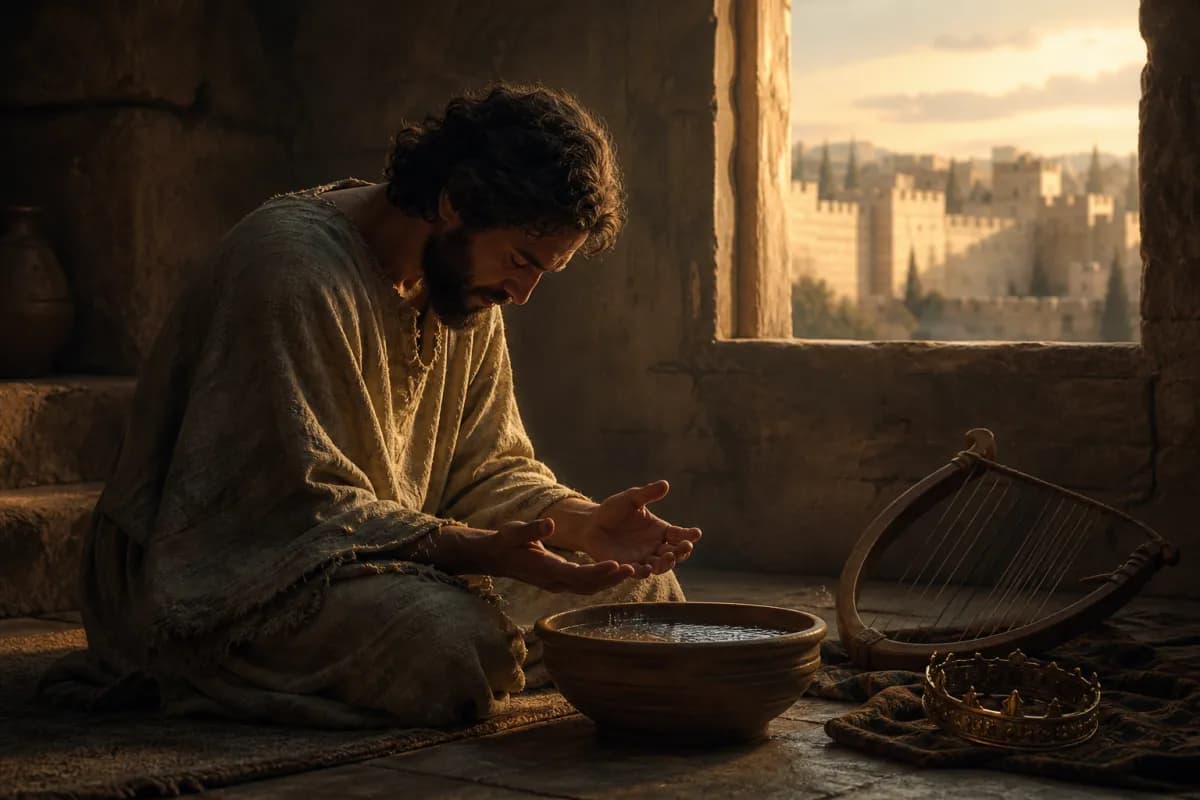
Psalm 51 is David’s plea for cleansing after his sin with Bathsheba and the death of Uriah. He does not minimize the wrong or offer religious performance as payment. He appeals to God’s steadfast love, asks for a new heart and restored joy, and learns that God receives the broken spirit—a mercy fulfilled through Jesus’ atoning death.
- In this study
- 19 verses · 5 movements
Psalms 51
51:1Have mercy on me, God, according to your loving kindness. According to the multitude of your tender mercies, blot out my transgressions.
51:2Wash me thoroughly from my iniquity. Cleanse me from my sin.
51:3For I know my transgressions. My sin is constantly before me.
51:4Against you, and you only, I have sinned, and done that which is evil in your sight, so you may be proved right when you speak, and justified when you judge.
51:5Behold, I was born in iniquity. My mother conceived me in sin.
51:6Behold, you desire truth in the inward parts. You teach me wisdom in the inmost place.
51:7Purify me with hyssop, and I will be clean. Wash me, and I will be whiter than snow.
51:8Let me hear joy and gladness, that the bones which you have broken may rejoice.
51:9Hide your face from my sins, and blot out all of my iniquities.
51:10Create in me a clean heart, O God. Renew a right spirit within me.
51:11Don’t throw me from your presence, and don’t take your Holy Spirit from me.
51:12Restore to me the joy of your salvation. Uphold me with a willing spirit.
51:13Then I will teach transgressors your ways. Sinners will be converted to you.
51:14Deliver me from the guilt of bloodshed, O God, the God of my salvation. My tongue will sing aloud of your righteousness.
51:15Lord, open my lips. My mouth will declare your praise.
51:16For you don’t delight in sacrifice, or else I would give it. You have no pleasure in burnt offering.
51:17The sacrifices of God are a broken spirit. O God, you will not despise a broken and contrite heart.
51:18Do well in your good pleasure to Zion. Build the walls of Jerusalem.
51:19Then you will delight in the sacrifices of righteousness, in burnt offerings and in whole burnt offerings. Then they will offer bulls on your altar.
CONTEXTUAL OVERVIEW
Psalm 51 comes from a king who has used power to take Bathsheba and arranged Uriah’s death. The superscription connects the prayer with Nathan’s confrontation, so David’s first need is not reputation management but mercy. He asks God to blot out, wash away, and cleanse sin because he knows the damage cannot be repaired by a public gesture.
The prayer moves from confession to renewed vocation. David asks for a clean heart, a steadfast spirit, and the joy of salvation so that he may teach transgressors God’s ways. Even the final concern for Zion shows that private sin by Israel’s king has public consequences before the God who loves His people.
HISTORICAL AND LITERARY CONTEXT
This is a penitential psalm: a prayer shaped by confession, petition, and hope in God’s character. Its repeated requests draw on covenant language. David appeals to God’s steadfast love and abundant mercy rather than to his office, past victories, or sacrifices.
Verse 5 says David was born into a world marked by sin; it does not excuse the decisions named in the psalm. The poem holds inherited human brokenness and personal responsibility together. Likewise, its language about sacrifice does not reject the worship God commanded; it rejects the idea that an offering can substitute for a contrite heart.
SECTION-BY-SECTION ANALYSIS
- Verses 1–6 · Psalms 51:1David confesses actual evil and appeals only to God’s steadfast love and mercy.
- Verses 7–12 · Psalms 51:10Cleansing requires God’s recreating action: a clean heart, a steadfast spirit, and restored joy.
- Verses 13–19 · Psalms 51:15Forgiven lips teach and praise, while God receives contrition rather than empty religious payment.
CHRIST IN THIS PASSAGE
Psalm 51 does not predict the mechanics of Jesus’ death, but it exposes the need His saving mission answers. David cannot blot out his own guilt or make his heart clean. Jesus bears sin without committing it, gives His life for the guilty, and by His blood opens the cleansing and reconciliation for which this prayer pleads.
The psalm also guards the gospel from cheap grace. Christ does not excuse David’s violence or permit repentance to become performance. He forgives those who come honestly to Him and gives the Holy Spirit to renew them. The clean heart requested here is received as God’s gift through the crucified and risen Son.
REFLECTION
Psalm 51 gives language for sin that has become impossible to hide. Do not defend the thing God has exposed or reduce it to a mistake. Name the harm truthfully before Jesus, including the people affected, and ask for the mercy you cannot earn.
Then ask for more than relief from shame. Bring one pattern of desire, speech, or power that needs a steadfast spirit, and take a concrete step toward repair where repair is possible. Christ receives a broken heart and turns forgiven people into truthful witnesses of His mercy.
Original Hebrew Word Study
Psalm 51:2
חָטָא
chata · H2398
Usually translated: to sin or miss the mark
Chata means to sin. David asks for cleansing because his evil is first and finally against God, and mercy must reach deeper than self-repair.
Follow the Scripture trail
Psalm 51: Mercy for a Broken and Contrite Heart in the larger story
The connection: David’s prayer reveals that even Israel’s king needs cleansing deeper than sacrifice or status can supply. Jesus, David’s greater Son, bears the guilt of sinners and gives the renewing Spirit so that the contrite may be restored to God.
Respond to the passage
Confess one specific sin to Jesus without self-defense, receive His mercy, and identify one person or responsibility toward whom repentance should bear truthful fruit.
- Why does David appeal to God’s steadfast love rather than to his kingly position or past obedience?
- What is the difference between wanting sin’s consequences removed and asking God for a clean heart?
- How does Jesus’ saving work make Psalm 51’s plea for cleansing possible without making sin less serious?
Prayer
Merciful Lord Jesus, I cannot cleanse my own heart. Forgive my sin through Your sacrifice, create steadfastness in me by Your Spirit, and make my restored life tell the truth about Your mercy. Amen.