Passage Study
Psalm 60: The Banner of Truth After National Defeat
Psalms 60:1–60:12
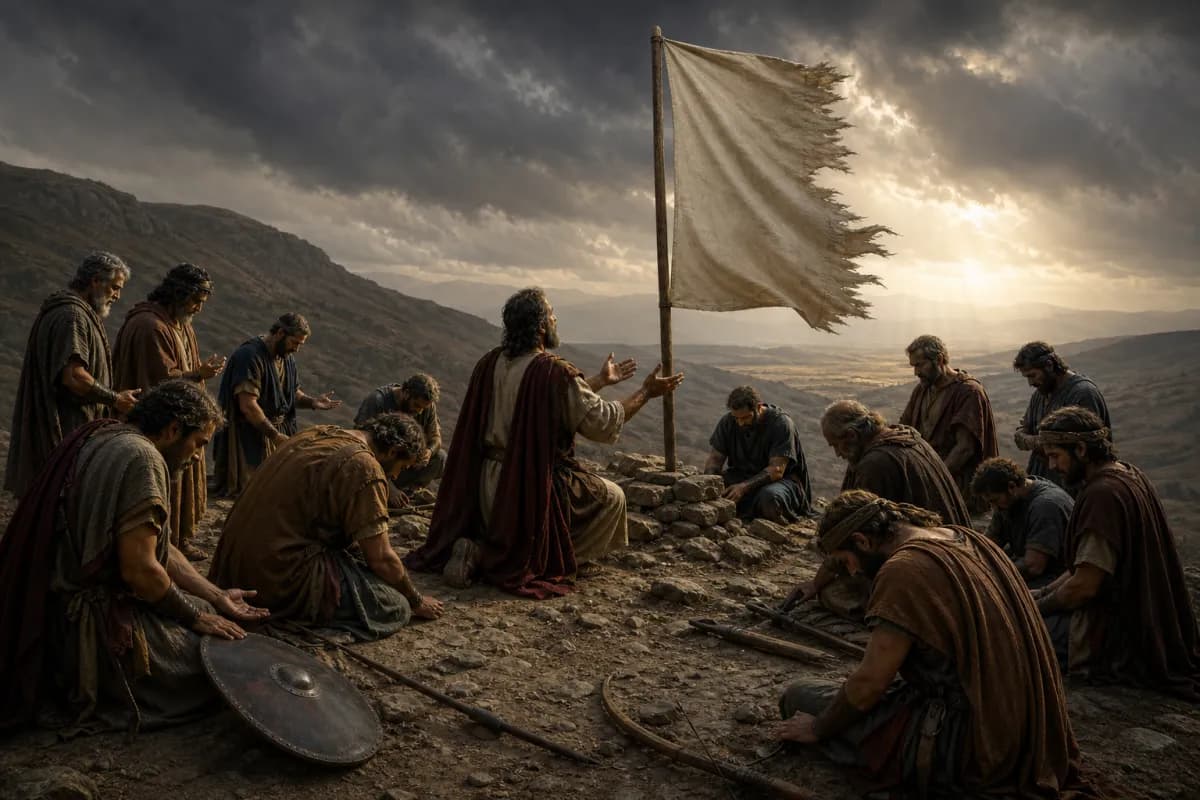
Psalm 60 is a communal prayer after Israel has suffered a painful setback in war. The people confess that God has shaken the land, plead for healing, remember the banner He gives to those who fear Him, and ask for help against the foe. In Christ, God’s people find their true King and victorious hope, while refusing to confuse military success with self-made righteousness.
- In this study
- 12 verses · 5 movements
Psalms 60
60:1God, you have rejected us. You have broken us down. You have been angry. Restore us, again.
60:2You have made the land tremble. You have torn it. Mend its fractures, for it quakes.
60:3You have shown your people hard things. You have made us drink the wine that makes us stagger.
60:4You have given a banner to those who fear you, that it may be displayed because of the truth. Selah.
60:5So that your beloved may be delivered, save with your right hand, and answer us.
60:6God has spoken from his sanctuary: “I will triumph. I will divide Shechem, and measure out the valley of Succoth.
60:7Gilead is mine, and Manasseh is mine. Ephraim also is the defense of my head. Judah is my scepter.
60:8Moab is my wash basin. I will throw my sandal on Edom. I shout in triumph over Philistia.”
60:9Who will bring me into the strong city? Who has led me to Edom?
60:10Haven’t you, God, rejected us? You don’t go out with our armies, God.
60:11Give us help against the adversary, for the help of man is vain.
60:12Through God we will do valiantly, for it is he who will tread down our adversaries.
CONTEXTUAL OVERVIEW
Psalm 60 begins after loss, not triumph. Israel says God has rejected, broken, and made the land quake, then asks Him to restore and heal its breaches. The language recognizes that national crisis must be brought before God; it does not give the community permission to invent a simple explanation for every military defeat.
At the center stands God’s banner for those who fear Him. The supplied note on nes identifies a banner or signal around which people gather. In this prayer the banner is linked to truth and deliverance, not to national self-congratulation. Israel’s hope rests in God’s revealed commitment, not in an army’s confidence.
HISTORICAL AND LITERARY CONTEXT
The superscription associates the psalm with David’s conflicts against Aram and Edom. The historical notices in Samuel and Chronicles record victories and an Edomite campaign, but the exact event behind this lament is difficult to reconstruct. The psalm itself is clear enough: the community is reeling from a breach and turns to God for restoration.
The middle oracle names Shechem, Succoth, Gilead, Manasseh, Ephraim, Judah, Moab, Edom, and Philistia. These names declare God’s sovereign claim over Israel and its neighbors. They are not a timeless warrant for any modern political map; they belong to Israel’s covenant history and to God’s rule over every people.
SECTION-BY-SECTION ANALYSIS
- Verses 1–3 · Psalms 60:6A shaken people ask God to heal the breach that has left them staggering after defeat.
- Verses 4–5 · Psalms 60:4God’s banner for those who fear Him anchors their plea for rescue in truth and covenant faithfulness.
- Verses 6–12 · Psalms 60:1God claims the land and defeats enemies, so Israel confesses that human help cannot secure the needed victory.
CHRIST IN THIS PASSAGE
Psalm 60 is not a prediction that every national conflict will be resolved in Christ’s earthly ministry. Its lasting canonical contribution is its confession that God alone rules territory, judges human pride, and gives His people their true help. Jesus fulfills the promised Davidic kingship as the King whose reign reaches beyond Israel’s borders and whose victory comes through self-giving obedience.
The psalm’s banner can therefore be connected to Christ as a theological echo, not a coded prediction of the cross. Jesus gathers a people around the truth of His saving death and resurrection, reconciling Jews and Gentiles to God. His mission corrects every attempt to turn divine help into national boasting or violence.
REFLECTION
When a family, church, or community has been shaken by failure, Psalm 60 gives permission for collective honesty. Name the breach before God and ask for healing without assigning confident blame where the text and facts do not justify it. Let fear of the Lord, not fear of losing status, shape the response.
The psalm also exposes reliance on human help. Bring the strategy, leader, or resource you have treated as indispensable before Jesus. Work wisely, but confess that only His truth and saving power can heal the deepest breach between people and God.
Original Hebrew Word Study
Psalm 60:4
נֵס
nes · H5251
Usually translated: banner or signal
Nes means banner. God gives His people a standard around which to gather, a sign that truth and deliverance belong to Him.
Follow the Scripture trail
Psalm 60: The Banner of Truth After National Defeat in the larger story
The connection: Psalm 60 brings a shaken covenant people before the God who alone gives help and claims every land. Jesus, the greater Son of David, establishes His reign through the cross and resurrection, gathering people from divided nations around the truth of His saving peace.
Respond to the passage
Where have you treated a human plan, leader, or resource as your banner of safety? Bring that reliance to Jesus, ask Him to heal the breach you can name, and take one faithful action shaped by His truth rather than pride or panic.
- Why does the psalm speak so honestly about God’s role in Israel’s experience of defeat?
- What protects the banner image from becoming national self-congratulation?
- How does Christ’s peace reshape the desire for victory over enemies?
Prayer
Lord Jesus, heal the breaches sin and failure have opened among us. Keep us from trusting human strength, gather us around Your truth, and make Your saving peace visible in the way we face defeat, conflict, and hope. Amen.