Passage Study
Psalm 61: Lead Me to the Rock Higher Than I
Psalms 61:1–61:8
Psalm 61 is a cry from the ends of the earth when David’s heart is overwhelmed. He asks to be led to a rock higher than himself, remembers God as a refuge and strong tower, and prays for the king’s life under God’s steadfast love and faithfulness. Jesus is the greater Davidic King who brings overwhelmed people near to God and keeps them in His saving care.
- In this study
- 8 verses · 5 movements
Psalms 61
61:1Hear my cry, God. Listen to my prayer.
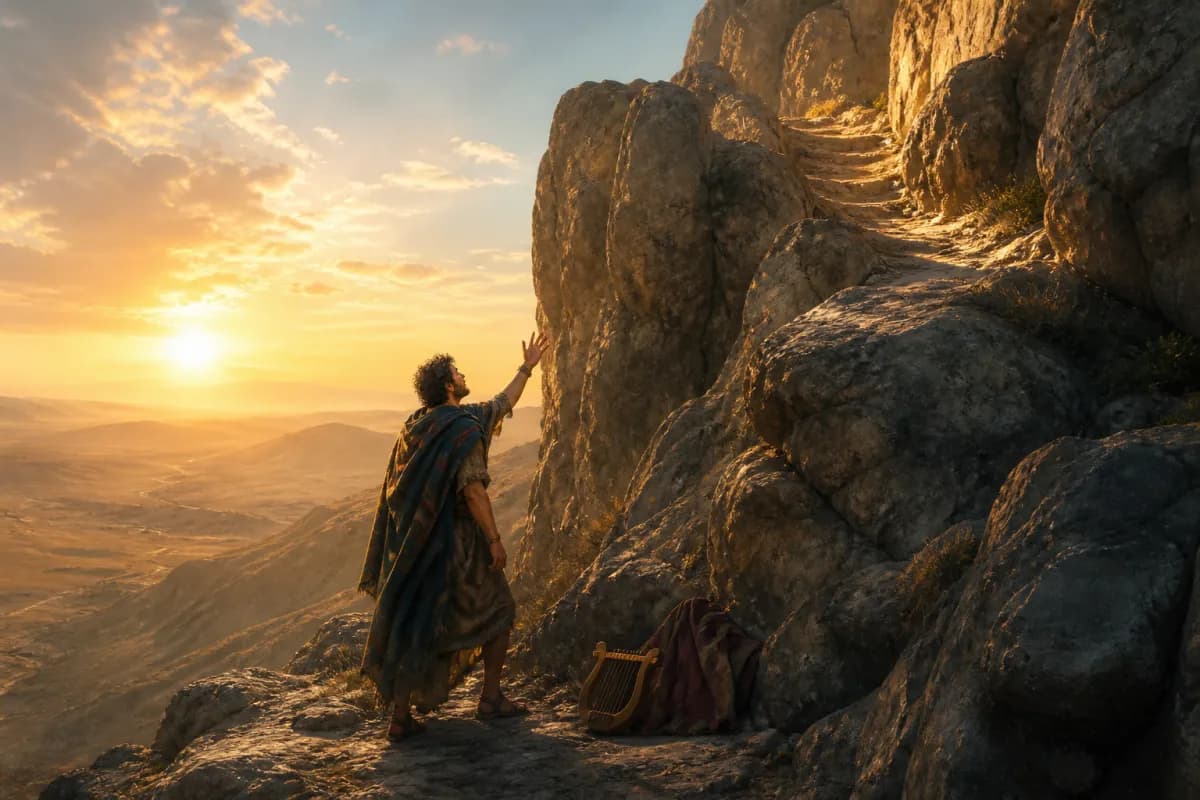
61:2From the end of the earth, I will call to you when my heart is overwhelmed. Lead me to the rock that is higher than I.
61:3For you have been a refuge for me, a strong tower from the enemy.
61:4I will dwell in your tent forever. I will take refuge in the shelter of your wings. Selah.
61:5For you, God, have heard my vows. You have given me the heritage of those who fear your name.
61:6You will prolong the king’s life. His years will be for generations.
61:7He shall be enthroned in God’s presence forever. Appoint your loving kindness and truth, that they may preserve him.
61:8So I will sing praise to your name forever, that I may fulfill my vows daily.
CONTEXTUAL OVERVIEW
Psalm 61 begins at “the end of the earth,” a phrase that can describe physical distance, exile, or profound disorientation. David’s heart is faint, so he asks to be led to a rock higher than he is. The request admits that he cannot raise himself above the flood of fear or exhaustion.
David remembers that God has been a refuge and a strong tower against the enemy. The supplied note on machaseh, refuge or shelter, clarifies that this is relational safety in God, not an escape from all responsibility. The psalm joins honest weakness to a remembered history of divine protection.
HISTORICAL AND LITERARY CONTEXT
Psalm 61 is an individual royal prayer. Its final petition for the king’s life shows that David speaks not only as a distressed believer but as Israel’s anointed ruler, whose preservation matters for the covenant people. The exact crisis is not named, so readers should not attach it with certainty to one exile or rebellion.
The poem moves from cry to memory to vow. Tent, wings, refuge, and strong tower are complementary images of God’s protection. David does not ask for an abstract feeling of security; he asks to dwell in God’s presence and to be kept by steadfast love and faithfulness while he fulfills his vows.
SECTION-BY-SECTION ANALYSIS
- Verses 1–2 · Psalms 61:2An overwhelmed David asks God to lead him to a rock higher than his own capacity.
- Verses 3–5 · Psalms 61:4Remembered refuge, tower, tent, and wings give substance to David’s confidence in God’s care.
- Verses 6–8 · Psalms 61:6The king asks to be guarded by steadfast love so that his preserved life may become continual praise.
CHRIST IN THIS PASSAGE
Psalm 61’s prayer for the king belongs to the Davidic hope fulfilled in Jesus. David asks that the king’s life endure before God; Jesus, the promised Son of David, passes through death and is raised to an indestructible life. His reign is not merely prolonged for a few more years but established forever at the Father’s right hand.
Jesus also brings the overwhelmed near to God. He is the refuge to whom weary people come, and through His death He opens access to the Father’s presence. The tent and wings imagery is a thematic connection rather than a direct prediction: in Christ, sinners find the shelter of God’s saving mercy and are kept for worship.
REFLECTION
When your heart feels overwhelmed, do not wait until you can explain everything calmly before you pray. Use David’s short cry and ask Jesus to lead you to the rock higher than your current capacity. Let trusted believers help you take practical steps while you seek refuge in God.
Remember one concrete occasion when God was your strong tower, then let that memory shape today’s vow of praise. Your stability is not secured by maintaining composure; it is secured by the risen King whose steadfast love and faithfulness hold you close to the Father.
Original Hebrew Word Study
Psalm 61:3
מַחֲסֶה
machaseh · H4268
Usually translated: refuge or shelter
Machaseh means refuge. The high rock David seeks is the safety of God’s presence when his own heart feels overwhelmed.
Follow the Scripture trail
Psalm 61: Lead Me to the Rock Higher Than I in the larger story
The connection: Psalm 61 brings an overwhelmed David to God as refuge and prays for the king’s lasting life under covenant love. Jesus, the risen Son of David, lives forever, brings weary sinners near to the Father, and keeps His people in the shelter of His saving mercy.
Respond to the passage
Say plainly where your heart is overwhelmed, and ask Jesus to lead you to the rock higher than you. Remember one past refuge God has provided, reach out for wise help if needed, and turn that remembrance into a specific act of praise.
- Why does David ask to be led to a rock higher than he is rather than relying on his own resolve?
- How do refuge, tower, tent, and wings deepen the meaning of God’s protection?
- Why does the prayer for the king’s life lead naturally to Jesus’ resurrection and eternal reign?
Prayer
Lord Jesus, lead me to the rock higher than I am when my heart is overwhelmed. Be my refuge and strong tower, keep me near the Father through Your living intercession, and make my preserved life a song of praise. Amen.