Passage Study
Psalm 63: Thirsting for God in a Dry Land
Psalms 63:1–63:11
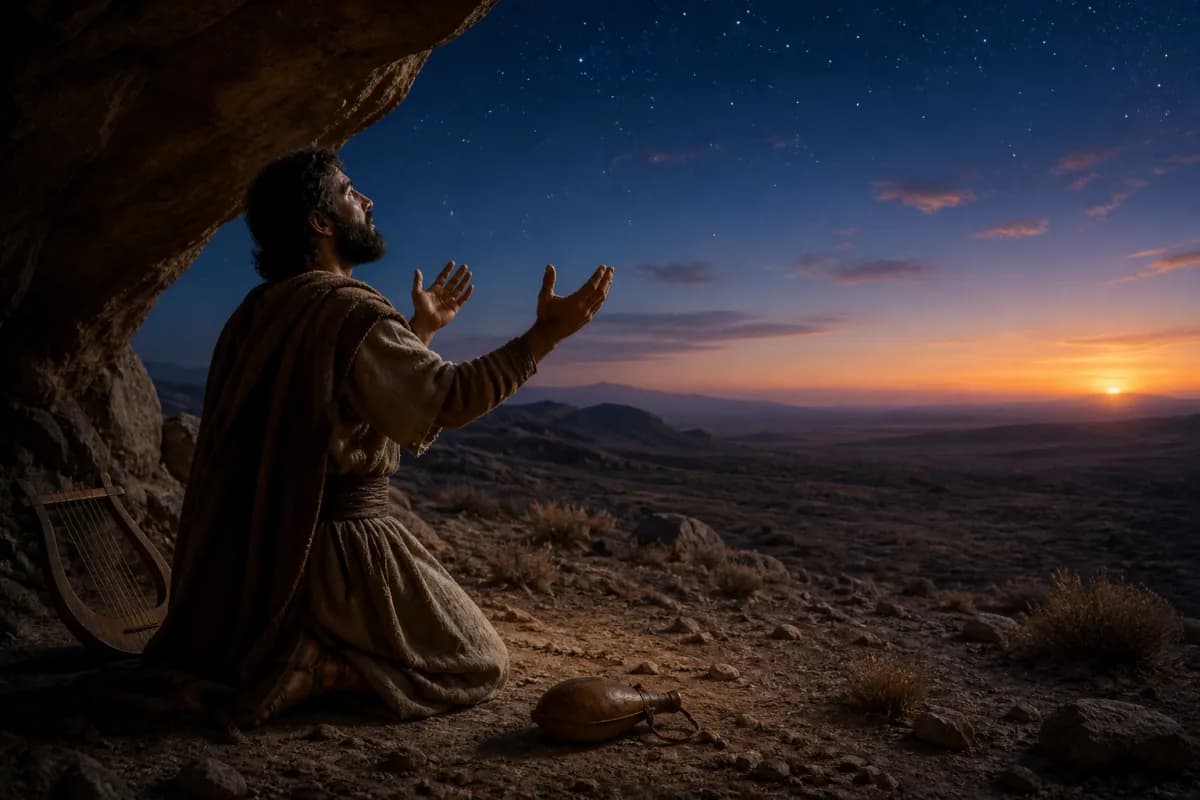
Psalm 63 is David’s wilderness song of desire for God. In a dry and weary land, he remembers God’s power and glory, values steadfast love above life, and finds satisfaction in praise. His enemies may seek his life, but David’s future is bound to God. Jesus meets the deepest human thirst by giving Himself, bringing sinners into the Father’s love, and sustaining them with resurrection hope.
- In this study
- 11 verses · 5 movements
Psalms 63
63:1God, you are my God. I will earnestly seek you. My soul thirsts for you. My flesh longs for you, in a dry and weary land, where there is no water.
63:2So I have seen you in the sanctuary, watching your power and your glory.
63:3Because your loving kindness is better than life, my lips shall praise you.
63:4So I will bless you while I live. I will lift up my hands in your name.
63:5My soul shall be satisfied as with the richest food. My mouth shall praise you with joyful lips,
63:6when I remember you on my bed, and think about you in the night watches.
63:7For you have been my help. I will rejoice in the shadow of your wings.
63:8My soul stays close to you. Your right hand holds me up.
63:9But those who seek my soul to destroy it shall go into the lower parts of the earth.
63:10They shall be given over to the power of the sword. They shall be jackal food.
63:11But the king shall rejoice in God. Everyone who swears by him will praise him, for the mouth of those who speak lies shall be silenced.
CONTEXTUAL OVERVIEW
Psalm 63 begins in physical barrenness but does not reduce David’s need to water, food, or safety. His soul thirsts and his flesh faints for God in a dry, weary land where there is no water. The wilderness makes visible a deeper hunger: David wants to see God’s power and glory as he has known them in the sanctuary.
The supplied note on tsame, “thirsty,” gives the opening its bodily force. David’s longing for God is not a vague religious preference. He compares it to a thirsty body in desert country. Yet the psalm does not end in deprivation. God’s steadfast love becomes better than life, and the worshiper’s soul is satisfied as with rich food through remembered praise.
HISTORICAL AND LITERARY CONTEXT
The superscription places Psalm 63 in the wilderness of Judah, though it does not determine whether David is fleeing Saul or facing Absalom’s revolt. Both settings fit a king separated from normal security and worshiping access. The psalm itself directs attention less to solving that question than to David’s practice of seeking God while exposed to wilderness scarcity and human danger.
This is a personal prayer that moves through desire, praise, nighttime meditation, confidence, and royal joy. The sanctuary memory is not nostalgia for a building detached from God; it is remembrance of God’s known presence among His people. David’s worship in the wilderness shows that distance from the sanctuary does not put him beyond the reach of the God he seeks.
SECTION-BY-SECTION ANALYSIS
- Verses 1–2 · Psalms 63:1In desert conditions David thirsts for God and remembers the power and glory he has known in worship.
- Verses 3–6 · Psalms 63:3God’s steadfast love is better than life, so David praises, meditates, and finds deep satisfaction in Him.
- Verses 7–11 · Psalms 63:4God helps and upholds David while he entrusts hostile pursuers and false speech to the Lord’s judgment.
CHRIST IN THIS PASSAGE
Psalm 63 does not identify Jesus by name or predict a single Gospel event, but its wilderness longing has a strong thematic connection to His mission. Jesus enters the wilderness in obedience to the Father and refuses to make bread, spectacle, or power the substitute for faithful worship. He teaches that people do not live by bread alone and calls them to seek God’s kingdom first.
Jesus also addresses the deeper thirst David names. He offers living water to the thirsty and gives Himself as the bread of life, not as a replacement for material care but as the Savior who reconciles sinners to God. His death opens access to the Father; His resurrection assures those who cling to Him that even a dry season cannot finally separate them from God’s steadfast love.
REFLECTION
A dry season can reveal what you have been asking to make your soul whole. Psalm 63 invites you to name that thirst before Jesus: perhaps you want relief, recognition, certainty, restored health, or the end of a conflict. Ask Him to meet the desire beneath the desire, so that hardship does not make you settle for a lesser god.
Use one unguarded moment—an early morning, a commute, or a wakeful night—to remember a concrete mercy God has shown you. Praise Him for it, and ask Christ to make His steadfast love more precious than the immediate comfort you cannot yet obtain. That practice does not deny grief; it trains the soul to cling to the One who upholds it.
Original Hebrew Word Study
Psalm 63:1
צָמֵא
tsame · H6770
Usually translated: thirsty
Tsame means thirsty. David describes desire for God as bodily thirst in a dry land, revealing worship as a need more basic than comfort.
Follow the Scripture trail
Psalm 63: Thirsting for God in a Dry Land in the larger story
The connection: Psalm 63 turns wilderness thirst into a pursuit of God whose steadfast love is better than life. Jesus enters the wilderness in obedient trust, gives living water to thirsty sinners, and brings them through His saving death into lasting fellowship with the Father.
Respond to the passage
Tell Jesus what feels dry and unmet in your life. Then choose a time today to remember His faithful care and praise Him for one specific mercy, asking Him to make your desire for God stronger than the comforts you are tempted to treat as life itself.
- How does the wilderness setting make David’s thirst for God more concrete?
- Why can David call God’s steadfast love better than life while enemies seek his life?
- How does Jesus’ offer of living water deepen Psalm 63 without reducing its original prayer?
Prayer
Lord Jesus, my soul is thirsty in ways comfort cannot finally satisfy. Draw me to seek the Father, make Your steadfast love better to me than the things I fear losing, and uphold me through every dry place. Amen.