Passage Study
God Justifies the Ungodly Through Faith in Christ
Romans 3:21–4:25
Romans 3:21–4:25 announces the answer to universal guilt: God reveals His righteousness apart from works of the law through faith in Jesus Christ. Christ’s redeeming death demonstrates God’s righteousness while justifying believers. Abraham then proves that this gift precedes circumcision and law, because he was counted righteous by faith in God’s promise. The promise culminates in the God who raised Jesus our Lord for our trespasses and justification.
- In this study
- 36 verses · 5 movements
Romans 3
3:21But now apart from the law, a righteousness of God has been revealed, being testified by the law and the prophets;
3:22even the righteousness of God through faith in Jesus Christ to all and on all those who believe. For there is no distinction,
3:23for all have sinned, and fall short of the glory of God;
3:24being justified freely by his grace through the redemption that is in Christ Jesus,
3:25whom God sent to be an atoning sacrifice through faith in his blood, for a demonstration of his righteousness through the passing over of prior sins, in God’s forbearance;
3:26to demonstrate his righteousness at this present time, that he might himself be just and the justifier of him who has faith in Jesus.
3:27Where then is the boasting? It is excluded. By what kind of law? Of works? No, but by a law of faith.
3:28We maintain therefore that a man is justified by faith apart from the works of the law.
3:29Or is God the God of Jews only? Isn’t he the God of Gentiles also? Yes, of Gentiles also,
3:30since indeed there is one God who will justify the circumcised by faith and the uncircumcised through faith.
3:31Do we then nullify the law through faith? May it never be! No, we establish the law.
Romans 4
4:1What then will we say that Abraham, our forefather, has found according to the flesh?
4:2For if Abraham was justified by works, he has something to boast about, but not toward God.
4:3For what does the Scripture say? “Abraham believed God, and it was accounted to him for righteousness.”
4:4Now to him who works, the reward is not counted as grace, but as something owed.
4:5But to him who doesn’t work, but believes in him who justifies the ungodly, his faith is accounted for righteousness.
4:6Even as David also pronounces blessing on the man to whom God counts righteousness apart from works:
4:7“Blessed are they whose iniquities are forgiven, whose sins are covered.
4:8Blessed is the man whom the Lord will by no means charge with sin.”
4:9Is this blessing then pronounced only on the circumcised, or on the uncircumcised also? For we say that faith was accounted to Abraham for righteousness.
4:10How then was it counted? When he was in circumcision, or in uncircumcision? Not in circumcision, but in uncircumcision.
4:11He received the sign of circumcision, a seal of the righteousness of the faith which he had while he was in uncircumcision, that he might be the father of all those who believe, though they might be in uncircumcision, that righteousness might also be accounted to them.
4:12He is the father of circumcision to those who not only are of the circumcision, but who also walk in the steps of that faith of our father Abraham, which he had in uncircumcision.
4:13For the promise to Abraham and to his offspring that he would be heir of the world wasn’t through the law, but through the righteousness of faith.
4:14For if those who are of the law are heirs, faith is made void, and the promise is made of no effect.
4:15For the law produces wrath; for where there is no law, neither is there disobedience.
4:16For this cause it is of faith, that it may be according to grace, to the end that the promise may be sure to all the offspring, not to that only which is of the law, but to that also which is of the faith of Abraham, who is the father of us all.
4:17As it is written, “I have made you a father of many nations.” This is in the presence of him whom he believed: God, who gives life to the dead, and calls the things that are not, as though they were.
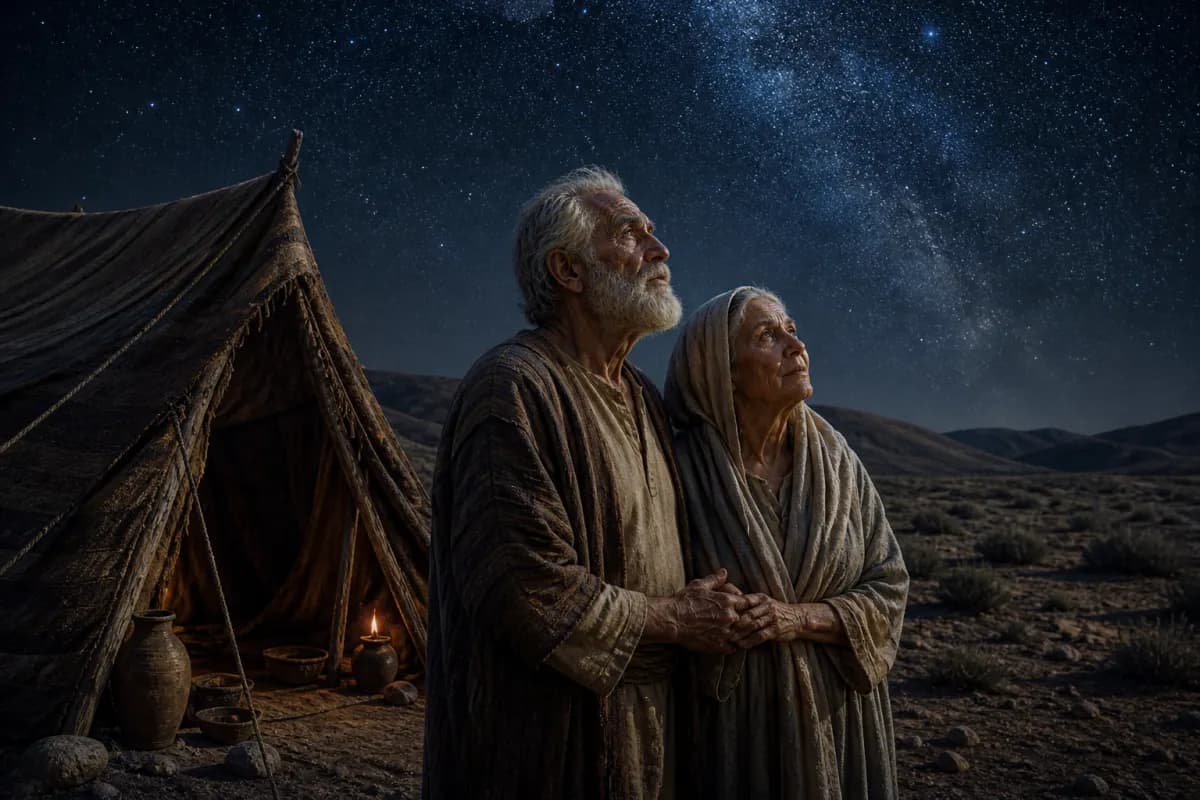
4:18Against hope, Abraham in hope believed, to the end that he might become a father of many nations, according to that which had been spoken, “So will your offspring be.”
4:19Without being weakened in faith, he didn’t consider his own body, already having been worn out, (he being about a hundred years old), and the deadness of Sarah’s womb.
4:20Yet, looking to the promise of God, he didn’t waver through unbelief, but grew strong through faith, giving glory to God,
4:21and being fully assured that what he had promised, he was also able to perform.
4:22Therefore it also was “credited to him for righteousness.”
4:23Now it was not written that it was accounted to him for his sake alone,
4:24but for our sake also, to whom it will be accounted, who believe in him who raised Jesus our Lord from the dead,
4:25who was delivered up for our trespasses, and was raised for our justification.
CONTEXTUAL OVERVIEW
After Romans 1:18–3:20 closes every mouth, 3:21 begins with the decisive words, “But now.” Paul does not soften the verdict on sin. He announces that God’s righteousness has been manifested apart from the law, though the Law and Prophets bear witness to it. The phrase “apart from the law” does not mean contrary to Scripture or indifferent to obedience. It means that sinners are not justified by performing the law’s works; their right standing is God’s gift through faith in Jesus Christ.
Romans 4 is not an appendix with an Old Testament illustration. Abraham is central because Jewish covenant identity, circumcision, and promise converge in him. Paul asks how Abraham was counted righteous and answers from Genesis 15:6: by faith before his circumcision. That timing makes Abraham father of uncircumcised believers as well as circumcised believers who share his faith, and it places God’s promise ahead of the law given centuries later.
HISTORICAL AND LITERARY CONTEXT
Paul’s language in 3:21–26 is dense with courtroom, marketplace, and sacrificial terms: righteousness, justification, redemption, and the place or means of atonement. The paragraph does not reduce Christ’s death to one image. God acts in Christ to deal truthfully with sin, free people from its guilt, and show that He is righteous even as He justifies those who have faith in Jesus. The result is the exclusion of boasting because justification rests on God’s grace rather than a human achievement.
The argument with Abraham also addresses the Jew-Gentile question in Rome. If Abraham was justified before circumcision, then circumcision cannot be the entrance requirement for being counted righteous. If the promise comes through faith rather than law, then it may embrace the many nations God promised to Abraham. Paul also cites David’s blessing of forgiveness, linking counted righteousness with sins not counted against the believer.
SECTION-BY-SECTION ANALYSIS
- Romans 3:21–26 · Romans 3:22God reveals His righteousness in Christ’s redeeming death and justifies sinners who have faith in Jesus.
- Romans 3:27–31 · Romans 3:30Faith excludes boasting and establishes one way of justification for Jews and Gentiles before the one God.
- Romans 4:1–25 · Romans 4:11Abraham was counted righteous before circumcision, and his trust in the life-giving God anticipates faith in the One who raised Jesus.
CHRIST IN THIS PASSAGE
Christ’s saving work stands at the center of 3:21–4:25. God justifies freely through the redemption that is in Christ Jesus and through His blood. Paul does not leave the cross undefined as a moving example of love. He says God dealt with sin there in a way that demonstrates His own righteousness, so that guilty people who trust Jesus may be declared righteous without God ceasing to be just.
The final sentence joins the cross and resurrection to the believer’s standing before God. Jesus was handed over because of our trespasses and raised for our justification. Abraham’s trust in the God who gives life to the dead becomes a strong canonical pattern: the promised son born from apparent deadness points beyond itself to faith in the God who raised His Son. The connection is not that Isaac and Jesus are identical stories, but that God’s promise and life-giving faithfulness reach their climax in the risen Christ.
REFLECTION
Paul removes both pride and panic. If justification rests on Christ’s redeeming work, no believer can boast as though acceptance were earned; if God justifies the ungodly, no repentant sinner needs to wait until personal improvement feels sufficient. Where are you treating your obedience, theological knowledge, family background, or emotional intensity as the reason God should receive you? Lay that claim down before the crucified and risen Jesus.
Abraham’s faith was directed to the God who keeps promises when visible circumstances look closed. Bring a particular place of impossible-looking need before Him without making the outcome a test of His goodness. Trust the God who raised Jesus for your justification, and let that assurance free you for grateful obedience rather than anxious self-salvation.
Original Greek Word Study
Romans 3:21
δικαιοσύνη
dikaiosyne · G1343
Usually translated: righteousness or justice
Dikaiosyne means righteousness or justice. God’s righteousness is now revealed apart from the law through faith in Jesus Christ, so justification rests on God’s gift rather than human boasting.
Follow the Scripture trail
God Justifies the Ungodly Through Faith in Christ in the larger story
The connection: God’s promise to Abraham always aimed beyond one ethnic household toward many nations. In Jesus’ death and resurrection, God fulfills that promise by justifying the ungodly through faith, creating a family marked by trust in the God who gives life to the dead.
Respond to the passage
Stop presenting your best works to God as a claim for acceptance. Trust Jesus, who was handed over for trespasses and raised for justification, and let one act of obedience today grow from gratitude rather than from fear that you must earn God’s welcome.
- How does the “But now” of Romans 3:21 answer the conclusion of Romans 3:9–20?
- Why does Paul say Christ’s death demonstrates both God’s justice and His justifying grace?
- What does Abraham’s being counted righteous before circumcision prove about the people God welcomes?
Prayer
God of Abraham, I cannot justify myself. Thank You for giving Your Son for my trespasses and raising Him for my justification. Teach me to trust Your promise, abandon boasting, and live from the grace You have freely given in Christ. Amen.