Passage Study
Reconciled Through Christ, Dead to Sin, Alive to God
Romans 5:1–6:23
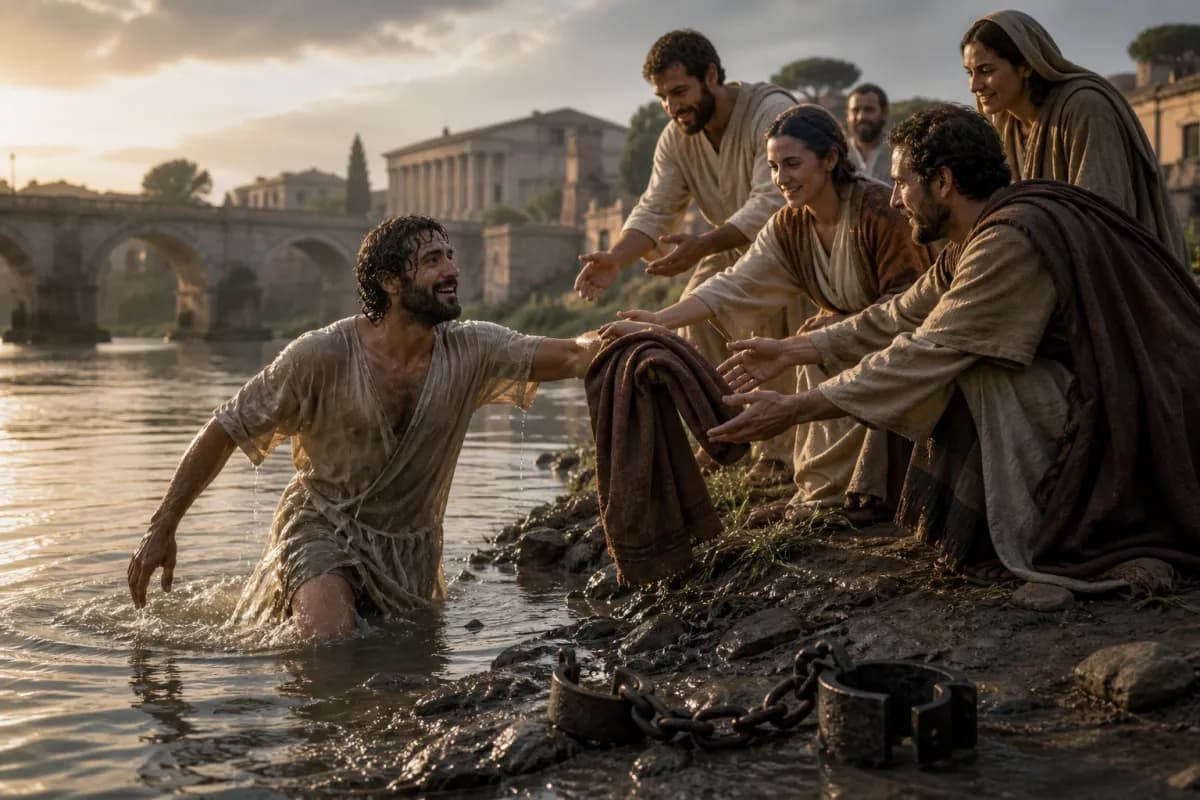
Romans 5:1–6:23 moves from peace with God to a new life under grace. Justified believers rejoice in hope amid suffering because Christ died for the ungodly and reconciled enemies to God. Adam’s trespass brought sin and death into human history; Christ’s obedient act brings righteousness and life to His people. Union with Christ in His death and resurrection means believers must no longer offer themselves to sin but to God.
- In this study
- 44 verses · 5 movements
Romans 5
5:1Being therefore justified by faith, we have peace with God through our Lord Jesus Christ;
5:2through whom we also have our access by faith into this grace in which we stand. We rejoice in hope of the glory of God.
5:3Not only this, but we also rejoice in our sufferings, knowing that suffering produces perseverance;
5:4and perseverance, proven character; and proven character, hope;
5:5and hope doesn’t disappoint us, because God’s love has been poured into our hearts through the Holy Spirit who was given to us.
5:6For while we were yet weak, at the right time Christ died for the ungodly.
5:7For one will hardly die for a righteous man. Yet perhaps for a good person someone would even dare to die.
5:8But God commends his own love toward us, in that while we were yet sinners, Christ died for us.
5:9Much more then, being now justified by his blood, we will be saved from God’s wrath through him.
5:10For if while we were enemies, we were reconciled to God through the death of his Son, much more, being reconciled, we will be saved by his life.
5:11Not only so, but we also rejoice in God through our Lord Jesus Christ, through whom we have now received the reconciliation.
5:12Therefore, as sin entered into the world through one man, and death through sin, so death passed to all men because all sinned.
5:13For until the law, sin was in the world; but sin is not charged when there is no law.
5:14Nevertheless death reigned from Adam until Moses, even over those whose sins weren’t like Adam’s disobedience, who is a foreshadowing of him who was to come.
5:15But the free gift isn’t like the trespass. For if by the trespass of the one the many died, much more did the grace of God and the gift by the grace of the one man, Jesus Christ, abound to the many.
5:16The gift is not as through one who sinned; for the judgment came by one to condemnation, but the free gift followed many trespasses to justification.
5:17For if by the trespass of the one, death reigned through the one; so much more will those who receive the abundance of grace and of the gift of righteousness reign in life through the one, Jesus Christ.
5:18So then as through one trespass, all men were condemned; even so through one act of righteousness, all men were justified to life.
5:19For as through the one man’s disobedience many were made sinners, even so through the obedience of the one, many will be made righteous.
5:20The law came in that the trespass might abound; but where sin abounded, grace abounded more exceedingly,
5:21that as sin reigned in death, even so grace might reign through righteousness to eternal life through Jesus Christ our Lord.
Romans 6
6:1What shall we say then? Shall we continue in sin, that grace may abound?
6:2May it never be! We who died to sin, how could we live in it any longer?
6:3Or don’t you know that all of us who were baptized into Christ Jesus were baptized into his death?
6:4We were buried therefore with him through baptism into death, that just as Christ was raised from the dead through the glory of the Father, so we also might walk in newness of life.
6:5For if we have become united with him in the likeness of his death, we will also be part of his resurrection;
6:6knowing this, that our old man was crucified with him, that the body of sin might be done away with, so that we would no longer be in bondage to sin.
6:7For he who has died has been freed from sin.
6:8But if we died with Christ, we believe that we will also live with him,
6:9knowing that Christ, being raised from the dead, dies no more. Death no longer has dominion over him!
6:10For the death that he died, he died to sin one time; but the life that he lives, he lives to God.
6:11Thus consider yourselves also to be dead to sin, but alive to God in Christ Jesus our Lord.
6:12Therefore don’t let sin reign in your mortal body, that you should obey it in its lusts.
6:13Also, do not present your members to sin as instruments of unrighteousness, but present yourselves to God as alive from the dead, and your members as instruments of righteousness to God.
6:14For sin will not have dominion over you, for you are not under law, but under grace.
6:15What then? Shall we sin because we are not under law but under grace? May it never be!
6:16Don’t you know that when you present yourselves as servants and obey someone, you are the servants of whomever you obey, whether of sin to death, or of obedience to righteousness?
6:17But thanks be to God that, whereas you were bondservants of sin, you became obedient from the heart to that form of teaching to which you were delivered.
6:18Being made free from sin, you became bondservants of righteousness.
6:19I speak in human terms because of the weakness of your flesh; for as you presented your members as servants to uncleanness and to wickedness upon wickedness, even so now present your members as servants to righteousness for sanctification.
6:20For when you were servants of sin, you were free from righteousness.
6:21What fruit then did you have at that time in the things of which you are now ashamed? For the end of those things is death.
6:22But now, being made free from sin and having become servants of God, you have your fruit of sanctification and the result of eternal life.
6:23For the wages of sin is death, but the free gift of God is eternal life in Christ Jesus our Lord.
CONTEXTUAL OVERVIEW
Romans 5 begins with the consequence of justification by faith: peace with God through our Lord Jesus Christ. Paul does not mean a calm feeling detached from circumstances. The peace rests on reconciliation accomplished while believers were still weak, sinners, and enemies. That established peace produces access to grace and hope in God’s glory, so even suffering can be named without being treated as proof that God has abandoned His people.
The passage then widens from individual reconciliation to Adam and Christ. Sin entered through one man, death spread through sin, and death reigned even before the law was given. Paul’s Adam-Christ comparison explains why the gospel is more than a repair of isolated bad choices. Humanity stands in a death-shaped dominion connected with Adam, and grace comes through the one righteous act of Christ to bring a new dominion of righteousness and life.
HISTORICAL AND LITERARY CONTEXT
Romans 5–6 follows Paul’s argument that people are justified apart from works of the law. A predictable objection follows: if grace increases where sin increases, should believers continue in sin? Paul answers with shocked denial and a new question about identity. Those baptized into Christ Jesus were baptized into His death; their relationship to sin has been decisively altered. The chapter is neither a command to reproduce a ritual nor a claim that believers never struggle. It grounds the command to resist sin in union with the crucified and risen Christ.
Paul uses the language of reign, slavery, wages, and presentation. Sin and death reign; grace reigns through righteousness; believers once presented their members as instruments of unrighteousness; and sin once paid death as wages. These images are verbal ways Paul describes rival masters and outcomes. His central pastoral claim is concrete: Christians should no longer let sin reign in their mortal bodies because they now belong to God through Christ.
SECTION-BY-SECTION ANALYSIS
- Romans 5:1–11 · Romans 5:1Justified enemies have peace and hope because Christ died for them before they could deserve reconciliation.
- Romans 5:12–21 · Romans 5:17Adam’s trespass establishes death’s reign, while Christ’s righteous act establishes grace’s reign toward eternal life.
- Romans 6:1–23 · Romans 6:23Union with Christ’s death and resurrection breaks sin’s claim and calls believers to offer themselves to God.
CHRIST IN THIS PASSAGE
Jesus is the ground of every saving claim in Romans 5–6. Peace is through Him; reconciliation comes through His death; final salvation is tied to His life; righteousness and life come through His obedient act; baptism joins believers to His death and resurrection; eternal life is God’s gift in Him. Paul will not allow a believer to separate forgiveness from the living Lord who now claims the whole person.
Adam’s act and Christ’s act form a strong biblical contrast. Adam’s disobedience brought condemnation and death, while Christ’s obedience brings the gift of righteousness and life. The cross is therefore not simply a lesson in sacrifice. Christ bears the consequences of sin as the obedient representative who creates a new humanity. His resurrection supplies the life in which those united to Him can refuse sin’s mastery and serve God.
REFLECTION
When suffering tests your assurance, return to the order Paul gives: Christ died for the ungodly, God reconciled enemies, and the Spirit pours God’s love into believers’ hearts. Do not read hardship as evidence that you must win God back. Bring the specific pain you are carrying to the reconciled God, and ask Him to form endurance and hope without pretending the pain is small.
When temptation presents itself as inevitable, answer it with the identity Paul gives. You are not being asked to rescue yourself from sin’s dominion; you are called to reckon as true what union with Christ has accomplished. Identify one bodily habit, use of speech, or pattern of thought through which sin seeks to reign, and deliberately offer that part of your life to God as an instrument of righteousness.
Original Greek Word Study
Romans 5:11
καταλλαγή
katallage · G2643
Usually translated: reconciliation or restored relationship
Katallage means reconciliation. Through Christ’s death, enemies receive a restored relationship with God, and that reconciliation becomes the basis for peace, hope, and new life.
Follow the Scripture trail
Reconciled Through Christ, Dead to Sin, Alive to God in the larger story
The connection: The first Adam’s rebellion brought humanity under sin and death; Jesus, the obedient last Adam, brings reconciliation, righteousness, and resurrection life. United to His death and resurrection, believers enter the new humanity He creates and are freed to live for God.
Respond to the passage
Bring your present suffering to God as someone reconciled through Christ, not as someone trying to earn a hearing. Then name one concrete way sin uses your body or habits and offer that area to God today, trusting that Christ’s risen life gives a real new allegiance.
- How does Christ’s death for enemies establish peace with God in Romans 5?
- Why does Paul compare Adam’s trespass and Christ’s righteous act?
- How does union with Christ answer the question, “Should we continue in sin?”
Prayer
Lord Jesus, thank You for dying for me when I was Your enemy and for reconciling me to God. Teach me to live from the peace You have secured, to endure suffering with hope, and to offer my whole life to God rather than to sin. Amen.